Episodes

May 27, 2026
Joseph Lee Smith–May 28, 1776
There’s a cool thing about Joseph Lee Smith that Mike doesn’t cover in his story today, probably because he is SO JEALOUS OF ME. Nah, I’m kidding. But the fact is, Joseph Lee Smith is tied up a little bit in my distant family history. I mentioned once before that my family can trace back to a common ancestor, Thomas Call, who arrived in America sometime in the 1640s. Thus, anyone with the surname Call is related, however distantly. There were Calls who were among the first Mormons to go west w...
May 26, 2026
Justice John Johnson–May 27, 1776
Justice John Johnson had a brief career in the Indiana Supreme Court, but this shouldn’t be the legacy he leaves behind, especially inasmuch as there were no important decisions handed down during the six-ish months in which he was part of that bench. It would be his earlier efforts as an Indiana politician that you want to know about. And yes, Johnson was an active politician early in the days of the Indiana Congress. Before there was a state Constitution, there were the Territorial laws that ...
May 25, 2026
The Battle Of The Cedars Ends–May 26, 1776
The Battle of the Cedars was actually a series of skirmishes that took place near the end of the American invasion of Quebec, which started in September 1775. The Cedars was an area just under 30 miles west of Quebec, and in April, Benedict Arnold had placed a detachment of troops in that area, because he’d heard that British and Indian troops were forming there. When Arnold’s men engaged with them, they wound up surrendering. What’s more, a backup force was also captured. But Arnold wasn’t giv...
May 24, 2026
Making A Play For The Natives–May 25, 1776
The Continental Congress knew that good relationship with the Native Americans was the smart thing to do, but it took them months to put together the Committee for Indian Affairs, even when their first attempt to bring the natives in failed miserably. In that first try, they came to the upstate New York and framed the Revolution as though it was a family dispute. The Iroquois, taking that literally, decided to stay out of the affair, then. This time around, the Iroquois (and shame on me, I sho...

May 23, 2026
Mr. Washington Goes To Philadelphia–May 24, 1776
The idea of George Washington in Philadelphia sounds kind of like a no-brainer, but with dealing with a war against the greatest army in the world, plus having to put up with ill-trained troops to fight that war, he was a busy guy and didn’t get out there much. Later on, after the war, of course, it was a common sight. But given Washington’s post-war stature as the soldier who delivered American victory, plus his stint as our first President—and the man who set many of the precedents for Presid...
May 22, 2026
Delegates Start Getting Their Orders–May 23, 1776
Once the preamble to Congress’ resolution had been written and unanimously approved back on May 15, it really was just a matter of when, rather than whether, America was going to formally declare itself as a separate state from England. The hardest part was getting all the ducks in a row, as the expression goes. The biggest reason that independence hadn’t already been declared is that anything that came out of the Continental Congress had to pass unanimously, so they could speak with a single v...
May 21, 2026
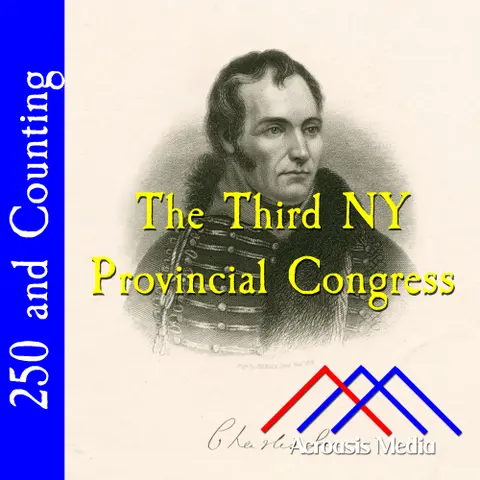
The Third NY Provincial Congress–May 22, 1776
When the Third NY Provincial Congress convened on this day, chances are that nobody really got their hopes up. By this point, that body had already met a few times, so it was generally known where they stood when it came to the Independence Question. And sure enough, when they sent delegates to the Continental Congress, they sent those delegates with instructions to oppose Independence. Rather than do that, however, the New York delegation typically just remained on the sidelines, appearing to ...
May 20, 2026
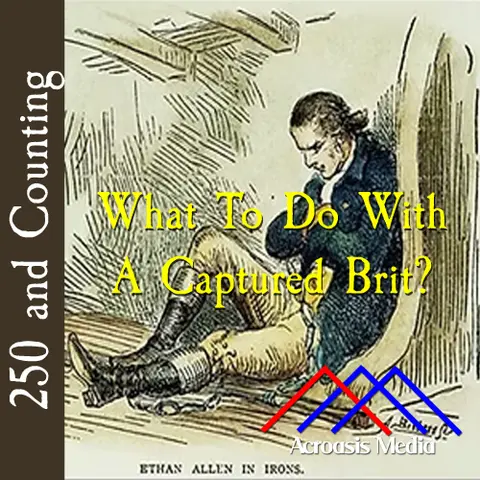
What To Do With A Captured Brit?–May 21, 1776
Early in the war, it became apparent that the treatment of prisoners was going to be a very lopsided affair. British soldiers were treated humanely and with dignity. American soldiers…not so much. As we noted last August, when Americans were captured they weren’t treated as prisoners of war but rather as criminals who didn’t deserve dienity. During the course of the war, over 8000 soldiers died because of the conditions of their confinement. Despite this, it appears that the Continental Congre...

May 19, 2026
Simon Fraser–May 20, 1776
Simon Fraser was born in Hoosick, New York, which is close to where New York’s border meets with those of Vermont and Massachusetts. He was the youngest of eight children. He moved to Montreal when he was 14 and worked with his uncles in the fur trade, apprenticing to the North West Company the following year. Now, the North West Company had already commissioned someone to find a river route to the Pacific Ocean. That may did find a route that worked for fur sources but wasn’t especially good a...
May 18, 2026
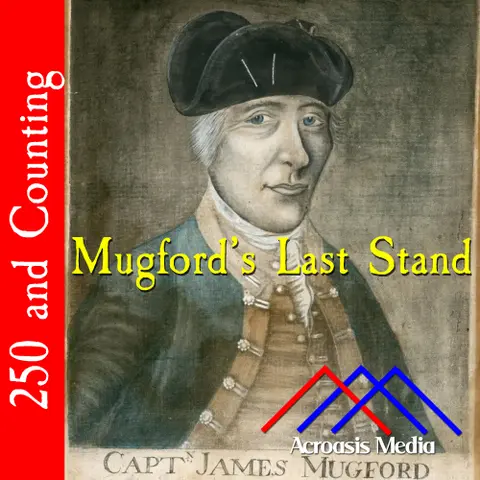
Mugford’s Last Stand–May 19, 1776
Captain enlisted in the Continental Army not long after the battles at Lexington and Concord. He was commissioned as a Captain and immediately put to work capturing British ships. One of the more surprising things about the battle between the USS Franklin is not so much the victorious outcome, which was starting to feel a little bit of a foregone conclusion at this point, or that the ships moving in on the Franklin at first pretended to be friendly Bostonians, since that was actually a common t...
May 17, 2026
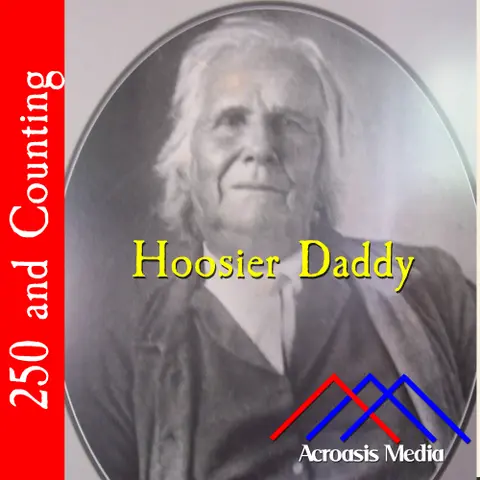
Hoosier Daddy–May 18, 1776
About that title: I regret nothing. Dennis Pennington gets a lot of well-deserved attention for his political work in Indiana, but the fact is that what he did affected the entire Northwest Territory, which also includes most of Ohio, Michigan, Illinois, Wisconsin and Minnesota east of the Mississippi River. He was also instrumental in the anti-slavery movement in that area, first supporting like-minded individuals for public offices, and then getting anti-slavery laws introduced and passed as ...
May 16, 2026
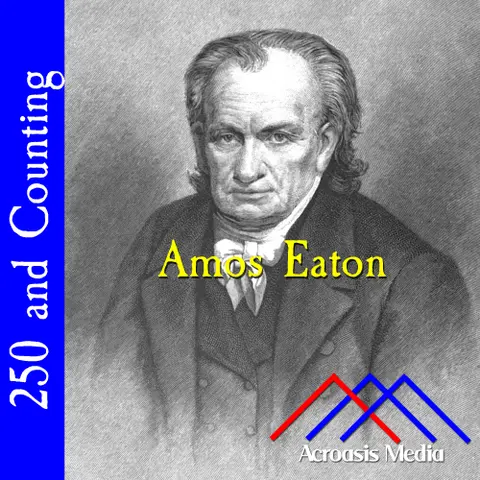
Amos Eaton–May 17, 1776
Amos Eaton, a co-founder of the Renssalaer School (later Renssalaer Polytechnic Institute) in Troy, NY, managed to flip scientific thinking on its head. He believed in having students learn through experimental demonstrations: let them apply the science in the field and then break it down later in the lab. This flew directly in the face of the traditional liberal arts tradition, which involved the classics, theology, lecture and recitation. However, it also led to more students in more courses ...

May 15, 2026
Henry Knox Wants To Get Tough–May 16, 1776
If the name Henry Knox sounds familiar to you, give yourself a prize. Knox was the man in charge of the Noble Train of Artillery, in which large amounts of ordinance were taken from Fort Ticonderoga and transferred to Boston. The presence of the new guns, with greater range than either side had at that point, led to the British finally evacuating the city a relatively short time later. But by this point Knox was back in New York, only he was in the city rather than the upstate area, and he coul...

May 14, 2026
The Declaration’s First Draft?–May 15, 1776
I have to admit that this small chunk of history has me a little confused, because if you’re going to vote on a resolution, shouldn’t you have the wording of that resolution in place? But the Second Continental Congress did vote on May 10, and now they’ve written a Preamble to the Resolution, largely drafted by John Adams. And from many angles, it looks like a formal break from England, but it’s really not. Adams also thought the Preamble to the Resolution looked like a formal break, but he als...
May 13, 2026
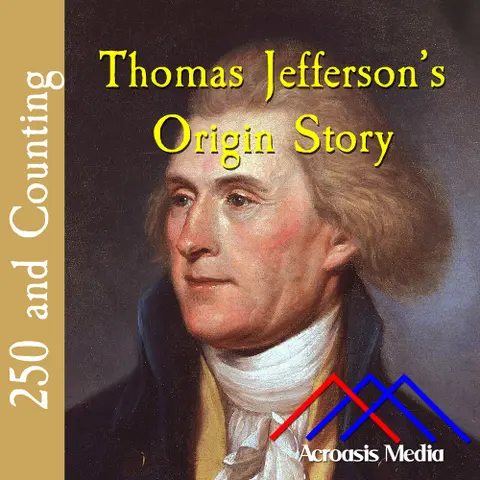
Thomas Jefferson’s Origin Story–May 14, 1776
Thomas Jefferson gets most of the credit for writing the Declaration of Independence, but Thomas Jefferson’s background clearly informed his writing of that document. That’s what Mike talks about in today’s episode. In this space I’d like to tell you a little about Declaration House. The building was newly erected at the time Jefferson rented out a room from its builder, a bricklayer named Jacob Graff (which is why it was originally called the Graff House, go figure). Jefferson lived in the sp...

May 12, 2026
Jett Thomas–May 13, 1776
Few people outside of Georgia know who Jett Thomas was, and everybody’s kind of okay with that. Thomas was instrumental in ensuring that major buildings in Athens (Ga.) and Milledgeville were constructed specifically to support education and jurisprudence, and as a result two towns and an entire county are named after Jett Thomas today. Now, that’s validation. About the Federal Road: the Creek Indians gave the US Government permission to develop a “horse path” through their nation for more eff...

May 11, 2026
America Benefits From French Politics–May 12, 1776
Charles Gravier, comte de Vergennes, was France’s Foreign Minister from 1774 to 1787 during Louis XVI’s reign. France was still salty about having lost the Seven Years’ War. On this side of the pond we refer to it as the French and Indian War, but this was a global affair that took place mostly in Europe. France and Austria took on Great Britain and Prussia, and a few other nations joined in with the coalitions. Winston Churchill once called it the “First World War” because so many nations were...
May 10, 2026
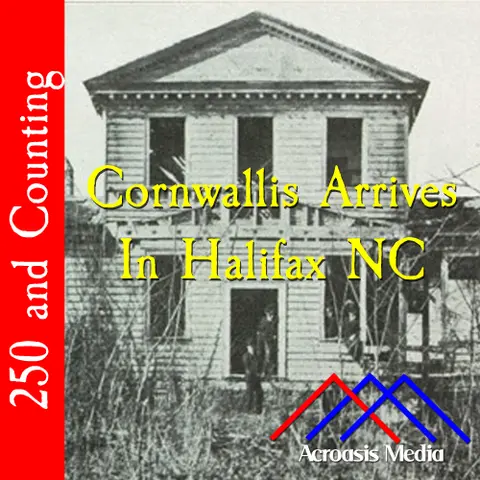
Cornwallis Arrives In Halifax, NC–May 11, 1776
Ugh. Before I tell you any more about The Grove, I have to take care of a couple of corrections. If you’ve listened to the episode already, you might be a little confused about Mike telling you that you’d be in Nova Scotia. Obviously he got his Halifaxes crossed. Second, after I’d completed today’s episode and finished all the post-production stuff, I discovered that Willie Jones’ first name isn’t pronounced the way I thought it was. While most people would make the same error I did and say it...

May 9, 2026
Change Comes From Within–May 10, 1776
You may remember a couple of the Colonies chose to endorse independence without necessarily declaring it. This suggested that a formal declaration from the Colonies as a whole was likely imminent. You may also remember that motions by the Second Continental Congress needed to be voted on unanimously in order to pass, so they could “speak as one voice.” To that end, the Congress recommended today that Colonies with a government that wasn’t in favor of independence, form a new government that wo...
May 8, 2026
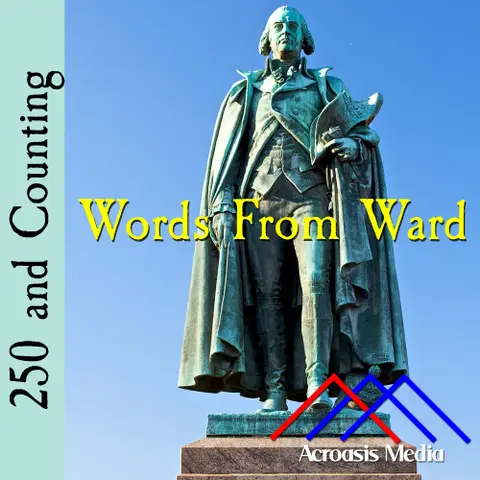
Words From Ward–May 9, 1776
Artemas Ward was the man left in charge of things when Washington made his trek to New York, so you know that this was a man that Washington trusted. As a result they corresponded with one another frequently. So it only makes sense that once in a while, the two would write to one another on the same day, and this was one of those days. Washington wrote to Ward his concern that the British would return to Boston and therefore the city should be fortified to protect against such an event, and War...
May 7, 2026
Thwarted On The Delaware–May 8, 1776
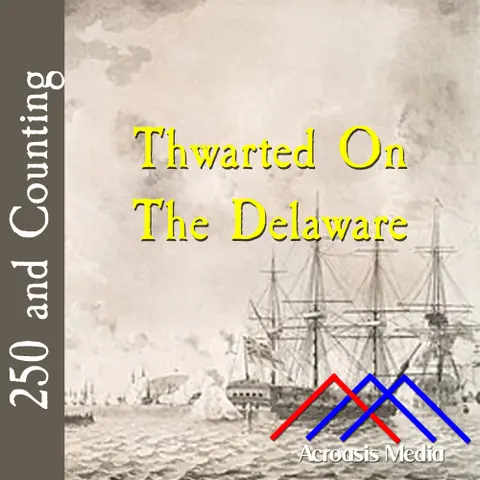
The HMS Roebuck was a ship that tangled with the Americans numerous times. One advantage that she had over other British ships was a relatively shallow draught (vertical distance between keel and waterline), which proved helpful when it came to navigating some of the shallower waters off the American coast. The HMS Roebuck had already had an encounter just south of today’s events back in March. She was also involved in the Battle of Long Island, which took place during the summer, in a battle o...
May 6, 2026
Abigail, On Power–May 7, 1776
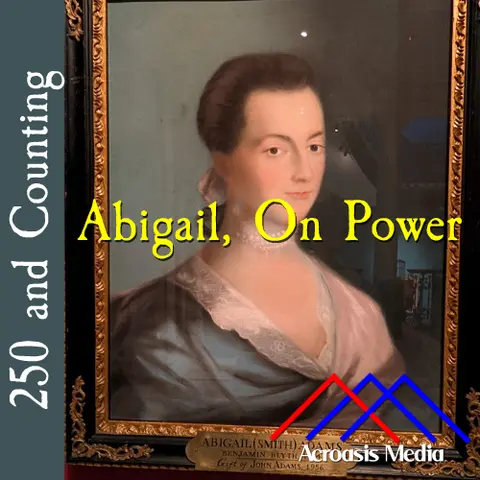
Abigail Adams had some thoughts when it came to arbitrary power, and how fragile it is. But you get all that from the episode itself. Instead, here in the show notes, I’m going to point out that I’m the one who took the photo used for today’s cover art. The painting hangs at the Massachusetts Historical Society, and because they keep it relatively dim there, you can see the reflection of the stairwell leading down to the main entrance. The white spot over Abigail’s head is the reflection of a ...
May 5, 2026
Two Men To The Carolinas–May, 1776
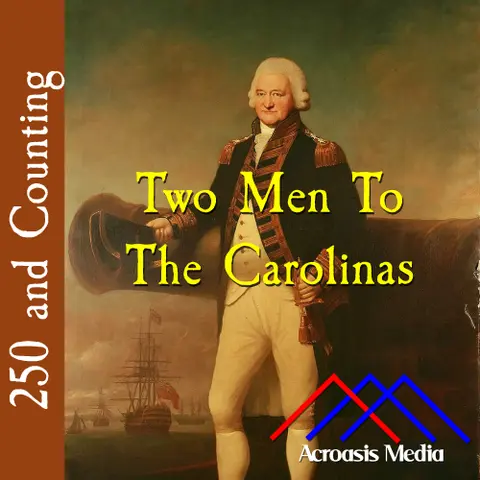
The advantage of having a large military force, as the British did, is that they were able to concentrate on multiple places at once with experienced soldiers. So while they had one group getting ready to move in on New York, they had others preparing to take on the southern states. Enter Sir Peter Parker and Lord George Cornwallis, who arrived in North Carolina on this day. Parker and Cornwallis’ mission was to take on the city of Charleston, in South Carolina. Why land in North Carolina? Thi...

May 4, 2026
Valentine Efner–May 5, 1776
Given the fact that Valentine Efner (sometimes spelled “Effner”) skipped so many roll call votes in Congress, it’s a wonder he ran for Representative in the first place. We have to think that Efner was an informal kind of representative, and being in the rarefied air of Congress had him missing the farm life, to which he returned immediately after his term of office had ended. PS Pardon the brief notes, we had a veterinary emergency here that ate up most of my night. Fortunately our dog is wel...