Episodes
May 3, 2026
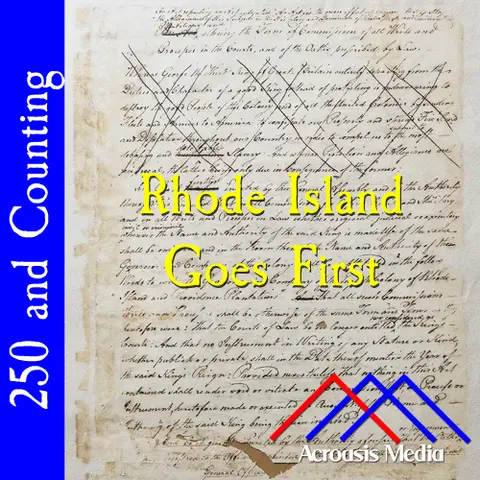
Rhode Island Goes First–May 4, 1776
May 4th is Rhode Island Independence Day, marking the date that one of our smallest states became the first of the Original Thirteen Colonies to declare its independence from Great Britain. Almost. Here—as the late, great Paul Harvey would say—is the rest of the story. All of the colonies were required to sign oaths of allegiance to King George III, or whoever was in charge at the time. On May 4, 1776, the Rhode Island Assembly passed the Act of Renunciation, which repealed that oath. They di...
May 2, 2026
Washington Cracks Down–May 3, 1776
George Washington was good at what he did because he’d studied military discipline, among other things. He read a lot about tactics and famous battles, and the importance of a well-trained army, and then he would meet with veterans and engage with them to learn what they thought. During the Seven Years’ War he asked to use some of those techniques with the men under his command. Sometimes, but by no means all the time, was he able to enact some of his ideas. So when Washington took over the Co...
May 1, 2026
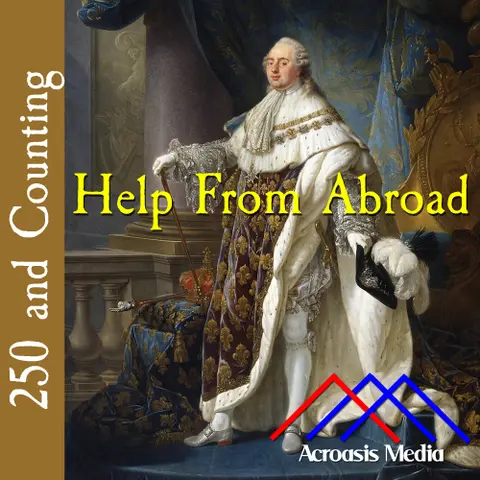
Help From Abroad–May 2, 1776
We’ve noted before that France had been helping the United Colonies for a little while, using gray markets and go-betweens in order to give themselves some plausible deniability. Britain and Spain were both a little salty about having been beaten by Britain in the past, so they were only too happy to have somebody else fighting them while they stood by and watched. And in the long run it didn’t cost them much to provide materials to the Colonies to help them get the job done. But while both nat...
April 30, 2026
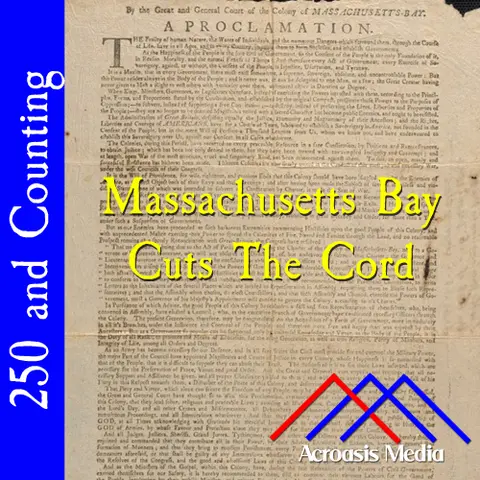
Massachusetts Bay Cuts The Cord–May 1, 1776
When it comes to breaking away from England, there are a lot of “Firsts” involved. Just a few weeks ago, delegates from North Carolina are the first in the Continental Congress to have the authority to vote for Independence–as long as someone else proposes it first. Today, Massachusetts Bay becomes the first to declare itself independent from Britain, largely for financial reasons. Their proclamation reads like a protocol manual, plus the fact that their new rules have a start date of June 1 m...
April 29, 2026
Samuel Adams Is Spoiling For A Fight–April 30, 1776
Reverend Samuel Cooper has an interesting item in his family history. His grandfather was Samuel Sewall, a judge in the Province of Massachusetts Bay who was involved with the Salem witch trials in 1692-3. Now, to be fair, Sewall did apologize for his part in that bit of foolishness, and he’s also known for writing an essay in 1700 criticizing slavery. As far as Cooper himself, he was an active Patriot of the Revolutionary Era, who was good friends with many of the Founding Fathers. According t...

April 28, 2026
The Road To Canada–April 29, 1776
It was called the Bayley Hazen Road, named after the two engineers who worked on it, and it was an attempt to make it easier for troops and equipment to get from New England to Canada. Prior attempts to move materiel were fraught with sickness and the need to navigate various forms of terrain, including waterways and deep mud, which made the journey so much longer that it wasn’t practical anymore. Bayley proposed creating a road that would not only make it easier to move things, it would cut t...

April 27, 2026
Recruiting In Georgia–April 28, 1776
Lachlan McIntosh was inadvertently responsible for a world record that stood for several years. In 1776 and 1777, McIntosh got into a bitter dispute with the Speaker of the Georgia Provincial Congress, a man named Button Gwinnett. It began when McIntosh succeeded Gwinnett as commander of Georgia’s Continental Battalion. Both men were Patriots but they were part of differing factions in the Independence movement. Gwinnett left the military and became a delegate to the Continental Congress, event...
April 26, 2026
Gates Moves Up Quickly–April 27, 1776
Horatio Gates did move up quickly through the ranks, and partially because he knew George Washington well, but it was also because he had a pretty good handle on getting things done. As an Adjutant General, Gates was the man who ran the administrative side of the Continental Army, and is now thought of as the US Army’s first Adjutant General. He handled a lot of the logistics of keeping records and ordering supplies, and offered Washington wise counsel when it came to the Siege of Boston. In th...
April 25, 2026
George Washington Has Concerns–April 26, 1776
Jonathan Trumbull was first and—for a while—the only Colonial Governor to support the American Revolution. (Most of the other colony leaders either didn’t hold that title, or remained quiet, as if hedging their bets.) Througout the Revolution, Trumbull supported the troops in general and George Washington in particular, and was often a close advisor to Washington on military matters. So it was a little bit of a surprise when Washington wrote to Trumbull, noting some of the problems he’d had wi...
April 24, 2026
Thomas Stone Writes Home–April 25, 1775
Thomas Stone was a delegate to the Second Continental Congress who served with strict instuctions to “arrive at a happy settlement and lasting amity” with the Mother Country. What’s more, he and his fellow delegates were told not to vote for any proposition that declared independence. Fortunately, just a few days before Richard Henry Lee put forth the resolution for Independence in early June 1776, the Maryland government removed that restriction, so the delegates could vote however they wanted...
April 23, 2026
New Kids In Town–April 24, 1776
It may seem as though a large number of men were suddenly being appointed as South Carolina delegates to the Continental Congress, but in fact they weren’t all new appointees. Some of them had already been delegates and were re-appointed. It’s also worth noting that while many of them were supporters of Colonial rights, they were also under instruction to oppose motions for independence. Specifically, when Richard Henry Lee’s motion comes down on June 7, Edward Rutledge specifically was told to...
April 22, 2026
South Carolina’s Small Declaration–April 23, 1776
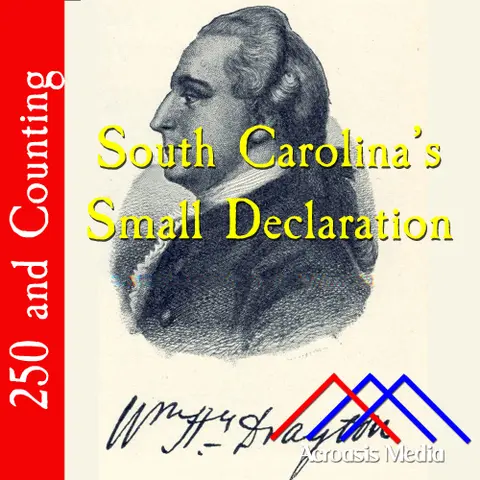
William Henry Drayton was born in 1742 on his family’s plantation just outside of Charleston. The plantation was dedicated to growing rice. In 1764 he married Dorothy Golightly. In the early 1770s he was a Loyalist and enjoyed some of the perks that came with it. Then in 1774 he wrote a pamphlet supporting a Continental Congress and lost all his government jobs. That, go figure, radicalized him to the Patriot cause and he dedicated the rest of his life to it. William Henry Drayton died in Berk...
April 21, 2026
Reorganizing in North Carolina–April 22, 1776
North Carolina’s Orange County Regiment went through a lot of change in a very short amount of time. First they were divided, then reabsorbed into a different group, all in the span of about two weeks. Fortunately things stablilized for them then, but the resulting Hillsborough District Brigade of militia saw a lot of action over the next several years in the Carolinas and in Georgia. By the time the war ended, Hillsborough was one of the few groups still standing. But chances are, if there was...
April 20, 2026
Letters From New England–April 21, 1776
When Henry Knox wrote to George Washington apologizing for getting to Noweich,Connecicut so late, he had a pretty good excuse: he spent a bunch of money on hiring people to move materials down; and those people had trouble getting the job done. But then Henry Knox also tells the story of leaving the caravan briefly to look at Newport RI and determine whether it’s defensible. Imagine how he felt when, after he spent two days figuring out the five best places to stand when defending Newport, he h...
April 19, 2026
Once More To Canada–April 20, 1776
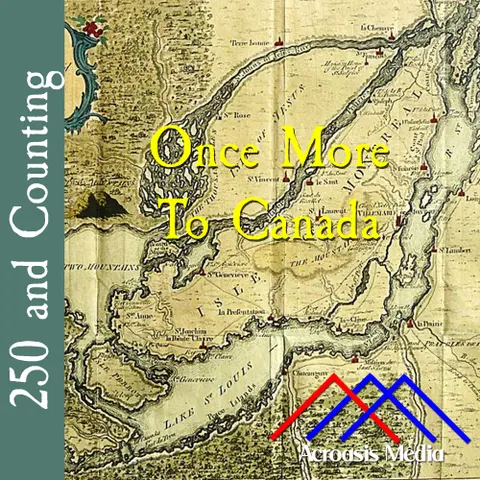
If nothing else, the tenacity of the Continental Congress has to be admired, because sending a delegation to Canada, especially after the recent New Year’s Eve disaster in Quebec, and then the “who knows how well it went” trip in March, was a sign of either eternal optimism or an inability to get the hint. It was probably a little of Column A and a little of Column B. At any rate, Ben Franklin, Samuel Chase and Charles Carroll headed up to Montrèal to see if relations with Canada could be smoo...
April 18, 2026
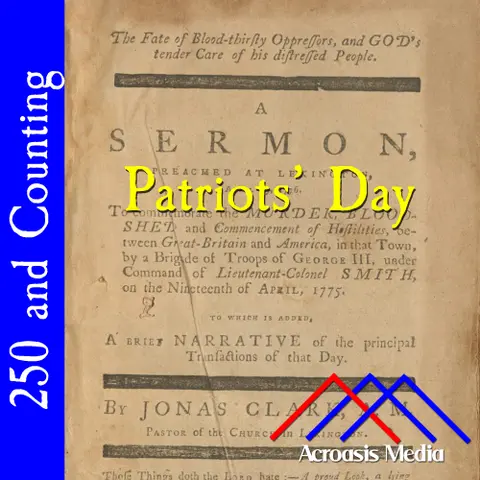
Patriots’ Day–April 19, 1776
It seems like only a year ago we were marking the date the war began at Lexington and Concord, and how it became Patriots’ Day. So we’re here once again: the battle ended with the British retreating into the city of Boston, and holding siege there for the better part of a year, until Washington was given several cannons brought down from Fort Ticonderoga, which vastly improved his shooting range. A year later, Reverend Jonas Clark marked the day with a sermon that is nearly 40 pages long in it...
April 17, 2026
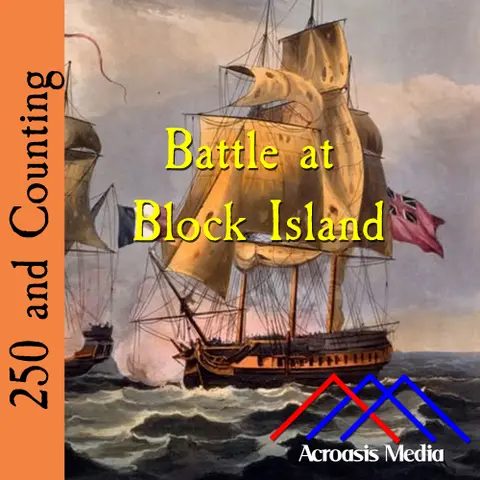
Battle at Block Island–April 18, 1776
When you have seven ships and you encounter a single ship belonging to the enemy, the Battle of Block Island teaches us that it’s still possible to be overconfident. Some people tried to frame the Battle of Block Island as a draw, but those people really weren’t paying attention. The HMS Glasgow took some damage, but far more damage was done to the ships that engaged her: The Cabot had its steering disabled and mostly just got in the way, the Alfred lost its tiller as well and also served as an...
April 16, 2026
Washington Writes A Protest Letter–April 17, 1776
One of the things I really appreciate about reading documents from this era is just how polite they were; George Washington’s letter to the NY Committee of Safety, when you read between the lines is an admonition wondering if that august body had lost their damn minds. One of the best examples of this is the Declaration of Independence itself. As Aaron Sorkin describes it in an episode of The West Wing: [N]ever has a war been so courteously declared. It was on parchment with calligraphy, and “...
April 15, 2026
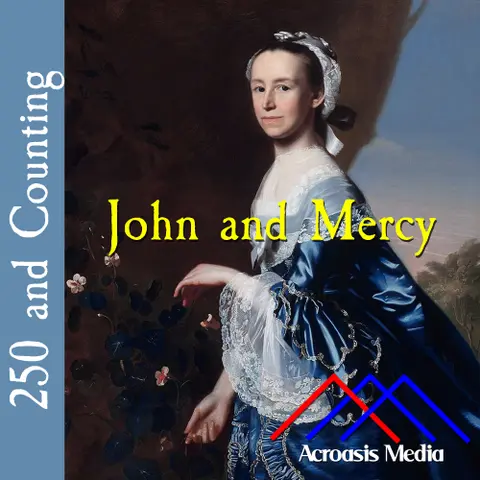
John and Mercy–April 16, 1776
Mercy Otis Warren doesn’t get nearly enough love in our history books, and barely enough of it here, besides. Having said that, our episode a little over a year ago was a fun little tribute. Mercy Otis Warren was a playwright, a pamphleteer and a poet before, during and after the Revolution. Some of her plays were thinly veiled attacks on the British. She was self-taught and pretty brilliant at it, considering that she was one of the first to advocate for a Bill of Rights (though nobody knew sh...
April 14, 2026
The Fourth NC Regiment–April 15, 1776
The Fourth North Carolina Regiment got into some interesting battles, but in retrospect it feels as though they didn’t get a ton of love from the Army in general. (My delaying the show notes probably doesn’t do anything for their ego either, but I was so tired that I was practically hallucinating. But I didn’t want to delay the episode drop, and I didn’t want to do meaningless show notes. And I do thank you for your patience.) Not long after they organized, they were moved to the Northern Depa...
April 13, 2026
John Adams’ Rebuttal–April 14, 1776
When Abigail Adams wrote her “remember the ladies” letter on March 31, she wasn’t just filling the page with anything that came into her head. Abigail Adams was quite intelligent and John treated her as an intellectual equal, seeking out her counsel on many matters. This in an era in which such things are rare. (And shame on us for giving it short shrift.) This also means that John’s reply, which Mike talks about today, was in earnest, if it was a little naïve in retrospect. Mike also mentions...
April 12, 2026
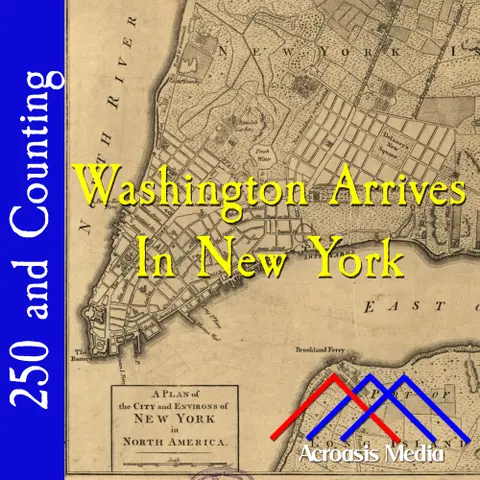
Washington Arrives In New York–April 13, 1776
When George Washington arrives in New York, things aren’t quite the way he’d like them to be, but he doesn’t really have time to worry about that. Construction of Fort Defiance had already begun, and before long the building of Fort Stirling would commence. Even though they were outmanned and outgunned, Washington was going to make sure that if a British victory were to happen in New York, it was going to be a Pyrrhic victory. About Fort Stirling: like Fort Defiance, nothing remains of the ori...
April 11, 2026
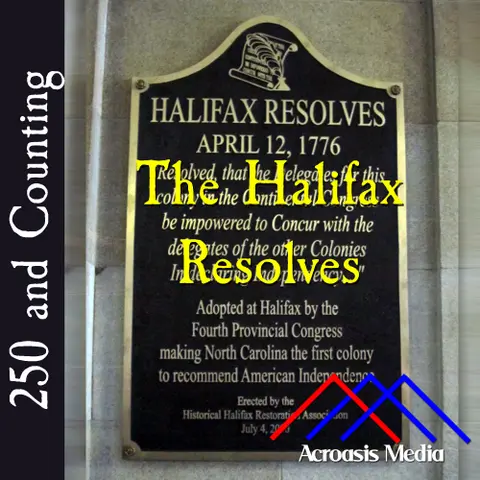
The Halifax Resolves–April 12, 1776
The Halifax Resolves was the first official action in which Independence from Great Britain was actually called for and approved. I have to admit that in earlier years, when driving up and down Interstate 95, when I got to Halifax County in North Carolina, I’d see a sign saying that this county is “Where the Spirit of Independence Was Born.” And this didn’t make a lot of sense to me: Most of the action early on was in Boston. Philadelphia is where the Declaration was written and signed. Richar...
April 10, 2026
Notes From All Over–April 11, 1776
While there were a lot of smaller things going on on this day in 1776, there are typically multiple things going on for any given day. We often have to make choices regarding what we’re going to concentrate on, and don’t think we don’t feel a twinge of regret when we spot something else that happened on thus-and-such a date and had a moment of “Man, I wish we’d done that one.” So today we were fortunate in that there were several smaller items going on, but we didn’t have to use up a lot of aud...