Episodes

June 20, 2026
Board of War and Ordnance–June 21, 1776
We’ve spent a bunch of episodes describing a day in the life of the Second Continental Congress, and many of them were almost exclusively dealing with military matters. In January 1776 George Washington recommended that the Congress designate a specific office for these dealings, and Edward Rutledge picked up the idea and suggested it to the Congress. It took a little time, but the Congress ultimately agreed and set up a Board of War and Ordnance, which began operating on this day in 1776. The...
June 19, 2026
Natick Makes It Official–June 20, 1776
Please forgive Mike’s pronunciation of “Natick”; he’s a Left Coast guy. And, he took his wife to Hawai’i this week. I never did that for my wife, though I did buy her a beach condo, so I guess we’re even. Plus, if I’m butchering any West Coast pronunciations, he’s keeping quiet about it. For the most part we’ve both got the language so baked into our heads that it never occurs to us that the other one might not know how to say things. And let’s face it, a lot of place names don’t always make se...
June 18, 2026
Francis Johnson–June 19, 1776
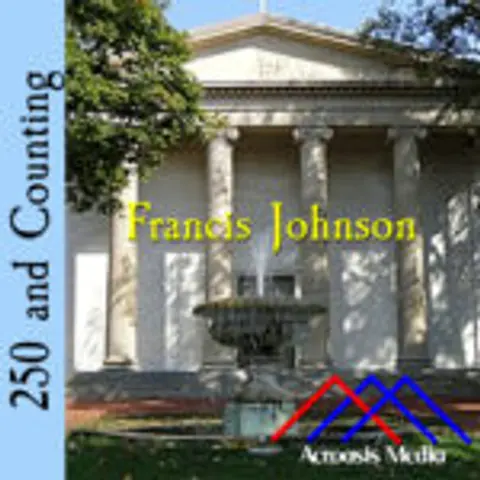
Let’s start with the truth: Francis Johnson was not in office when the building in today’s cover art opened. This is the Old State Capitol in Frankfort, Kentucky, which opened in 1827, just after he left the US Congress. But while this is the Old State Capitol, there are two buildings even older which were used; unfortunately both of them burned down, hence this stone edifice, one presumes. You kind of have to feel badly in the long run when stuff like this happens. It feels a little bit like ...
June 17, 2026
The First Draft–June 18, 1776
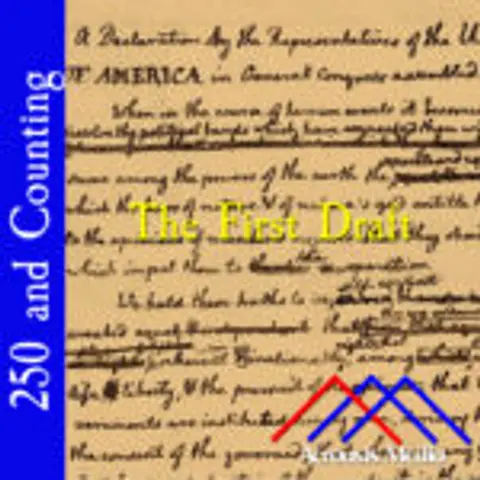
As Mike notes, marking today as the day that the first draft of the Declaration of Independence was presented to Congress is largely a matter of interpoloation on the part of historians working from incomplete information. But who are we to argue? The writing you see in today’s cover art is, in fact, Thomas Jefferson’s, mostly. Some of it is corrections made by Benjamin Franklin. It’s also worth noting that this image came from Wikimedia Commons and is color-adjusted. The original image has the...
June 16, 2026
The San Francisco Journey–June 17, 1776
Joseph Joachin Moraga along with a party of colonists and soldiers first set forth from Monterey to the future site of San Francisco, along with supplies for beginning a new community. He supervised the selection of a location for the presidio (fortress), then managed its construction and provided leadership. He also ensured that a ramada—a roof ssupported by poles—was built, which eventually became Mission Dolores. For all his work, Joseph Joachin Moraga is considered the founder of San Franc...
June 15, 2026
A Test In Rhode Island–June 16, 1776
Loyalty oaths are a peculiar thing. They ask a person to commit in writing a thing they may–or may not–have done already. Look, if you’re an undercover spy staring at children from across the street, you’re already raising more questions than answers. But if—IF—you’re an undercover spy and you want to lay low, for goodness’ sake, find a plausible lie and stick to it. You don’t go off sacrificing yourself to the Greater Cause. The post A Test In Rhode Island–June 16, 1776 appeared first on 250 ...
June 14, 2026
Delaware, The First State–June 15, 1776
Separation Day is a genuine holiday in Delaware, during which the day is marked with parades and historical reenactments, though of course they (like the rest of the world) took a couple of years off because we had that little global pandemic thing. And like most good niche holidays, there’s a small faction of people who call themselves “Unificationists,” most of whom can trace their roots back to the Finns, Swedes and Quakers who settled in the region before 1776. Their message is that Delawar...
June 13, 2026
Connecticut Goes Fourth–June 14, 1776
It’s not a misspelling; it’s a pun—oh, forget it. Connecticut had already been fighting the war for independence since Bunker Hill, but that’s not the same thing as separating politically from Great Britain. In retrospect, we made it look relatively easy, but once again, remember: something like this hadn’t been done before, and sending instructions to their delegates to vote in favor of Independence was literally directing them to commit an act of treason. So let’s give the individual colonies...

June 12, 2026
Elizabeth Scott–June 13, 1776
The life of Elizabeth Scott is an open book and is still quite mysterious. It’s not 100% clear when she was born, other than it was “probably” in 1708. Her personal life isn’t very well known, and her work as a hymnist is still a matter of speculation, since so many of her pieces didn’t have her name on them, for some reason. It’s only been through careful analysis of known pieces that we’ve been able to put her name to the unknown pieces. Many of her known works are in the hands of Yale Colleg...
June 11, 2026
The Virginia Declaration of Rights–June 12, 1776
While the Virginia Declaration of Rights wasn’t adopted until today, and Thomas Jefferson only got started on writing the Declaration of Independence yesterday, it’s known that the Virginia document was one of the few references that Jefferson had with him when he first began writing. The other one we know about for sure is the draft of the Virginia Constitution, which Jefferson himself had written. The Virginia Declaration of Rights not only served as a big chunk of Jefferson’s inspiration fo...

June 10, 2026
The Declaration Begins–June 11, 1776
After temporarily tabling the Lee Resolution, which called for our independence from Great Britain, the Second Continental Congress identified its Declaration Committee. Five men were chosen to articulate why we were asking King George to go screw himself in the politest possible terms. While the Committee involved five men—John Adams, Benjamin Franklin, Thomas Jefferson, Roger Sherman and Robert Livingston—most of the work fell to three of them: Jefferson, Adams and Franklin. Jefferson spent a...

June 9, 2026
Who Wants To Write A Declaration?–June 10, 1776
With the Lee Resolution on hold for the time being, but still a very real thing, the Continental Congress needed to get organized with regard to how this was going to be presented and effected. As we told you a few days ago, some delegates needed hard instructions. Others needed a little more clarity regarding the structure. Still others determined that a formal declaration was necessary. Why? You have to remember, this kind of thing had never been done before. And even though some other nation...
June 8, 2026
News From All Over–June 9, 1776
It was a busy day for corresponding with George Washington on this day, as three letters to Washington were sent. Each one had a bit of information that was negative at its worst and neutral at its best. But these letters were a bit of a problem, in that information took so long to get from one place to another: by the time Washington received warning that British troops were enroute, they were thisclose to actually being there. On the other hand, both sides are equally disadvantaged by the ti...
June 7, 2026
Finally Bailing Out Of Canada–June 8, 1776
As a nation, we should be able to face our failures as squarely as we crow our triumphs, and make no mistake: the invasion of, and withdrawal from Canada was a botched effort from one end to the other. Perhaps the only thing that kept it from being a bigger deal was the distraction a few weeks later of the Colonies delcaring themselves to be states independent from Great Britain. We barely had an army that had any idea of how to provision its forces, yet we sent a bunch of them to the north an...
June 6, 2026
The Question is Called–June 7, 1776
It was one of the last major steps before the Declaration, and it happened on this day. The Lee Resolution, as it came to be known, was named after Richard Henry Lee, delegate from Virginia, who was given instructions from his government to propose that the Colonies become designated as free and independent states. Now, because some of the delegates didn’t have specific instructions on the Lee Resolution, and because Congress had long ago decided that votes needed to be unanimous, the vote was ...
June 5, 2026
William Reed–June 6, 1776
Mike is having a big day today (that is, his son is having a big day), so apologies for the delay in getting today’s episode to you, and thanks for your patience. William Reed was from Marblehead, Massachusetts, and while Mike has said about all there is to say, I thought I’d talk about Marblehead a little bit. I had an aunt who lived there when I was a small child (under 10 or so). I don’t know when she moved there, but when I visited she’d already picked up a strong local accent (pahk the ca...

June 4, 2026
Congress Does Some War Business–June 5, 1776
Using the input of George Washington from just a few days earlier, the Second Continental Congress wasted little time putting together some Continental Army protocols to ensure that this relatively ragtag group of men would adhere to some kind of formalized behavior. But the Continental Army protocols they worked on also helped to establish better pay for some personnel, or set up protocol ranks for some otherwise non-officer personnel. And, of course, getting everyone paid was important so th...

June 3, 2026
Isaac Van Houten–June 4, 1776
The Rockland County area of New York State is some lovely country. It’s just north of New York City and, along with adjacent Duchess and Westchester Counties, could be considered the heart of the area where the Dutch settlers came and stayed. As a result you’ll find many place names that have Dutch origins. This is why so many places in the downstate New York area (the triangle above NYC) end in “-kill”, because “kill” is dutch for “creek.” Thus, “Fishkill” means “fish creek”. At any rate, whi...
June 2, 2026
Congressional Mail–June 3, 1776
Josiah Bartlett was, in fact, the inspiration for the presidential character who appears in the TV show The West Wing. The modern day president, Jed Bartlet only spelled his name with a single T at the end, but it was only around this time that the spelling of English words was starting to standardize, so Bartlett gets a pass. Bartlett, of course, was involved in the creation of the state constitution, and while he declined the position of US Senator in 1789 despite the vote, he accepted the po...
June 1, 2026
RIP John Thomas–June 2, 1776
John Thomas was a doctor and a soldier from Massachusetts who was in Quebec during the attempted invasion and was in charge of the withdrawal until he got smallpox and died on this day in 1776. Thomas discovered he liked military service about as much as he liked being a surgeon, so in 1747 he became a lieutenant in the British army. A few years later he served as a surgeon for a different regiment. In the early days of the Revolution, Thomas nearly quit the Continental Army because he wasn’t ...

May 31, 2026
George Schetky–June 1, 1776
George Schetky came from a very musical family. As we mention in the episode, his father was also a cellist and composer who was originally from Vienna. As a result his home always had plenty of music present and was a regular hub of performances. In fact, one could say that the Schetky family was a musical dynasty, between George, his father, his uncle on his mother’s side (Alexander Reinagle) amd others. Thus, he was a virtuoso on the cello before he ever set foot in America. George came to ...
May 30, 2026
José Antonio de la Garza–May 31, 1776
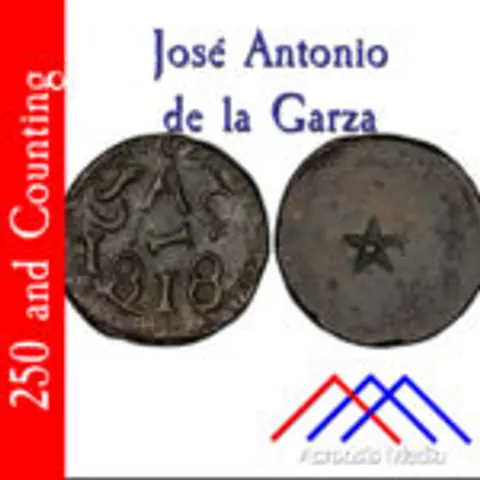
José Antonio de la Garza was born in what we now call San Antonio. They may have called it that back then as well, but the area was called San Antonio de Béjar at the time, and was a mission around which the eventual city grew. Texas was still a territory belonging to Mexico (i.e., Spain), and in the early 1700s the popular thought was that building these missions would strengthen Spain’s claims to the territory. That…sort of worked for awhile, until disputed territories were locked into treati...
May 29, 2026
Back From Canada–May 30, 1776
Ben Franklin in Canada isn’t completely unreasonable, even though he was already the oldest delegate to the Continental Congress at 70. He was America’s first diplomat and a very skilled one at that, with oodles of charm. But Franklin in Canada was also a bad idea, because his health was bad and it’s not like he could just shoot up the New York Thruway to get there. He had to head up the Hudson River through Albany and Saratoga, and then across Lake Champlain. And he had to do it in wartime, in...
May 28, 2026
The Address That Didn’t Happen–May 29, 1776
While the Second Continental Congress always had a lot going on, not creating “an animated address” to make the Independence movement appearent to everyone seems like an odd failure. But sure enough, when it was recommended that such an address be created, this specific committee came up with nothing. Other committees appear to have presented addresses without problems, and many delegates worked on multiple committees, so was this an oversight? Was it overwork? Or perhaps the need to actually w...