Episodes

April 10, 2026
A Fort Grows in Brooklyn–April 10, 1776
The construction of Fort Defiance in the Red Hook section of Brooklyn made perfect sense. That part of the peninsula sticks out into New York Harbor and provides an excellent view of anything that might be sailing in or out. Red Hook comes from the Dutch Roode Hoek, “hoek” translating to “point”, which can still be seen in modern-day maps. The whole area, what we now call Red Hook and Gowanus, was settled by the Dutch in the 1630s. Red Hook was some swampy land when the Dutch moved in. But the...

April 8, 2026
Letter to Virginia–April 9, 1776
We need your love! Don’t forget to share this show with your friends. Likewise, share it with your enemies; maybe they’ll become your friends as a result. The Lees were a very prominent family in Virginia, connected to most major events in that era of American History. So it makes sense that Francis Lightfoot Lee sees American Independence on the horizon, and that it was Richard Henry Lee who first put the question (or, as the Founding Fathers wrote it, “The Question”) before Congress. Inciden...
April 7, 2026
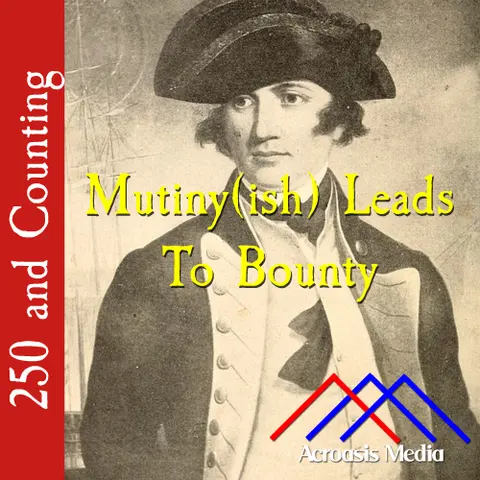
Mutiny(ish) Leads To Bounty–April 8, 1776
Esek Hopkins wasn’t just the Commander In Chief of the Continental Navy; he was the only Commander In Chief of the Continental Navy. As we noted just a day ago, the navy was disbanded shortly after the war (sold off, you may recall) until a few years later, when the US Congress decided we needed a US Navy and we had to start all over again. In the 1760s he was a merchant who once took on a slave ship. Unfortunately he didn’t really know what he was doing, and more than half the slaves died enro...
April 6, 2026
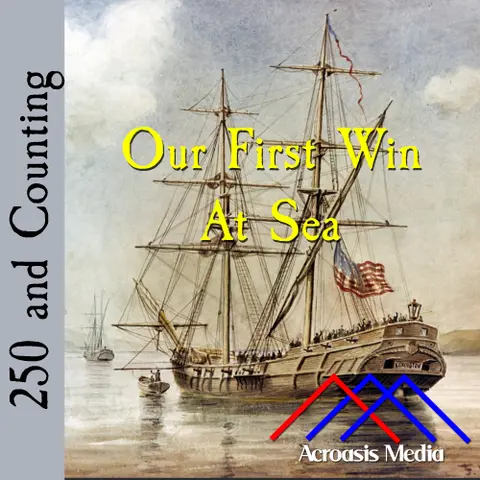
Our First Win At Sea–April 7, 1776
Captain John Barry was commanding the Lexington, looking for Lord Dunmore’s fleet when they more or less stumbled on the HMS Edward off the coast of the Virginia Capes. By most accounts the battle went on for two hours and included the Edward trying to lure the Lexington into the capes, though it’s not clear why. Possibly there was some help there in the form of other ships or land-based guns. And possibly because being in the capes meant that geographically, the Lexington wouldn’t have as much...

April 5, 2026
Brits: Keep Out!–April 6, 1776
We’ve mentioned a few times that boycotts and import restrictions didn’t have a huge impact on the British economy. After all, the British Empire was huge and America just didn’t have the financial clout to make such things hurt. The real issue, many Britons thought, was that America had the impudence to act at all. How dare these mere colonists think that they can behave in such a dreadful manner, what with the wasting of the tea and circumventing our governors? Stuff like that, you know? And...
April 4, 2026
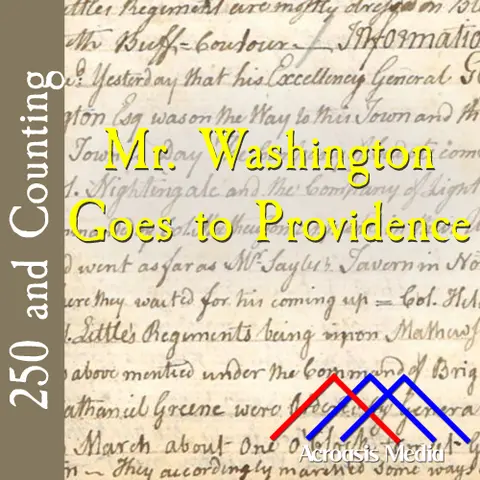
Mr. Washington Goes to Providence–April 5, 1776
The war was less than a year old, but heroes were already beginning to emerge, as we learn from contemporary writings. The arrival of George Washington in Providence, RI, was considered a big event each time he came through. In fact, it was such a big deal that the website for Stephen Hopkins’ house in Providence notes that “George Washington was a guest here. Twice.” I suppose they could have hung up two “George Washington Slept Here” signs but nobody would get it. Then again, “George Washing...

April 3, 2026
Washington Departs Cambridge–April 4, 1776
To say the Washington left the Longfellow House is putting the cart before the horse, because Washington was in it before Longfellow. The house originally belonged to John Vassall Jr, a Loyalist who had the good sense to get out of town when the shooting started. From July 16, 1775 until this day in 1776, Washington occupied it as his home and his headquarters. In 1791 Washington’s apothecary Andrew Craigie purchased the house and made a major addition to it, the only big cosmetic change to the...
April 2, 2026
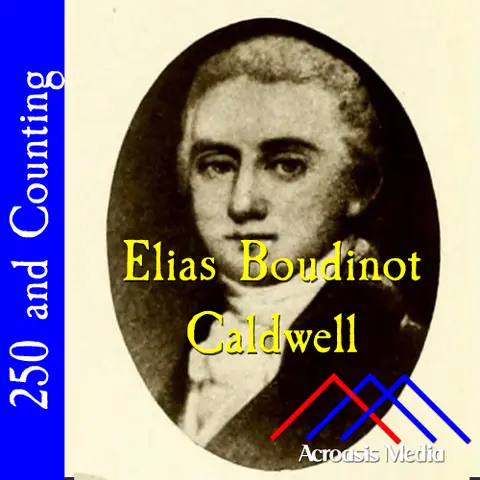
Elias Boudinot Caldwell–April 3, 1776
I mentioned briefly that Elias Boudinot Caldwell was a member of the Society for the Colonization of Free People of Color of America (to the extent that anyone can say that briefly), and I though I’d get a little deeper into that organization here. The group was founded in 1816 by Robert Finley, along with Caldwell and Francis Scott Key, to encourage and support the repatriation of freeborn people of color and emancipated slaves to sub-Saharan Africa. Their feeling was that free people of color...
April 1, 2026
Thanks, George–April 2, 1776
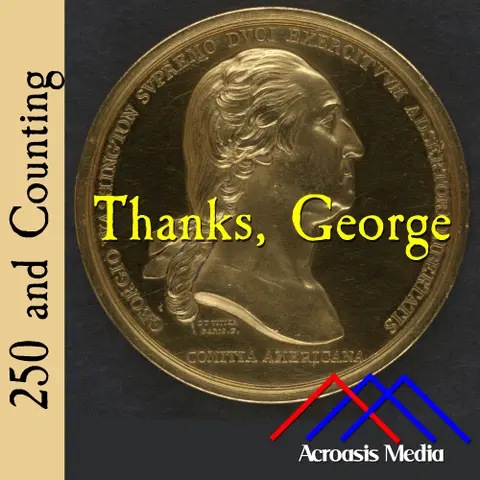
Just a few days ago, Congress passed a resolution that George Washington should be thanked for his efforts in Boston, and that a Congressional Medal should be issued to him. Specifically, the resolution read: Resolved, That the thanks of this Congress, in their own name, and in the name of the thirteen United Colonies, whom they represent, be presented to His Excellency General Washington, and the officers and soldiers under his command, for their wise and spirited conduct in the siege and acq...
March 31, 2026
Gang Greene–April 1, 1776
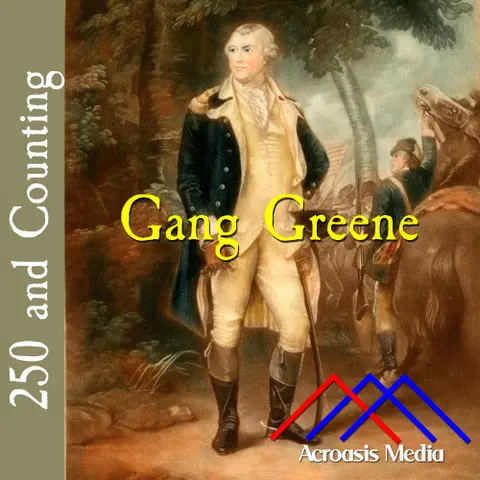
re: the title, I regret nothing. Nathanael Greene (you’ll also see it alteratively spelled as “Nathaniel”) was one of Washington’s trusted generals, largely because he had a keen mind for military tactics, but also because he had high expectations for his soldiers. In addition to drilling them regularly, he also insisted that they keep as clean as possible, including things like maintaining a clean-shaven face. Card-playing and swearing were also prohibited. As a result, his men stood out amo...
March 30, 2026
Farewell, Mother Jefferson–March 31, 1776
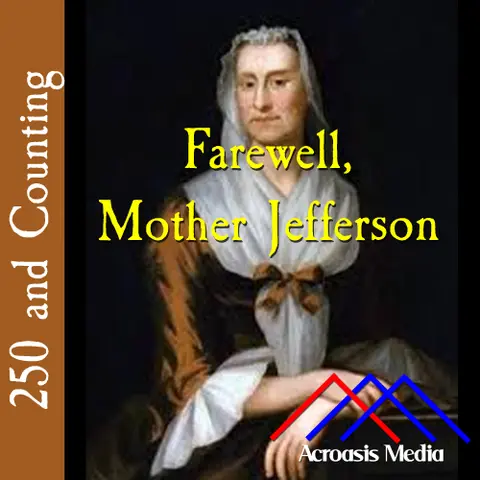
In discussing the life of Jane Randolph Jefferson, I mentioned during the episode that Thomas Jefferson rarely discussed her. This is not, however, to suggest that he lacked affection for her, or that he was somehow ashamed of her. There are family remembrances and contemporary biographies that show that Jane was a revered family member. It’s also worth noting that Thomas Jefferson, unlike Benjamin Franklin, was not in the habit of retaining correspondence, even with people important to him. J...
March 29, 2026
Death Of A Belcher–March 30, 1776
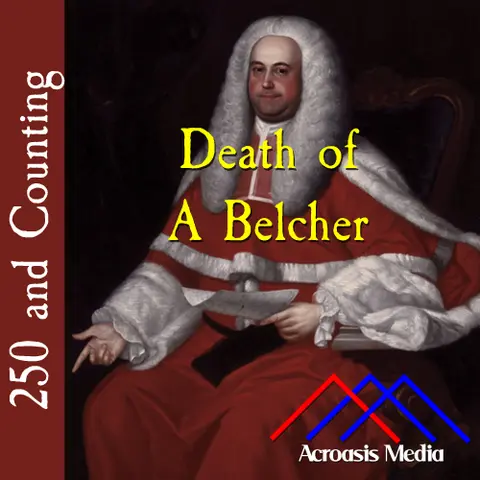
Jurist Jonathan Belcher was born in Boston. He was the second son of Jonathan Belcher and Mary Partridge, Belcher entered Harvard College, where in 1728 he received a Bachelor of Arts degree in Divinity Studies. In 1730 he entered the Middle Temple, London, to read law, and in 1734 was called to the English bar. In the meantime he had been admitted as a fellow-commoner to Trinity College, Cambridge, where in 1733 he received another master’s degree, this time in mathematics. He later received ...

March 28, 2026
From One Postal Official To Another–March 29, 1776
While we’re focusing on one letter written by Benjamin Franklin today, written to Anthony Todd, it’s rather impressive the sheer number and breadth of letters written by, or to, Franklin during his lifetime as a statesman. There is a collaborative effort going on between Yale University and the American Philospohical Society, among others, to search, collect and publish the various works of Benjamin Franklin. So far over forty volumes have been published since 1959, and the scholars involved ar...

March 27, 2026
He Built This City–March 28, 1776
Juan Bautista de Anza is considered one of the founding fathers of Spanish California. He was born in 1736 in New Spain (what we now call Sonora, Mexico) into a family of military leaders. Most of his military actions involved taking on Native Americans while he explored what is now known as Arizona. Near the end of the 1760s Spain began to colonize Alta California, which was basically anything not considered Baja California. They took a two-pronged approach; one expedition ran up the coast at...

March 26, 2026
A New Home For The Royal Navy–March 27, 1776
The image in today’s cover art is an engraving of Citadel Hill, around 1780. Citadel Hill is a very popular historic site in Halifax, and while four forts have been built on this site, none of them have ever had to withstand a direct attack. In a couple of instances, structures near the Citadel were attacked, but never the building itself. It’s possible that the forts that were erected on the site served as deterrents. The first Citadel was built in 1749. Fortifications were constructed on thi...
March 25, 2026
A Death In Rhode Island–March 26, 1776
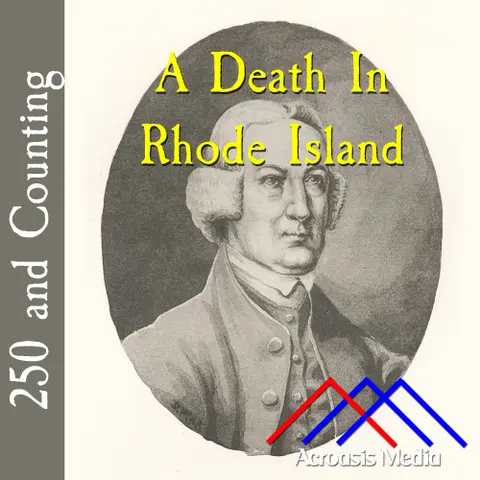
Samuel Ward Sr. was a farmer and a politician, the governor of the Colony of Rhode Island and Providence Plantations, and a Justice of that colony’s Supreme Court. As a younger man, Ward believed in governments issuing hard money rather than paper, often battling with Stephen Hopkins over this issue. Because of this specific topic, the two men became bitter rivals and for several terms they alternated being governor of Rhode Island. His final term as governor ended in 1767, at which he left po...
March 24, 2026
Raid On Tybee Island–March 25, 1776
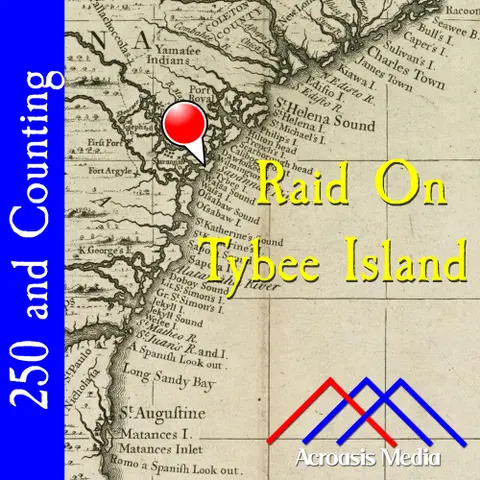
The raid on Tybee Island wasn’t the only one of its kind; in fact a similar action had been taken at Sullivan’s Island in South Carolina a few weeks earlier. In that case there were many more runaway slaves involved, but like Tybee, very few were actually captured and the fate of most of the others is unknown, although there is one account that says fifty people had resisted capture and were subesquently killed. But in both cases we see a raid that took place specifically to deny people their ...

March 23, 2026
Letters From The General–March 24, 1776
Mike had a little fun busting on George Washington’s spelling in today’s episode, but we do have to offer a little grace here, because in 1776 efforts to standardize spelling in the English language were only just beginning to catch on. About a hundred years earlier, some of the language was simplified; thus, sinne became sin; logique became logic; toune to town, etc. Not long afterward, some words were tied to their Greek or Latin roots, e.g. det became debt (Latin, “debitum”) and dout became ...
March 22, 2026
Here Come The Privateers–March 23, 1776
When you first hear the word “Privateers” and its definition, your mind probably goes to your basic concept of a pirate: someone who attacks a ship and plunders its hold for anything valuable. And you wouldn’t be entirely wrong, but there’s still a difference. A privateer is essentially a pirate who’s working on the right side of the law. Privateers are given commissions through a document called a Letter of Marque, which authorizes a vessel to engage with any ship they consider unfriendly. Thi...

March 21, 2026
William Tryon Isn’t Popular–March 22, 1776
To be perfectly clear, William Tryon was never popular on this side of the pond. When he was appointed Lieutenant Governor in North Carolina in 1764, he wasn’t able to move into the usual housing for a man of that title because the previous inhabitant refused to move out. When the Stamp Act was enacted in 1765, there was a great deal of opposition in North Carolina, so he refused to allow meetings of the Assembly in order to prevent them from voting for a resolution formally opposing it. When...
March 20, 2026
John Frederick Frelinghuysen–March 21, 1776
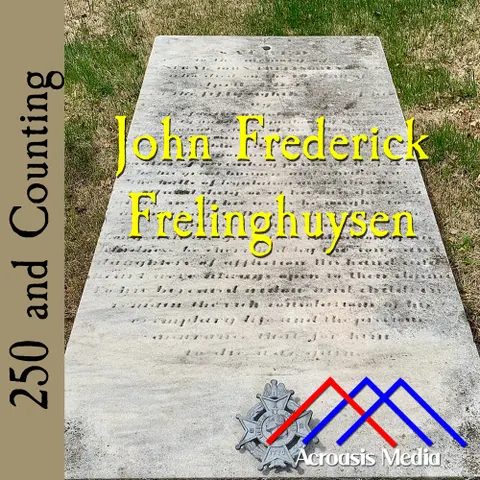
John Frelinghuysen was born on this day in 1776 (hey! Cake and Candles for this man!) and died in 1833. Like many people of the time, he never permanently left the area where he was born. Born there, lived and worked there, died there. He probably went to Trenton on business a few times, and he was stationed at Sandy Hook while in the Army, but that appears to be about all as far as travel. John Frelinghuysen married Louisa Mercer in 1797, and they had two daughters: Gertrude and Mary Ann. Lou...
March 19, 2026
Meet The New Boss–March 20, 1776
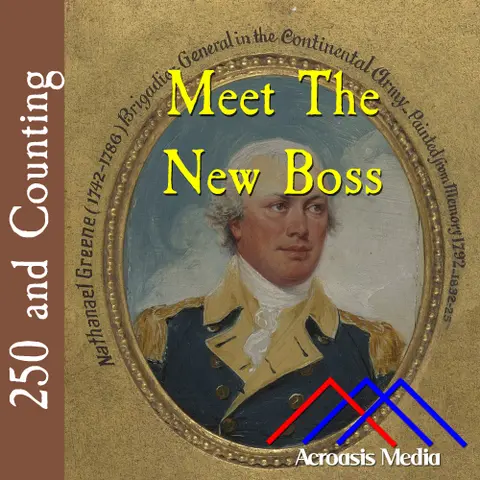
While preparing to depart Boston for New York, George Washington appointed Nathaniel Greene to run things for awhile until everything was back in order. Fortunately for both Greene and Washington, matters straightened out rather quickly, because Greene was called to join Washington just a few weeks later. Nathaniel Greene was tasked with fortifying Brooklyn while Washington prepared to defend Manhattan. As a military leader, Greene had a bit of a mixed record, but more often than not it appear...

March 18, 2026
Philemon Beecher–March 19, 1776
Philemon Beecher is an unusual name (said the guy named Claude Call, sigh), but that’s on us for not recognizing it as a name from the Bible. Philemon was a man to whom the apostle Paul wrote while in prison. He was in prison more than once, but it’s not entirely clear which stretch Paul was doing when he wrote it. Philemon was a leader in the Colossian Church, and Paul’s letter—one of a very few that scholars generally agree was actually written by Paul—touches on themes of reconciliation, for...
March 17, 2026
Reviewing Boston–March 18, 1776
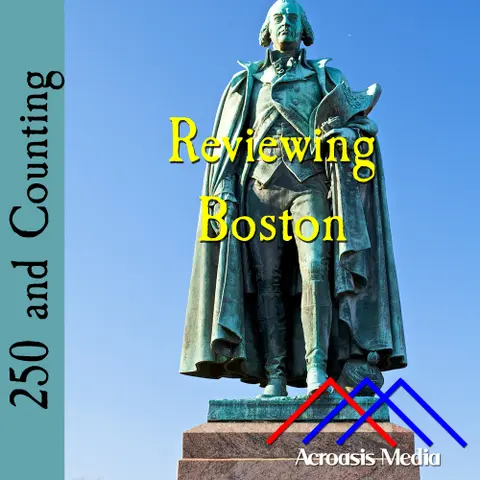
In the aftermath of the siege of Boston, it was incumbent upon George Washington and his men to re-enter the city and take stock of its condition. Mike brings up Artemas Ward in today’s episode, and I’m pretty sure that was the first time his name has come up in the course of this podcast. Ward was a major general during the Revolutionary War, among others, and an effective political leader when he wasn’t being a soldier. It was Ward who sounded the alarm on Bunker Hill, and who took command of...