Episodes
Feb. 21, 2026
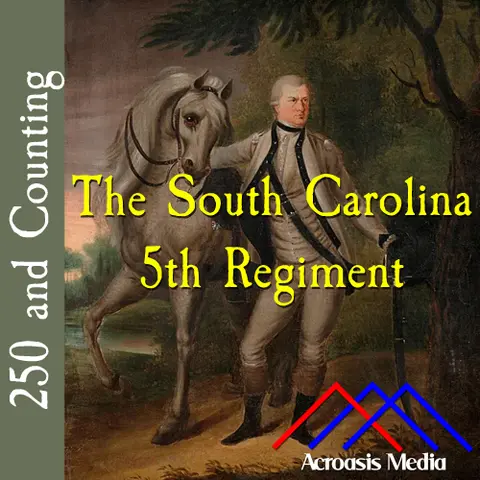
The South Carolina 5th Regiment–February 22, 1776
The South Carolina 5th Regiment ultimately wasn’t a huge success, with a single exception, which we’ll talk about in greater detail in a few months. But in those losses there were some long odds going on, so we’ll not judge too harshly. I learned a couple of things as a result of today’s episode. I own a piece of property in South Carolina, in the Myrtle Beach area, which is located in Horry County. I always wondered how it got that name, and now I’ve learned that Horry County was named after P...
Feb. 20, 2026
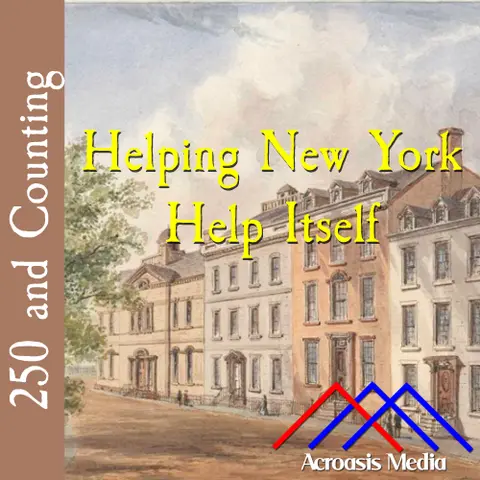
Helping New York Help Itself–February 21, 1776
There’s a line in the play 1776 about how everyone in the New York Legislature is very loud and talks very fast and as a result nothing ever gets done. This was likely a side effect of the fact that New York was so politically mixed at the time. Everyone hollering at rather than talking to each other means that nobody is truly connecting with anyone else. Thank goodness we’ve moved past THAT! <eyeroll> But New York and the Hudson Valley in particular held great strategic value for the various p...

Feb. 19, 2026
From Connecticut To Georgia–February 20, 1776
Oliver Wolcott was one of our Founding Fathers in that he was one of the men who signed the Declaration of Independence, but while he never achieved prominence on the level of Franklin or Adams, he nevertheless served an important role as a member of the Second Continental Congress. As the Revolution began, Wolcott was made a commissioner of Indian affairs, largely to work on ensuring that the northern tribes remained neutral. He was considered qualified for that position because he worked in t...
Feb. 18, 2026
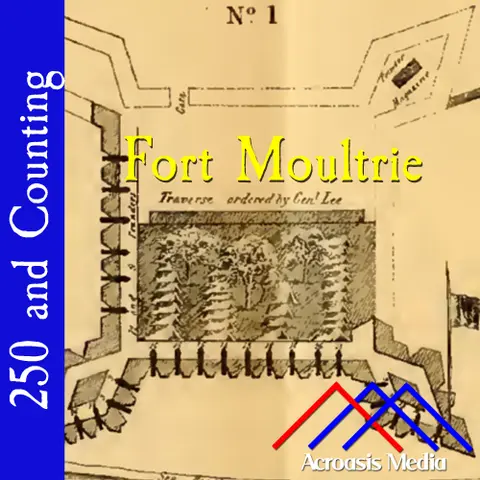
Fort Moultrie–February 19, 1776
Today we’re looking at Fort Moultrie. I know, it wasn’t that long ago that I was gushing about Fort McHenry, but I live in Baltmore so it’s kind of the law around here to pump up the local history. Also, Fort, McHenry is a cool place to visit. And so is Fort Moultrie! In fact, Fort Moultrie itself was built several times, including its original Fort Sullivan incarnation, and as a result there are extensive historic exhibits throughout the park. The various forts went through three wars against...
Feb. 17, 2026
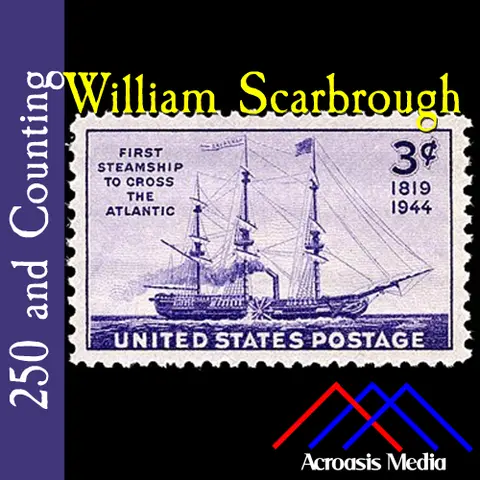
William Scarbrough–February 18, 1776
William Scarbrough, who was the owner of the USS Savannah more than he was anything else, purchased the ship when it was still on the slipway. It was purchased with the aim of converting it to an auxiliary steamship and give his company the distinction of offering the world’s first transatlantic steamship service. The Savannah had multiple sources of propulsion, though. The steam engine could drive the side paddlewheels on either side which were retractable when the engine wasn’t in use. But it...
Feb. 16, 2026
Making Money–February 17, 1776
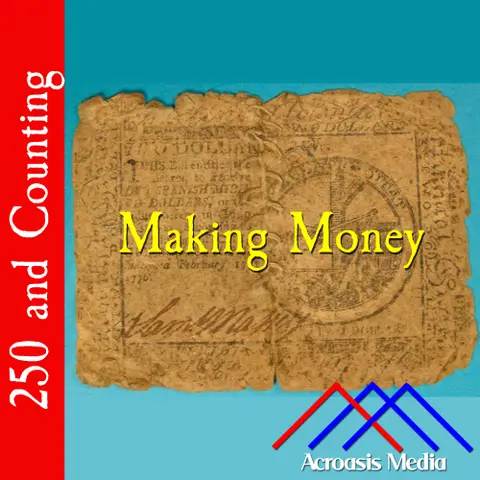
Back in June, Mike told you about the Continental Congress taking a stab at issuing common currency that could be used throughout the Colonies. It didn’t work out very well, and the Continentals became a joke because there was nothing backing them up. But this time around, they may have gotten it right, because the new Continental Currency had some specific backing to it. (We don’t even have that today, thanks to Richard Nixon.) Look carefully at the bill in the cover art and you’ll see that i...

Feb. 15, 2026
Nicholas Ware–February 16, 1776
Mike already tells you about all you need to know about Nicholas Ware in today’s episode, so let me focus on his home, which was derisively nicknamed “Ware’s Folly.” The house was completed in 1818 at a total cost of $40,000, which would be well over $12 million today. Part of this derives from the elaborate styling on the outside, and part of it is from the extravagant details on the inside, including a three-story elliptical staircase. The house, as Mike noted, is now the home of the Gertrud...
Feb. 14, 2026
Things Heat Up in Wilmington–February 15, 1776
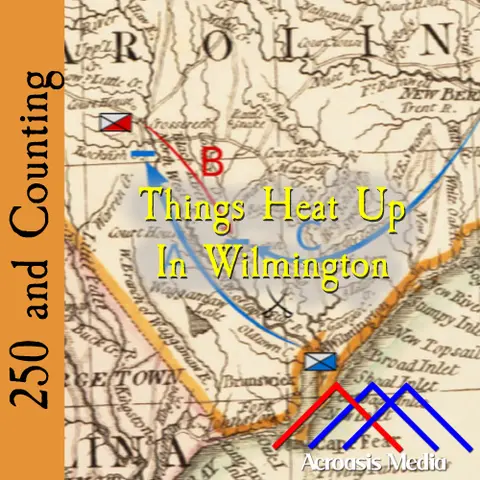
We should confess that by the time we actually get to the Battle of Moore’s Creek Bridge, it’s not going to be as big a battle as anyone thought it was going to be. But the buildup was something else again. It seemed pretty clear to everyone involved that this was going to be epic and a veritable cast of thousands would be involved. But, things happen. Motivations change. Cynicism and even capriciousness sets in. And there’s still a battle, but it involves hundreds, not thousands. So from a bat...

Feb. 13, 2026
Washington Goes Mail-Order Shopping–February 14, 1776
There were many reports from George Washington over the course of the Revolutionary war, but for the most part I think they were carefully crafted and frankly not always worthy of the reactions they proposed. The careful craftsmanship does makes sense, though, because Washington was a diligent collector and reader of books. As an autodidact, he was constantly learning, and he was the teacher. It’s just a huge shame that when Washington died, his book collection was broken up and sold off. In re...
Feb. 12, 2026
A More Organized War–February 13, 1776
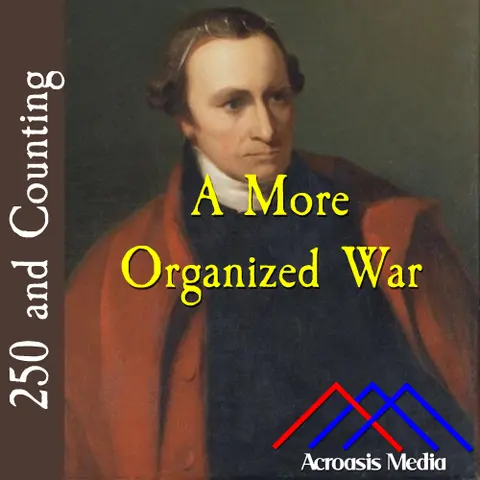
So nearly a year ago, in March 1775, Patrick Henry said “Give me Liberty or give me death.” Today the Continental Congress said “Bet,” and sent him to lead troops in Virginia. That was a coincidence, of course: practically anyone who showed any real leadership skills was given the opportunity to lead troops. Henry had the leadership and the oratory skills to get his troops into shape. We mentioned the various committees and their reports today. One of them was the committee that was directed t...
Feb. 11, 2026
Mary Pickersgill–February 12, 1776
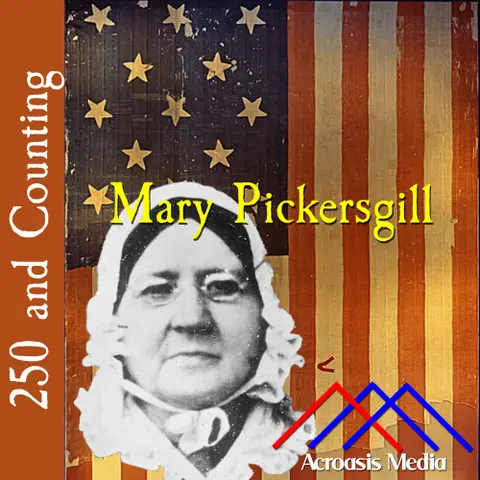
The thing that’s hard to understand when considering the flag that Mary Pickersgill put together, and that inspired our National Anthem, is that it’s huge. Mike says specifically that this flag is 17 feet by 42 feet, but that’s hard to picture. When the flag was first displayed at the Smithsonian, it hung out in the open, against the atrium wall. But a flag that big, and that old, eventually begins to give in to gravity. So the Smithsonian folks took it down and spent a couple of years restorin...
Feb. 10, 2026
Troop Movement in North Carolina–February 11, 1776
Richard Caswell was in charge of the Minutemen in New Bern, North Carolina until the Battle of Moore’s Creek Bridge. Not long after that, the Provincial Congress did away with the Minutemen in favor of a more broadly-trained milita. From that point, his position in the Continental Congress was pretty much over for good. Caswell remained active in the military throughout the Revolution, and was in charge of the Provincial Congress when it came time to write their first State Constitution. Shortl...
Feb. 9, 2026
Common Sense Comes to NC–February 10, 1776
As the ideas behind Common Sense spread through the country, it’s an interesting coincidence that Common Sense came to both North and South Carolina a day apart. What’s curious is the way it caught on very quickly in South Carolina, but was more of a slow burn in North Carolina. It’s possible that the difference is as simple as Christopher Gadsden presenting the pamphlet orally before the Provincial Congress, whereas John Penn took more of a backdoor approach, giving a copy to a colleague and h...
Feb. 8, 2026
A New Job For John Adams–February 9, 1776
One of John Adams’ stronger talents was being able to see the motivation behind the action, and because of this he was usually able to thwart unattractive actions somehow. In today’s case, he was able to thwart people who opposed him by simply agreeing with them. As a newly-minted Chief Justice of Massachusetts, some Loyalist (if not Loyalist, then certainly in the Don’t Declare Independence crowd) delegates from Maryland suggested that because he worked for Massachusetts, he had an inherent co...

Feb. 7, 2026
Gadsden, Come Home–February 8, 1776
Christopher Gadsden is famous almost entirely for the “Don’t Tread On Me” flag. But even for that, most people don’t know that the flag was named after a person. And those who do, don’t necessarily know Gadsden’s first name. And yet, he was instrumental in getting America to break away from England. Christopher Gadsden was the one who got South Carolina more excited about Independence. He was a Brigadier General in that colony during the war. He helped draft a state constitution and was then e...
Feb. 6, 2026
What To Do With Prisoners?–February 7, 1776
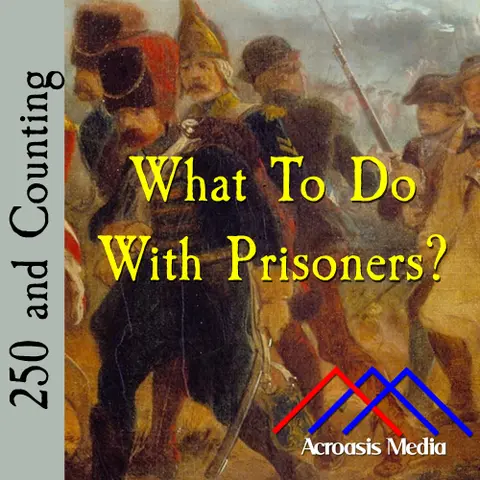
Detail from “The Battle of Bennington” by Grandma Moses, 1953, depicting British prisoners being taken. Originally commissioned by the Daughters of the American Revolution but rejected because of some inaccuracies. Now at the Bennington Museum. When I mentioned in today’s episode that American prisoners were left to disease or neglect, I wasn’t telling you the half of it. The British used captured, damaged or obsolete ships as their prisons. Conditions were so bad that more Americans died as a ...

Feb. 5, 2026
Vive La France–February 6, 1776
Much like the Hessians of our last episode, the story involving our getting French recognition and friendship is longer and more complex than most people realize. The events of today were important, but they laid the groundwork for so much more in the future. France was already annoyed with Britain over the Seven Years’ War, so supporting the Colonies was the shrewd thing to do: France would annoy Britain with the treaty, America would get arms and soldiers (and naval support), and we wound up ...

Feb. 4, 2026
Here Come The Hessians–February 5, 1776
I think I need to clarify something that I said during today’s episode. I mentioned that about 2200 Hessian soldiers fought in the Revolution. That number is accurate, but it only refers to the soldiers who came from Hesse-Hanau and were affected by the treaty alluded to today. Another big chunk came from Hesse-Kassel and the rest came from elsewhere in Germany. In all, more than 30,000 Hessians fought in the Revolutionary War, comprising about a fourth of the British land forces. According to...
Feb. 3, 2026
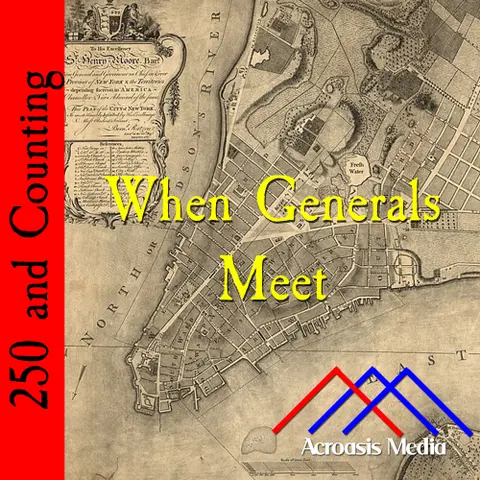
When Generals Meet–February 4, 1776
A war map of New York City from 1776. This was almost the entire city at that time. OK, I’ll admit I cheated the title a little bit. The fact is, both General Charles Lee, who was part of George Washington’s inner circle, and General Henry Clinton, who was a British general, did arrive in New York City on the same day. The odds are pretty low that, despite how small New York City is compared to today, they actually encountered one another on this day. The post When Generals Meet–February 4, 17...
Feb. 2, 2026
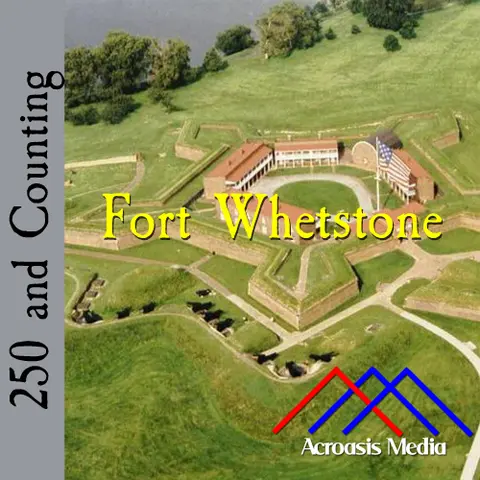
Fort Whetstone–February 3, 1776
Aerial view of Fort McHenry. The curved earthworks wall along the bottom third of the picture is a remnant of Fort Whetstone. via Wikimedia Commons. I was actually rather disappointed not to be able to find any images of Fort Whetstone. Surely there are some pictures from that time, but the Internet was not in a giving mood today. In today’s artwork you can see some remnants of the original fort (most of what you see is modern-day Fort McHenry). Those are along the bottom of the photo, but ther...
Feb. 1, 2026
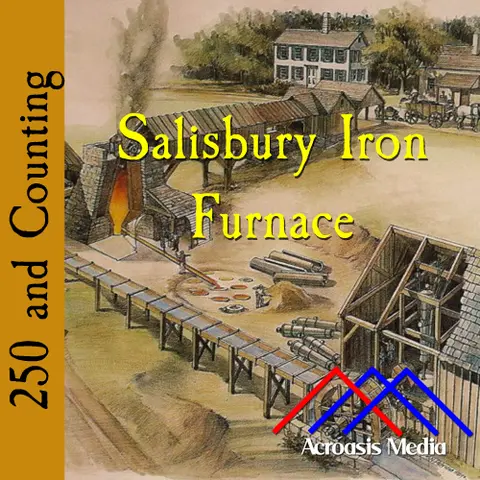
Salisbury Iron Furnace–February 2, 1776
A typical iron factory setup, This image is generally used to represent the Salisbury Furnace. via National Park Service. In early 1775 when hostilities first broke out, the Salisbury Iron Furnace was owned by an Englishman named Richard Smith. By the end of the year he’d cleared out and gone back home to England, and remained there for the rest of the war. After an inspection in early January, the Committee of Safety formally recommended that the Salisbury Iron Furnace be confiscated and made ...
Jan. 31, 2026
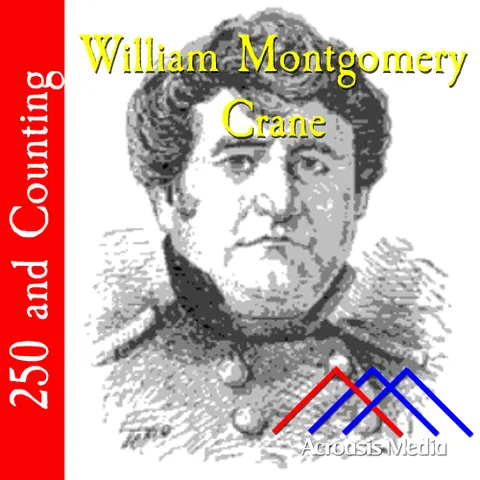
William Montgomery Crane–February 1, 1776
Portrait of William Montgomery Crane. By Unknown author – The National Cyclopaedia of American Biography, Volume XII, 1904, page 422, via Wikimedia Commons. If you’re going to have a kid in 1776, you’re probably going to be feeling a little patriotism when you do so. Such was the case with William Montgomery Crane, who got his middle name from General Richard Montgomery, under whom his father served around this point in the Revolutionary War. Crane’s father was General William Crane, but at tha...
Jan. 30, 2026
The Fate of a Crew–January 31, 1776
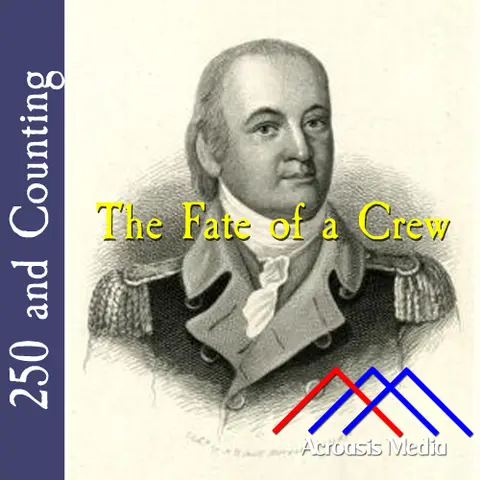
Etching of William Alexander, Lord Stirling, as a Major General. Etching by H.B. Hall, 1892. via New York Public Library. The capture and ultimate disposition of the HMS Blue Mountain Valley and her crew was, in the bigger scheme of things, a relatively minor event in the American Revolution, however it did suddenly bring both New Jersey and New York into more active participation in the war. And even though the Blue Mountain Valley was beset by storms that they couldn’t possibly control, the f...
Jan. 29, 2026
Enlisting Apprentices–January 30, 1776
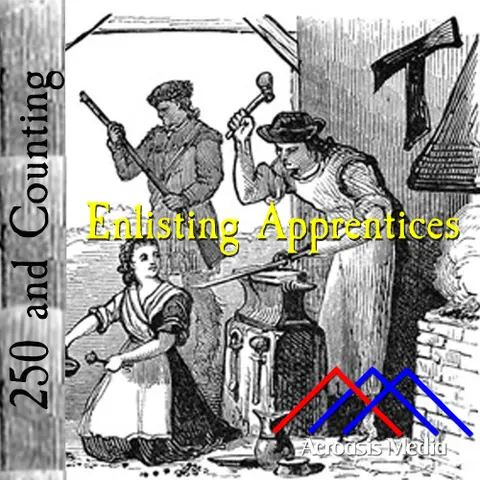
“Colonial Blacksmith, 1776”. Wood engraving, attributed to “Granger” though this may be the name of the collection. While we’re talking about enlisting apprentices today, it should be noted that there was precious little difference between an apprentice and an indentured servant, except maybe their age. Thus, the rules that applied to apprentices when it came to enlistment could also be applied to indentured servants, especially inasmuch as some of those rules seemed designed more for them than ...