Episodes
Jan. 28, 2026
From John To George–January 29, 1776
A letter written by John Hancock. Letters from John Hancock to George Washington weren’t especially scarce, nor were letters going the other way. However, today’s letter takes on a few important topics for Washington that one hopes came greatly appreciated. There was commendation that Washington had the foresight to send troops to New York, there was some good financial news, there was also good news in the realm of troop recruitment, and there was a warning about likely military action coming ...
Jan. 27, 2026
Arrest of a Franklin–January 28, 1776
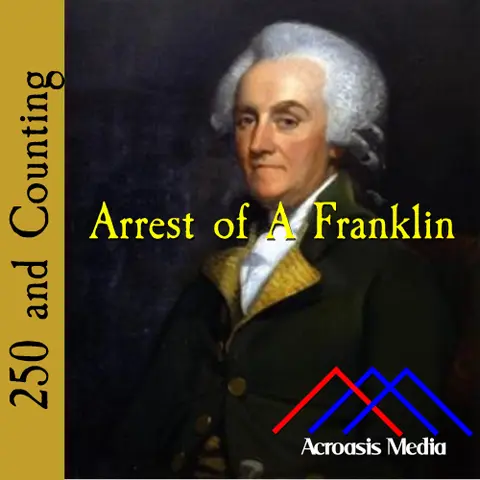
Portrait of William Franklin, 1790, attributed to Mather Brown. via Wikimedia. It used to be rumored that Benjamin Franklin had over 30 children out of wedlock, but that’s since been debunked. (And there goes a perfectly good “lightning rod” joke.) But William Franklin was considered illegitimate, though he was raised by his father and his common-law wife Deborah Read. There are some breadcrumbs here and there that lead some historians to believe that Deborah was, in fact, William’s mother, but...

Jan. 26, 2026
Rules for Native American Trade–January 27, 1776
Engraving titled Washington and Fairfax and a War-Dance by John Rogers, 1857. The event depicted actually took place in 1779. As noted in the episode, there were several different rules laid down for trading with Native Americans at that time, and some of them were designed to ensure that they remained on our side or, at worst, that they remained neutral in Revolution-based matters. But the rules wound up working out well for both sides: the various tribes were able to get the materials they wa...
Jan. 24, 2026
Our First Memorial–January 25, 1776
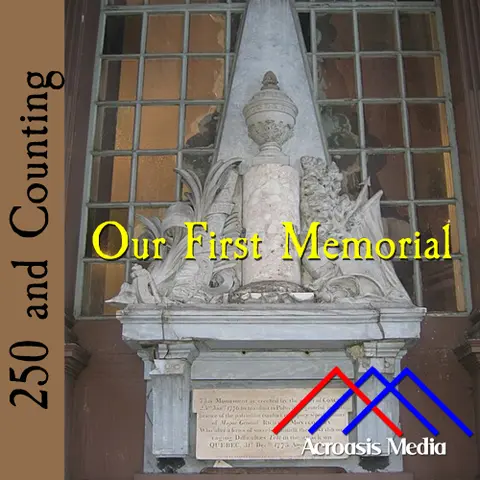
The monument erected to honor Richard Montgomery outside St. Paul’s Chapel at Trinity Church. The inscription reads: This Monument is erected by the order of Congress, 25th, Janry, 1776, to transmit to Posterity a grateful remembrance of the patriotism conduct enterprise & perseverance of Major General Richard Montgomery Who after a series of successes amidst the most discouraging Difficulties Fell in the attack on Quebec. 31st, Decbr, 1775. Aged 37 Years. We weren’t even a nation yet and Congre...
Jan. 23, 2026
Jean-Guillaume Hyde–January 24, 1776
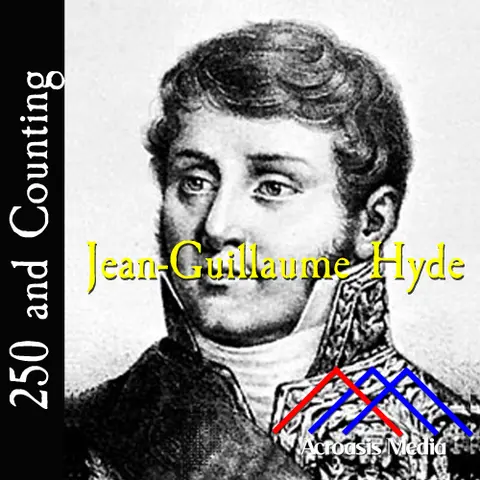
Detail of an 1830 lithograph by Ducarme after a portrait by Legrand. While the United States has had its share of international mishaps, not all of them have been created by Americans. Jean-Guillaume Hyde, more properly known as “Jean-Guillaume, baron Hyde de Neuville”, would be an early example of this. Hyde was probably a textbook case of failing upward, as he appears to have suffered multiple setbacks and still managed to come out ahead later on. As early as 1793, when he was 17, Hyde liked ...
Jan. 22, 2026
A Most Dreadful Voyage–January 23, 1776
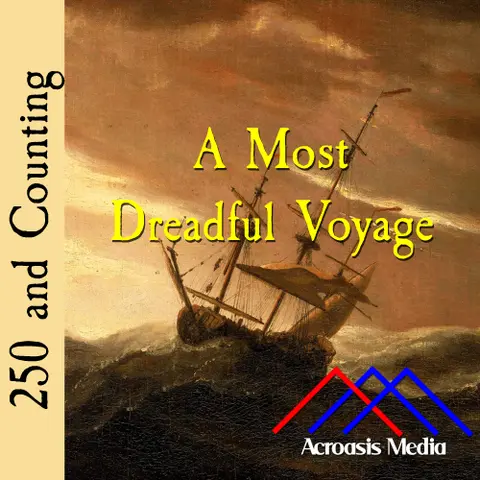
“An English Ship at Sea Lying-To in a Gale,” painted by Willem van de Velde the Younger, late 17th century. The HMS Blue Mountain Valley—which probably got its name from the place in eastern Jamaica—had rather a rough trip to America from London in late 1775 and early 1776. They left London in mid-October 1775 and ran into multiple storms before arriving somewhere near Boston nine or ten weeks later. Damage to the ship was such that it was judged unsafe to enter the Massachusetts Bay because sa...

Jan. 21, 2026
“Which Will Be Your Choice?”–January 22, 1776
Portrait of Francis Lightfoot Lee. Artist and date unknown, however the original painting is thought to have been created during his lifetime. This is the basis for many images of Lee. Francis Lightfoot Lee is another one of those Founding Fathers who was there for much of the main action, but who doesn’t seem to get as much press as Jefferson, Franklin, Adams and a few others. That’s not to say he didn’t have any influence. In fact, as we learn today, he was one of the first to suggest the ine...
Jan. 20, 2026
Elisha Haley–January 21, 1776
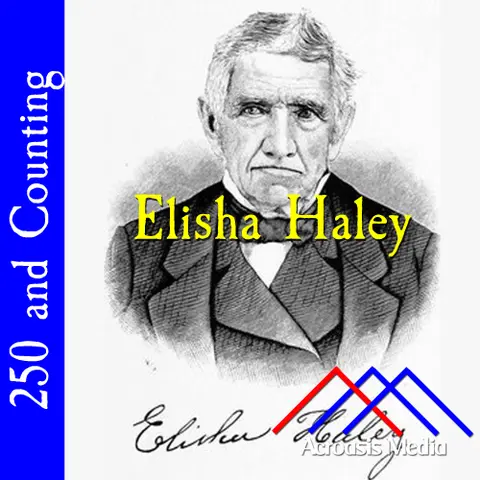
Portrait of Elisha Haley, artist unknown, created approximately 1860. Elisha Haley wasn’t necessarily a lawmaker at either the State or the Federal level who made such a huge mark that he’s become a kind of household name, but he appears to have been solid enough that he could get elected multiple times at both levels. I did discover, after recording the episode, that Haley is not, in fact, buried in Crary Cemetery but rather in the Wightman Cemetery, which is also in Groton. His wife and four ...
Jan. 19, 2026
Charles Pinckney Sumner–January 20, 1776
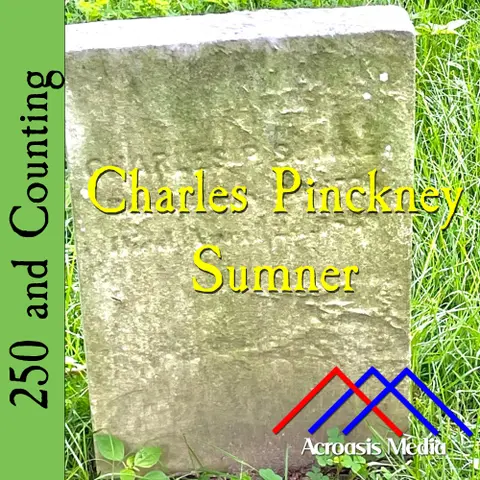
Charles Pinckney Sumner was a man ahead of his time, in the sense that he knew not only that slavery was wrong, but that slaves need not only to be freed, but to be treated as equal citizens. He also carried a rather Utopian view of what society should be like, that Nature was at least as important as Nurture, if not more so. Although he and his wife Relief Jacob had at least nine children, they were considered to be not especially demonstrative with one another, even described by some as “for...
Jan. 18, 2026
Busy Day In Congress–January 19, 1776
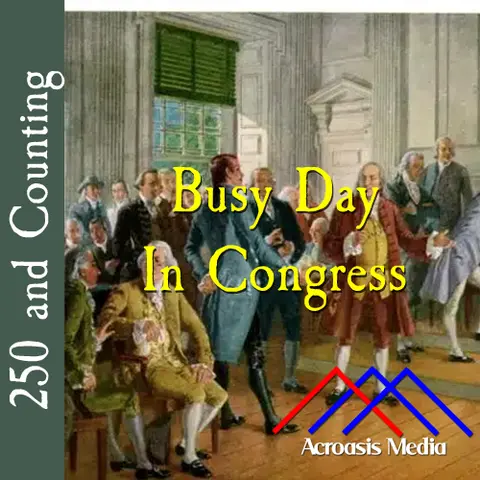
Painting of the Continental Congress by John Trumbull, created around 1819. This painting depicts a date several months after today. Trumbull was especially insistent on painting subjects from life whenever he could. The Second Continental Congress Committees, several of them anyway, reported out on this day in 1776 and it was starting to become clear that the individual colonies had some needs when it came to defense. There were issues with prisoners possibly being mistreated, word had gotten ...
Jan. 17, 2026
Church Gets Out–January 18, 1776
Given that Benjamin Church was discovered to be a traitor long before Benedict Arnold was, it’s a little peculiar that Arnold’s name has carried down through history much more than Church’s was. Maybe it’s because Church was a little less prominent in the Revolution before he was caught. Maybe “Benedict Arnold” has a better ring to it as something to hurl at someone who’s broken your trust. It’s also possible that, at that time, nobody really knew the extent of the damage Benjamin Church had d...
Jan. 16, 2026
Many Letters to George–January 17, 1776
Copy of a letter sent in April 1776 by Washington to the Continental Congress. via Library of Congress. George Washington was a prolific letter writer, and as such he also tended to receive a great number of letters. We have to day three missives sent to George Washington on this day in 1776. (Pardon my brevity for this episode; as I write this my wife has spent the better part of the day in the hospital for a surgical procedure, and I’m too exhausted to be my usual clever self.) The post Man...
Jan. 15, 2026
A Council of War–January 16, 1776
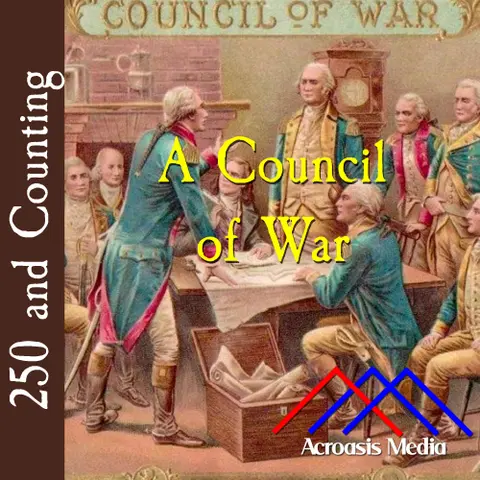
This appears to be a colorized print taken from a monument relief. This is actually Washington’s Council of War from shortly before the Battle at Monmouth. George Washington was a good leader in the sense that he knew what his troops needed, but he was also a good leader because he sought the counsel of others before making decisions. Washington would call a Council of War before he made big movements, and the Boston Council of War was no exception. Washington knew that the Siege of Boston wasn...
Jan. 14, 2026
Sam Adams Also Has Concerns–January 15, 1776
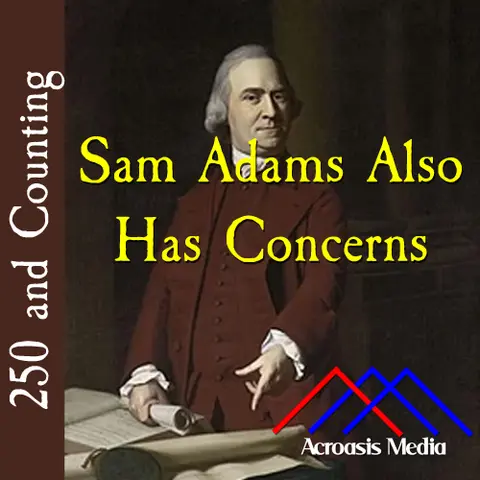
Samuel Adams in 1772, painted by John Singleton Copley. via Wikimedia Commons and the Museum of Fine Arts in Boston. Samuel Adams made a point of telling his second cousin John Adams that he didn’t have a lot of time to write. Then he cranked out 570 words of worries about the language in the New Hampshire constitution, which had been ratified ten days earlier. Then the next day he tacked on another 250 words. If he’d typed all 820 words out, it would be about three pages (double-spaced). The s...
Jan. 13, 2026
Washington Has Concerns–January 14, 1776
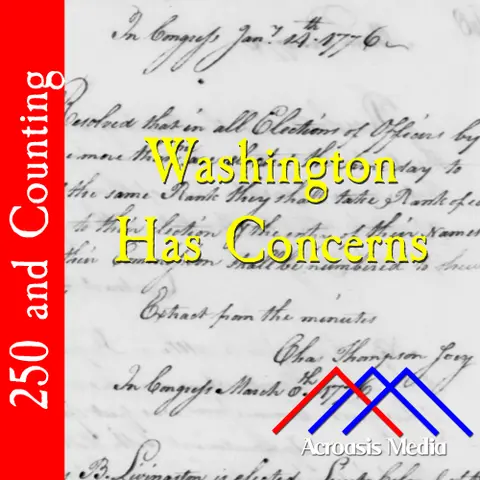
Correspondence from Charles Thompson, Secretary to the Second Continental Congress, to George Washington. via Library of Congress. As George Washington’s aide-de-camp, Joseph Reed was privy to a lot of things on his Commander-in-Chief’s mind. And it shows in the level of prose that Washington uses when writing to Reed, because it’s much less formal. Compare that to the letter he sent to the Continental Congress the same day. In both cases he was expressing concerns regarding his troops, but in ...
Jan. 12, 2026
John M. Snowden–January 13, 1776
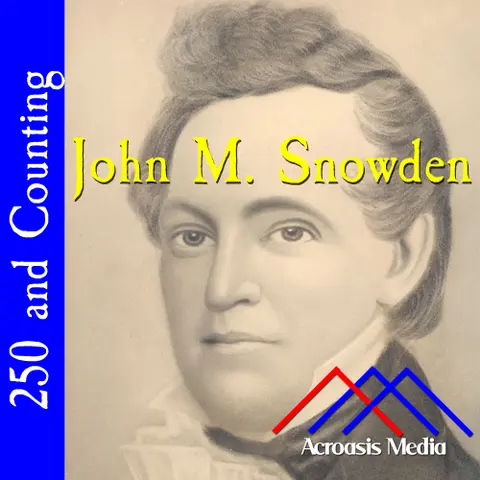
Portrait of John Maugridge Snowden, Third Mayor of Pittsburgh. From the Snowden Family Collection via Wikimedia Commons. What can I say about John M. Snowden that I didn’t tell you about in the episode itself? The truth is, he’s not a well-documented man, nor is his family, even though (as I noted) his wife was an advisor to George Washington for awhile. I can note that I foreshortened his career a little bit, in that he had done a little public service before he was the mayor of Pittsburgh. H...
Jan. 11, 2026
Prudence Island Under Attack–January 12, 1776
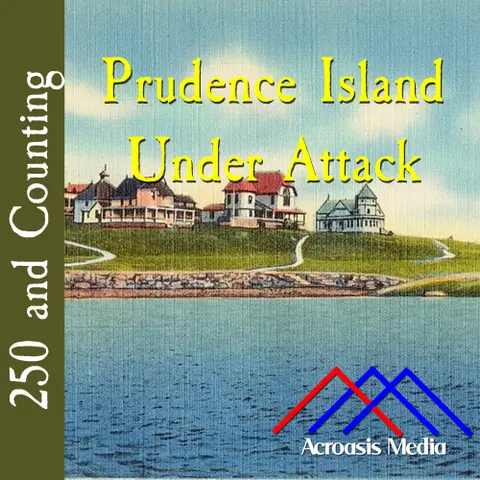
Prudence Park on Prudence Island, from a 1930s-era postcard. Via Wikimedia Commons. Prudence Island, in the Narragansett Bay off Rhode Island, didn’t have a lot of strategic value to anyone. What it DID have was livestock, and the British were hard-pressed to get supplies, especially for Boston, which had been under siege since mid-April. And, as Mike notes during the episode, neither army was really shy about stealing what they needed to advance their cause. While the residents of Prudence Is...
Jan. 10, 2026
Rush To The Altar–January 11, 1776
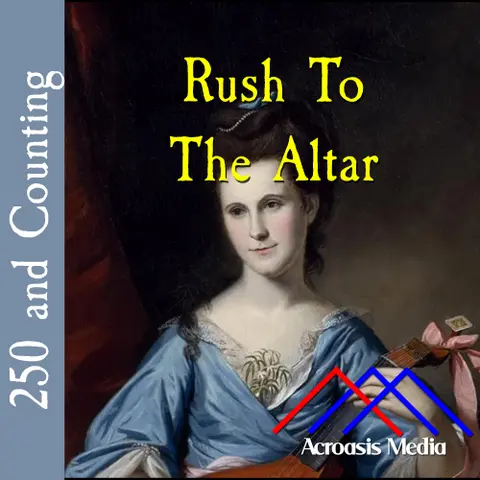
Portrait of Julia Stockton Rush by Charles Willson Peale, painted in 1776. Sure, most of the episode is about Benjamin Rush, but who would YOU rather look at? Right. Although she was quite young when she married Benjamin Rush, Julia Stockton was probably as brilliant and opinionated as her husband was. Not long after they married on this day in 1776, Benjamin was appointed Surgeon General to his friend George Washington, and as the war got more intense and involved, and American losses began to...
Jan. 9, 2026
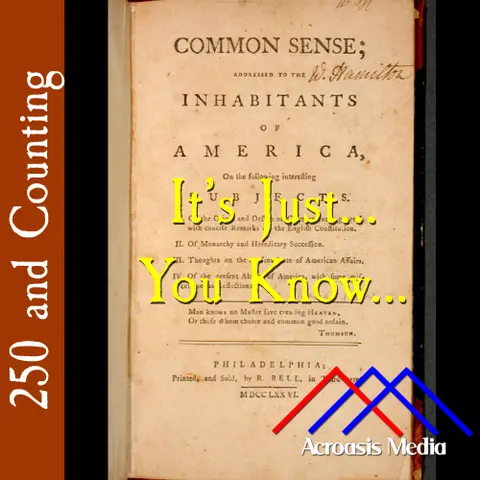
It’s Just…You Know…–January 10, 1776
The original cover of Common Sense. via Wikimedia Commons. Okay, so here’s the thing about Common Sense: It’s not as though Thomas Paine came up with prose so extraordinarily clear that everyone suddenly smacked their foreheads and said, “My God! Independence! Of COURSE!” In fact, many people thought Common Sense was crazy, and others considered it an incitement to the all-out war that everyone was trying to avoid. There were complaints that what Paine had written was dangerous, even violent. ...
Jan. 8, 2026
A Plan Is Hatched–January 9, 1776
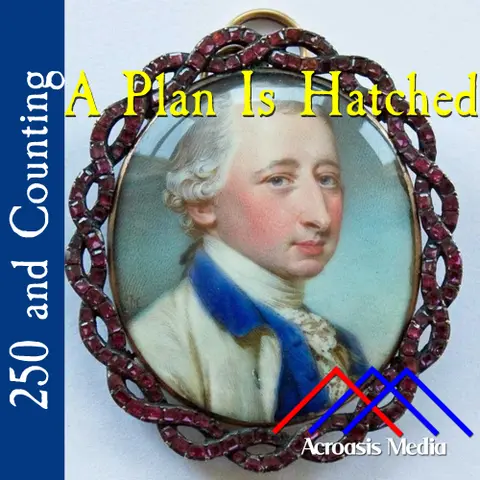
A miniature portrait of Josiah Martin, artist unknown, circa 1775. Josiah Martin was the last Royal Governor of North Carolina, and while he spent the first few months of the job in New York, he probably wouldn’t have a reputation as an especially bad governor if he hadn’t been hampered so much by circumstances that were in place before he got the job. There were money issues that his predecessor had left behind, and the rest of the government was plagued by internal squabbling that pretty much...
Jan. 7, 2026
The Play’s The Thing–January 8, 1775
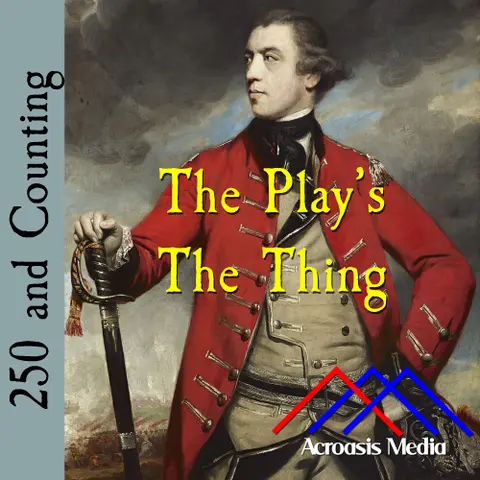
Portrait of John Burgoyne c. 1766, by Joshua Reynolds. Via the Frick Collection. Mike wasn’t kidding when he said that, had it not been for his part in the Revolution, John Burgoyne would be best known as a playwright. He wrote several plays, most of them quite successful. Interestingly enough, the play Mike cites today is not often listed among his oeuvre. So we get the feeling that “The Blockade to Boston” was more of a one-act, or a skit-level kind of show meant specifically for that day’s au...
Jan. 6, 2026
Preparing To Defend New York–January 7, 1775
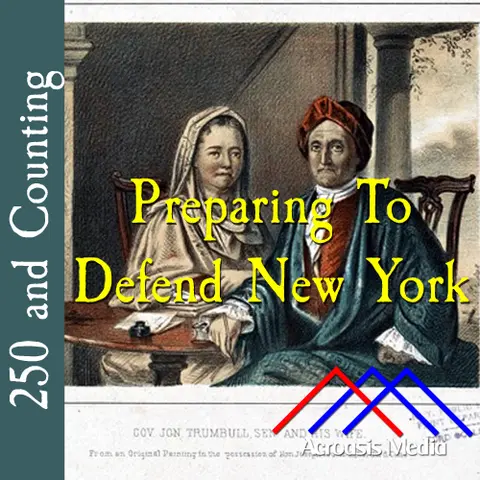
Portrait of Jonathan Trumbull and his wife Faith, painted by his son John Trumbull, 1778. via New York Public Library. There are many letters between George Washington and Connecticut Governor Jonathan Trumbull. Presumably something as simple as proximity to another leader was attractive to both of them, especially in an age where letters took several days to go a hundred miles. We have to presume that the two men had very reliable people transporting these letters, given how much detail is in ...
Jan. 5, 2026
Retreat From Charleston–January 6, 1776
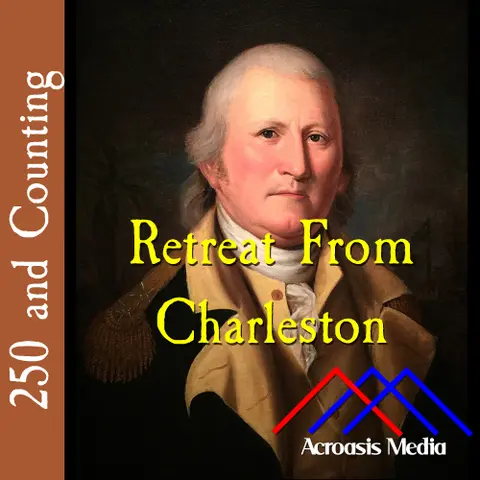
Oil painting of William Moultrie, who was a General when this was painted by Charles Wilson Peale in 1782. From a strategic standpoint, Charleston Bay was probably much more attractive to the British than Boston Harbor was. The northern harbor was more open to the sea, there were a bunch of small islands to navigate around, and the weather could get quite treacherous. Meanwhile in South Carolina, there was a definite entry/exit point, there were fewer islands to deal with, and while it can stil...
Jan. 4, 2026
The First State Constitution–January 5, 1776
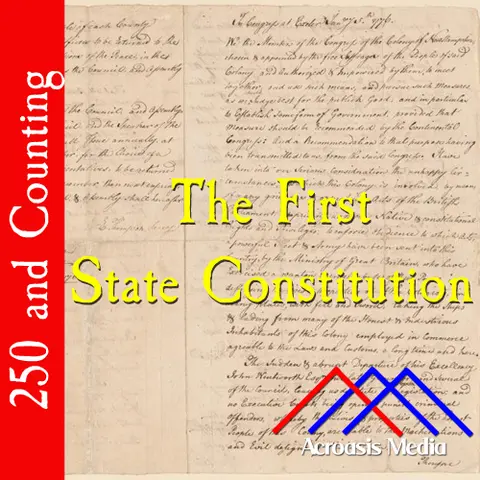
The manuscript for the first New Hampshire constitution. Via New Hampshire Secretary of State social media account. It’s fun to say that the New Hampshire Constitution was the first time that an American commonwealth constitution, and that several of the others quickly followed, as though a dam had broken. But the fact is, the various colonies were putting together their own constitutions at the urging of the Second Continental Congress, and New Hampshire just happened to be the first. That sa...