Episodes

April 16, 2026
Proteins on manuscript reveal how Renaissance medicines were made
Our podcast guest develops technologies for proteomics

April 9, 2026
Backing winners in deep tech: physicist and venture capitalist Alexandra Vidyuk
Our podcast guest began her career with a BSc in applied mathematics and physics

April 2, 2026
Biomedical optics play crucial roles across medicine
Medical physicist, inventor and entrepreneur Brian Pogue is our podcast guest

March 26, 2026
How IOP Publishing cut its carbon footprint by 36% since 2020
The company’s sustainability lead Liz Martin is our podcast guest

March 19, 2026
From the classroom to the committee room: Dave Robertson MP on politics and physics
This episode of the Physics World Weekly podcast features a conversation with Dave Robertson, who was elected member of the UK parliament for Lichfield in 2024. Robertson spent eight years teaching physics after studying the subject at the University of Liverpool. He then worked for a teachers’ union, which inspired him to become a candidate for the Labour Party. He chats with Physics World’s Matin Durrani about his transition from the classroom to the committee room and how parliament “is a tr...

March 12, 2026
Droplet scientists push the boundary between living and non-living matter
In this episode of the Physics World Weekly podcast, we hear from a trio of scientists with a common interest in the physics of droplets. Specifically, Joe Forth, Rob Malinowski and Giorgio Volpe share a fascination with droplets that are “animate” – that is, capable of responding to their surroundings in ways that resemble the behaviour of living organisms. As they explain in the podcast, systems must tick three boxes to qualify as animate. First, they must be active, able to use energy from t...
March 5, 2026
Ultrasound system solves the ‘unsticking problem’ in biomedical research
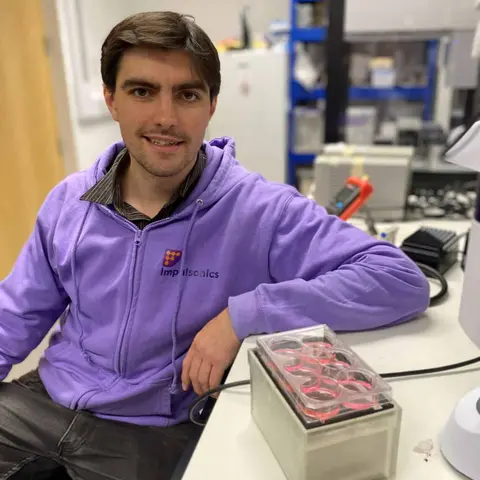
“Surround sound for biological cells,” is how Luke Cox describes the ultrasound technology that Impulsonics has developed to solve the “unsticking problem” in biomedical science. Cox is co-founder and chief executive of UK-based Impulsonics, which spun-out of the University of Bristol in 2023. He is also my guest in this episode of the Physics World Weekly podcast. He explains why living cells grown in a petri dish tend to stick together, and why this can be a barrier to scientific research and...
Feb. 26, 2026
LHCb upgrade: CERN collaboration responds to UK funding cut
Later this year, CERN’s Large Hadron Collider (LHC) and its huge experiments will shutdown for the High Luminosity upgrade. When complete in 2030, the particle-collision rate in the LHC will be increased by a factor of 10 and the experiments will be upgraded so that they can better capture and analyse the results of these collisions. This will allow physicists to study particle interactions at unprecedented precision and could even reveal new physics beyond the Standard Model. Earlier this year...
Feb. 19, 2026
Quantum Systems Accelerator focuses on technologies for computing
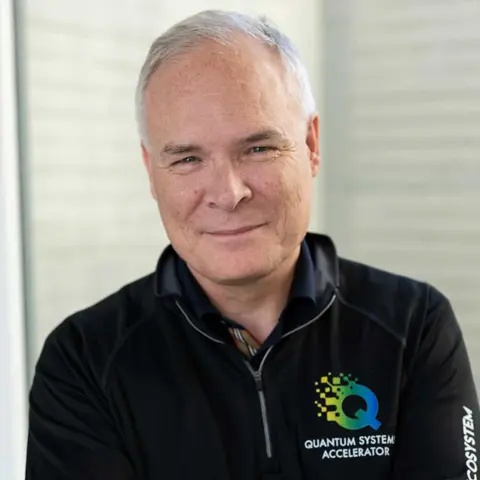
Developing practical technologies for quantum information systems requires the cooperation of academic researchers, national laboratories and industry. That is the mission of the Quantum Systems Accelerator (QSA), which is based at the Lawrence Berkeley National Laboratory in the US. The QSA’s director Bert de Jong is my guest in this episode of the Physics World Weekly podcast. His academic research focuses on computational chemistry and he explains how this led him to realise that quantum phe...

Feb. 12, 2026
Asteroid deflection: why we need to get it right the first time
Science fiction became science fact in 2022 when NASA’s DART mission took the first steps towards creating a planetary defence system that could someday protect Earth from a catastrophic asteroid collision. However, much more work on asteroid deflection is needed from the latest generation of researchers – including Rahil Makadia, who has just completed a PhD in aerospace engineering at University of Illinois at Urbana-Champaign. In this episode of the Physics World Weekly podcast, Makadia talk...

Feb. 5, 2026
Physics‑based simulations help diagnose and treat disease
This episode of the Physics World Weekly podcast features Amanda Randles, who is a computer scientist and biomedical engineer at Duke University in the US. In a conversation with Physics World’s Margaret Harris, Randles explains how she uses physics-based, computationally intensive simulations to develop new ways to diagnose and treat human disease. She has also investigated how data from wearable devices such as smartwatches can be used identify signs of heart disease. In 2024, the Association...
Jan. 29, 2026
AI-based tool improves the quality of radiation therapy plans for cancer treatment
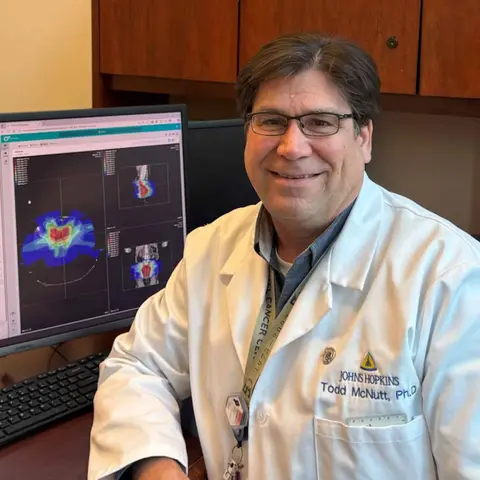
This episode of the Physics World Weekly podcast features Todd McNutt, who is a medical physicist at Johns Hopkins University and the founder of Oncospace. In a conversation with Physics World’s Tami Freeman, McNutt explains how an artificial intelligence-based tool called Plan AI can help improve the quality of radiation therapy plans for cancer treatments. As well as discussing the benefits that Plan AI brings to radiotherapy patients and cancer treatment centres, they examine its evolution f...
Jan. 22, 2026
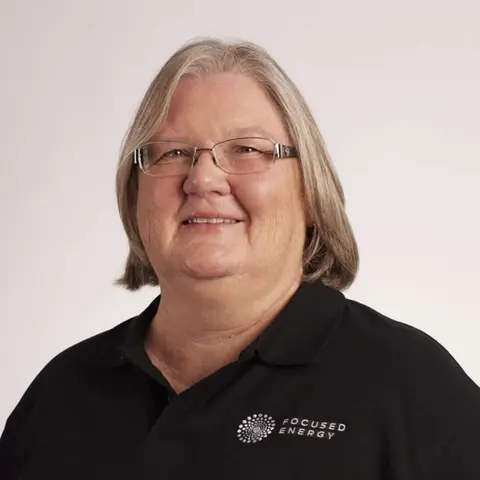
Laser fusion: Focused Energy charts a course to commercial viability
This episode of the Physics World Weekly podcast features a conversation with the plasma physicist Debbie Callahan who is chief strategy officer at Focused Energy – a California and Germany based fusion-energy startup. Prior to that she spent 35 years working at the National Ignition Facility (NIF) at Lawrence Livermore National Laboratory in the US. Focused Energy is developing a commercial system for generating energy from the laser-driven fusion of hydrogen isotopes. Callahan describes Light...
Jan. 14, 2026
Quantum metrology at NPL: we explore the challenges and opportunities
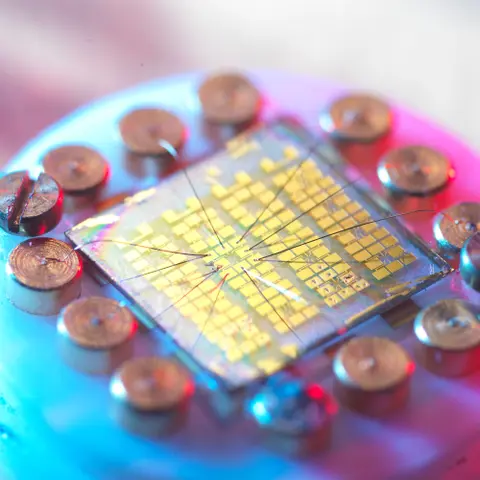
This episode of the Physics World Weekly podcast features a conversation with Tim Prior and John Devaney of the National Physical Laboratory (NPL), which is the UK’s national metrology institute. Prior is NPL’s quantum programme manager and Devaney is its quantum standards manager. They talk about NPL’s central role in the recent launch of NMI-Q, which brings together some of the world’s leading national metrology institutes to accelerate the development and adoption of quantum technologies. P...
Jan. 8, 2026
Quantum information theory sheds light on quantum gravity
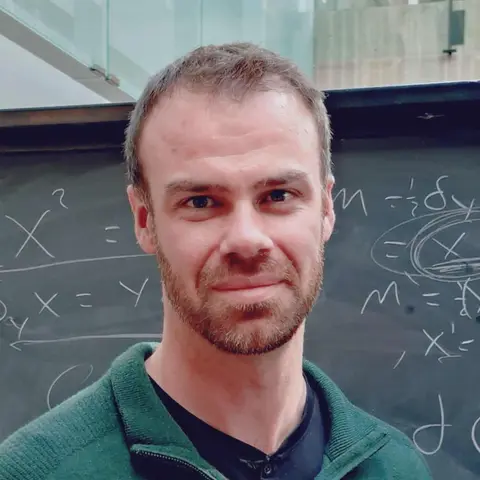
This episode of the Physics World Weekly podcast features Alex May, whose research explores the intersection of quantum gravity and quantum information theory. Based at Canada’s Perimeter Institute for Theoretical Physics, May explains how ideas being developed in the burgeoning field of quantum information theory could help solve one of the most enduring mysteries in physics – how to reconcile quantum mechanics with Einstein’s general theory of relativity, creating a viable theory of quantum gr...

Dec. 23, 2025
Oscar-winning computer scientist on the physics of computer animation
This episode of the Physics World Weekly podcast features Pat Hanrahan, who studied nuclear engineering and biophysics before becoming a founding employee of Pixar Animation Studios. As well as winning three Academy Awards for his work on computer animation, Hanrahan won the Association for Computing Machinery’s A M Turing Award for his contributions to 3D computer graphics, or CGI. Earlier this year, Hanrahan spoke to Physics World’s Margaret Harris at the Heidelberg Laureate Forum in Germany....
Dec. 18, 2025
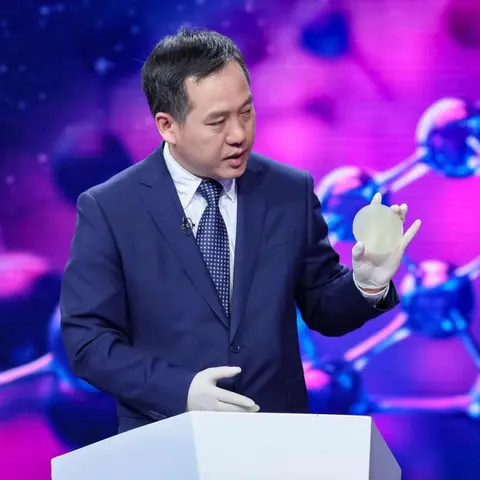
How to make 2D metals: Guangyu Zhang on his team’s award-winning research
This episode of the Physics World Weekly podcast features Guangyu Zhang. Along with his colleagues at the Institute of Physics of the Chinese Academy of Sciences, Zhang has bagged the 2025 Physics World Breakthrough of the Year award for creating the first 2D metals. In a wide-ranging conversation, we chat about the motivation behind the team’s research; the challenges in making 2D metals and how these were overcome; and how 2D metals could be used to boost our understanding of condensed-matter...
Dec. 11, 2025
Exploring this year’s best physics research in our Top 10 Breakthroughs of 2025
This episode of the Physics World Weekly podcast features a lively discussion about our Top 10 Breakthroughs of 2025, which include important research in quantum sensing, planetary science, medical physics, 2D materials and more. Physics World editors explain why we have made our selections and look at the broader implications of this impressive body of research. The top 10 serves as the shortlist for the Physics World Breakthrough of the Year award, the winner of which will be announced on 18 ...

Dec. 4, 2025
Building a quantum future using topological phases of matter and error correction
This episode of the Physics World Weekly podcast features Tim Hsieh of Canada’s Perimeter Institute for Theoretical Physics. We explore some of today’s hottest topics in quantum science and technology – including topological phases of matter; quantum error correction and quantum simulation. Our conversation begins with an exploration of the quirky properties quantum matter and how these can be exploited to create quantum technologies. We look at the challenges that must be overcome to create la...

Nov. 27, 2025
Quantum gravity: we explore spin foams and other potential solutions to this enduring challenge
Earlier this autumn I had the pleasure of visiting the Perimeter Institute for Theoretical Physics in Waterloo Canada – where I interviewed four physicists about their research. This is the second of those conversations to appear on the podcast – and it is with Bianca Dittrich, whose research focuses on quantum gravity. Albert Einstein’s general theory of relativity does a great job at explaining gravity but it is thought to be incomplete because it is incompatible with quantum mechanics. This ...

Nov. 20, 2025
Talking physics with an alien civilization: what could we learn?
It is book week here at Physics World and over the course of three days we are presenting conversations with the authors of three fascinating and fun books about physics. Today, my guest is the physicist Daniel Whiteson, who along with the artist Andy Warner has created the delightful book Do Aliens Speak Physics?. Is physics universal, or is it shaped by human perspective? This will be a very important question if and when we are visited by an advanced alien civilization. Would we recognize ou...
Nov. 18, 2025
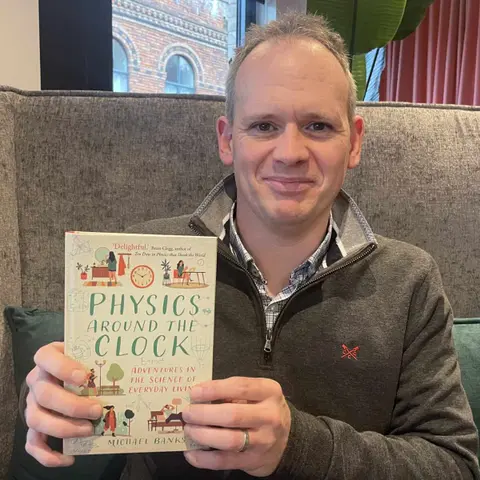
Better coffee, easier parking and more: the fascinating physics of daily life
It is book week here at Physics World and over the course of three days we are presenting conversations with the authors of three fascinating and fun books about physics. First up is my Physics World colleague Michael Banks, whose book Physics Around the Clock: Adventures in the Science of Everyday Living starts with your morning coffee and ends with a formula for making your evening television viewing more satisfying. As well as the rich physics of coffee, we chat about strategies for finding ...

Nov. 13, 2025
Designing better semiconductor chips: NP hard problems and forever chemicals
Like any major endeavour, designing and fabricating semiconductor chips requires compromise. As well as trade-offs between cost and performance, designers also consider carbon emissions and other environmental impacts. In this episode of the Physics World Weekly podcast, Margaret Harris reports from the Heidelberg Laureate Forum where she spoke to two researchers who are focused on some of these design challenges. Up first is Mariam Elgamal, who’s doing a PhD at Harvard University on the devel...
Nov. 6, 2025
Unlocking the potential of 2D materials: graphene and much more
This episode explores the scientific and technological significance of 2D materials such as graphene. My guest is Antonio Rossi, who is a researcher in 2D materials engineering at the Italian Institute of Technology in Genoa. Rossi explains why 2D materials are fundamentally different than their 3D counterparts – and how these differences are driving scientific progress and the development of new and exciting technologies. Graphene is the most famous 2D material and Rossi talks about today’s r...