Episodes
Oct. 30, 2025
Quantum steampunk: we explore the art and science
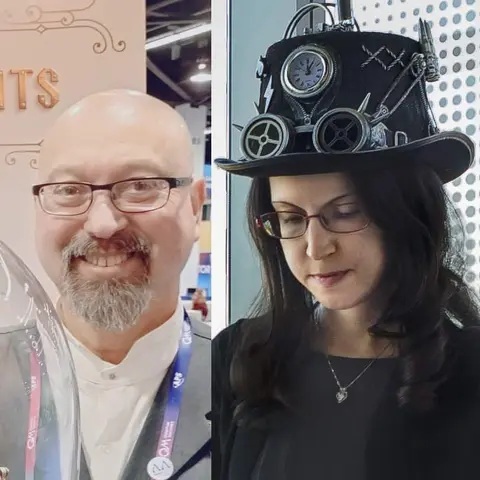
Earlier this year I met the Massachusetts-based steampunk artist Bruce Rosenbaum at the Global Physics Summit of the American Physical Society. He was exhibiting a beautiful sculpture of a “quantum engine” that was created in collaboration with physicists including NIST’s Nicole Yunger Halpern – who pioneered the scientific field of quantum steampunk. I was so taken by the art and science of quantum steampunk that I promised Rosenbaum that I would chat with him and Yunger Halpern on the podcast...
Oct. 23, 2025
Quantum computing and AI join forces for particle physics
This episode of the Physics World Weekly podcast explores how quantum computing and artificial intelligence can be combined to help physicists search for rare interactions in data from an upgraded Large Hadron Collider. My guest is Javier Toledo-Marín, and we spoke at the Perimeter Institute in Waterloo, Canada. As well as having an appointment at Perimeter, Toledo-Marín is also associated with the TRIUMF accelerator centre in Vancouver. Toledo-Marín and colleagues have recently published a pa...
Oct. 16, 2025
Astronauts could soon benefit from dissolvable eye insert
Spending time in space has a big impact on the human body and can cause a range of health issues. Many astronauts develop vision problems because microgravity causes body fluids to redistribute towards the head. This can lead to swelling in the eye and compression of the optic nerve. While eye conditions can generally be treated with medication, delivering drugs in space is not a straightforward task. Eye drops simply don’t work without gravity, for example. To address this problem, researchers...
Oct. 9, 2025
From quantum curiosity to quantum computers: the 2025 Nobel Prize for Physics
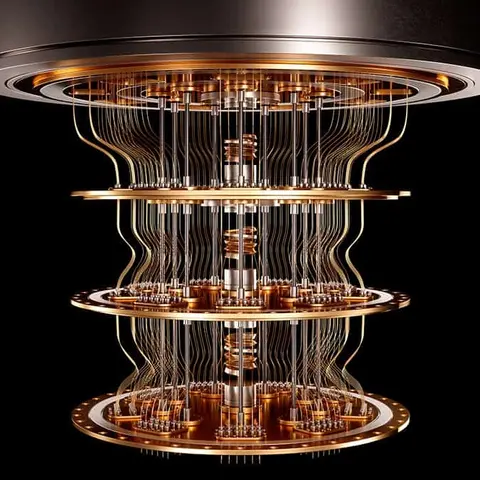
This year’s Nobel Prize for Physics went to John Clarke, Michel Devoret and John Martinis “for the discovery of macroscopic quantum mechanical tunnelling and energy quantization in an electric circuit”. That circuit was a superconducting device called a Josephson junction and their work in the 1980s led to the development of some of today’s most promising technologies for quantum computers. To chat about this year’s laureates, and the wide-reaching scientific and technological consequences of ...
Oct. 2, 2025
The curious history of Nobel prizes: from lighthouses to gravitational waves
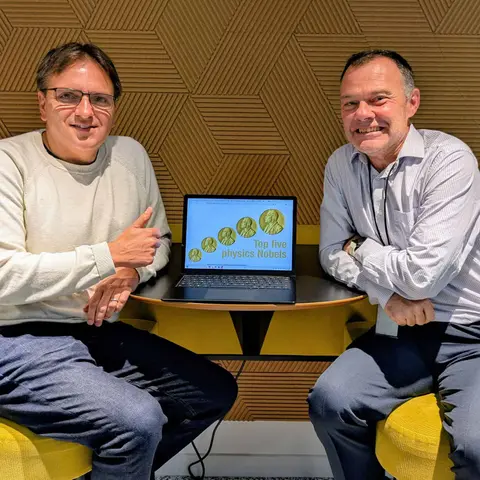
Next week, the winners of the 2025 Nobel Prize for Physics will be revealed. In the run-up to the announcement I’m joined in this podcast by my colleague Matin Durrani, who has surveyed the last quarter century of Nobel prizes and picked his top five physics prizes of the 21st century – so far. We also look back to two early Nobel prizes, which were given for very puzzling reasons. One was awarded in 1908 to Gabriel Lippmann for an impractical colour-photography technique that was quickly forgo...
Sept. 25, 2025
Imagining alien worlds: we explore the science and fiction of exoplanets
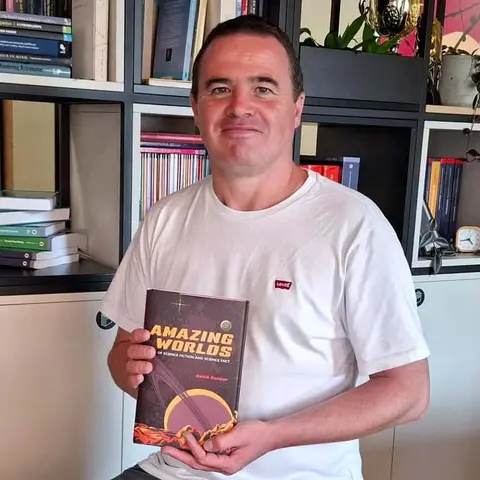
In the past three decades astronomers have discovered more than 6000 exoplanets – planets that orbit stars other than the Sun. Many of these exoplanets are very unlike the eight planets of the solar system, making it clear that the cosmos contains a rich and varied array of alien worlds. Weird and wonderful planets are also firmly entrenched in the world of science fiction, and the interplay between imagined and real planets is explored in the new book Amazing Worlds of Science Fiction and Scie...

Sept. 18, 2025
Peer review in the age of artificial intelligence
It is Peer Review Week and the theme for 2025 is “Rethinking Peer Review in the AI Era”. This is not surprising given the rapid rise in the use and capabilities of artificial intelligence. However, views on AI are deeply polarized for reasons that span its legality, efficacy and even its morality. A recent survey done by IOP Publishing – the scientific publisher that brings you Physics World – reveals that physicists who do peer review are polarized regarding whether AI should be used in the pr...
Sept. 11, 2025
Juno: the spacecraft that is revolutionizing our understanding of Jupiter
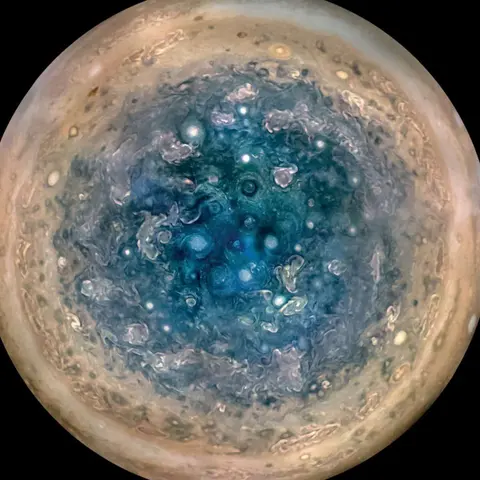
This episode of the Physics World Weekly podcast features Scott Bolton, who is principal investigator on NASA’s Juno mission to Jupiter. Launched in 2011, the mission has delivered important insights into the nature of the gas-giant planet. In this conversation with Physics World’s Margaret Harris, Bolton explains how Juno continues to change our understanding of Jupiter and other gas giants. Bolton and Harris chat about the mission’s JunoCam, which has produced some gorgeous images of Jupiter ...
Sept. 4, 2025
Artificial intelligence predicts future directions in quantum science
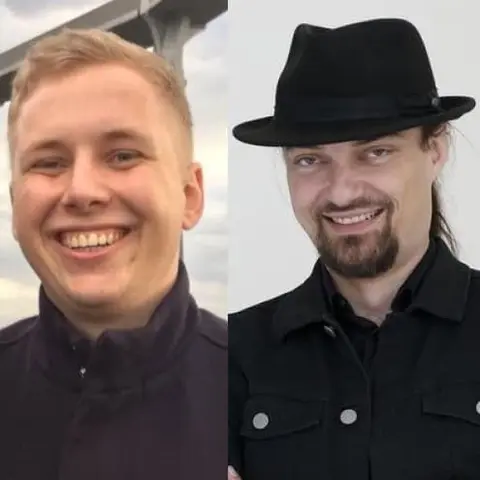
Can artificial intelligence predict future research directions in quantum science? Listen to this episode of the Physics World Weekly podcast to discover what is already possible. My guests are Mario Krenn – who heads the Artificial Scientist Lab at Germany’s Max Planck Institute for the Science of Light – and Felix Frohnert, who is doing a PhD on the intersection of quantum physics and machine learning at Leiden University in the Netherlands. Frohnert, Krenn and colleagues published a paper e...
Aug. 28, 2025
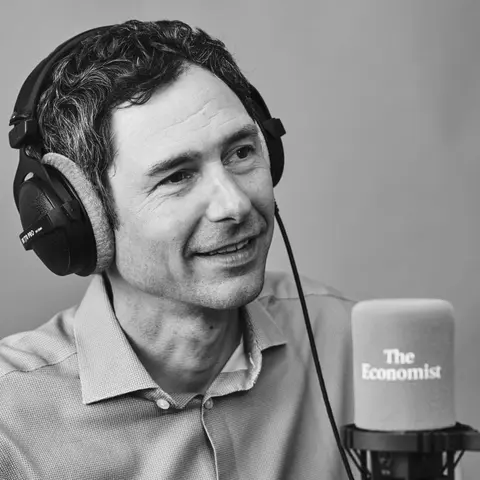
From a laser lab to the Economist: physicist Jason Palmer on his move to journalism
My guest in this episode of the Physics World Weekly podcast is the journalist Jason Palmer, who co-hosts the Intelligence podcast at the Economist. Palmer did a PhD in chemical physics at Imperial College London before turning his hand to science writing with stints at the BBC and New Scientist. He explains how he made the transition from the laboratory to the newsroom and offers tips for scientists planning to make the same career journey. We also chat about how artificial intelligence is ch...
Aug. 21, 2025
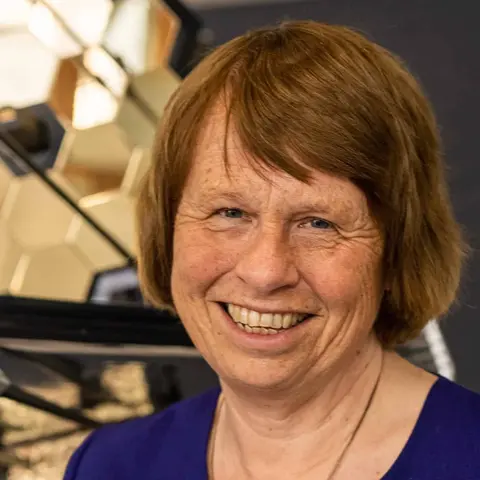
Cosmic chemistry: Ewine van Dishoeck shares her zeal for astrochemistry
This episode features a wide-ranging interview with the astrochemist Ewine van Dishoeck, who is professor emeritus of molecular astrophysics at Leiden Observatory in the Netherlands. In 2018 she was awarded The Kavli Prize in Astrophysics and in this podcast she talks about her passion for astrochemistry and how her research combines astronomy, astrophysics, theoretical chemistry and laboratory experiments. Van Dishoeck talks about some of the key unanswered questions in astrochemistry, includi...
Aug. 14, 2025
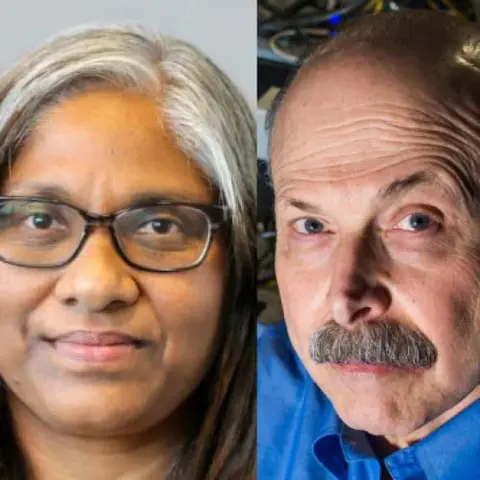
Building a quantum powerhouse in the US Midwest
In this episode of the Physics World Weekly podcast I am in conversation two physicists who are leading lights in the quantum science and technology community in the US state of Illinois. They are Preeti Chalsani who is chief quantum officer at Intersect Illinois, and David Awschalom who is director of Q-NEXT. As well as being home to Chicago, the third largest urban area in the US, the state also hosts two national labs (Fermilab and Argonne) and several top universities. In this episode, Awsc...
Aug. 7, 2025
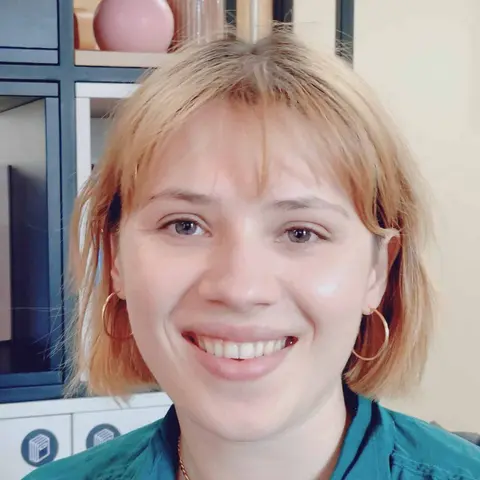
Building a career from a passion for science communication
This episode of the Physics World Weekly podcast features an interview with Kirsty McGhee, who is a scientific writer at the quantum-software company Qruise. It is the second episode in our two-part miniseries on careers for physicists. While she was doing a PhD in condensed matter physics, McGhee joined Physics World’s Student Contributors Network. This involved writing articles about peer-reviewed research and also proof reading articles written by other contributors. McGhee explains how the...
July 31, 2025
Third age careers for physicists: writing and the arts beckon
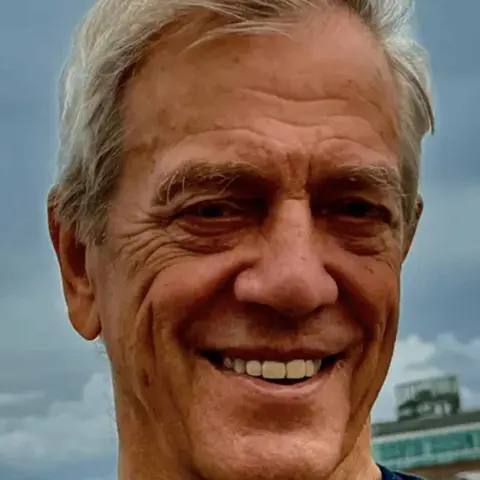
Many of us will have careers with three distinct eras: education, work and retirement. While the first two tend to be regimented, the third age offers the possibility of pursuing a wide range of interests. Our guest in this episode of the Physics World Weekly podcast is the retired particle physicist Michael Albrow, who is scientist emeritus at Fermilab in the US. He has just published his book Space Times Matter: One Hundred Short Stories About The Universe, which is a collection of brief essa...
July 24, 2025
From rabbits and foxes to the human gut microbiome, physics is helping us understand the natural world
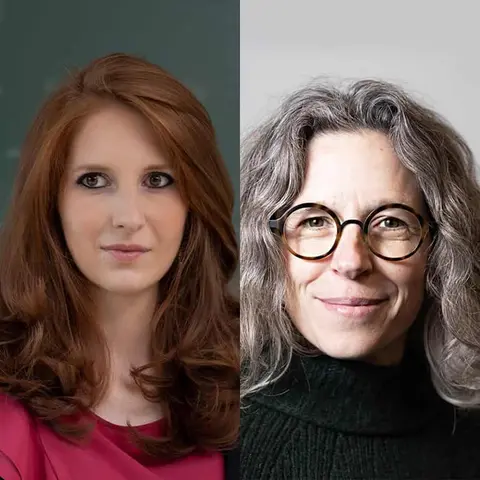
This episode of the Physics World Weekly podcast is a conversation with two physicists, Ada Altieri and Silvia De Monte, who are using their expertise in statistical physics to understand the behaviour of ecological communities. A century ago, pioneering scientists such as Alfred Lotka and Vito Volterra showed that statistical physics techniques could explain – and even predict – patterns that ecologists observe in nature. At first, this work focused on simple ecosystems containing just one or ...
July 17, 2025
Oak Ridge’s Quantum Science Center takes a multidisciplinary approach to developing quantum materials and technologies
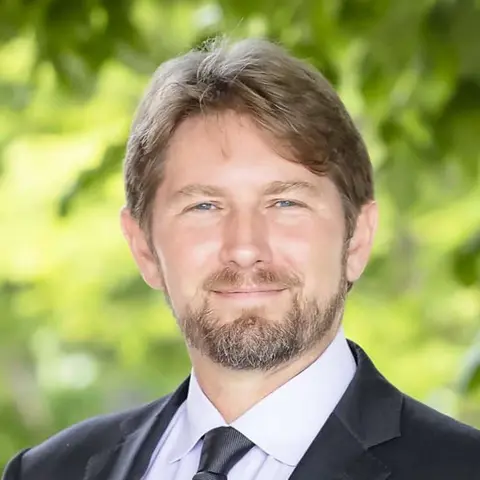
This episode of the Physics World Weekly podcast features Travis Humble, who is director of the Quantum Science Center at Oak Ridge National Laboratory. Located in the US state of Tennessee, Oak Ridge is run by the US Department of Energy (DOE). The Quantum Science Center links Oak Ridge with other US national labs, universities and companies. Humble explains how these collaborations ensure that Oak Ridge’s powerful facilities and instruments are used to create new quantum technologies. He als...
July 10, 2025
Inside ATLAS: Sara Alderweireldt explains how the CERN experiment homes in on new physics
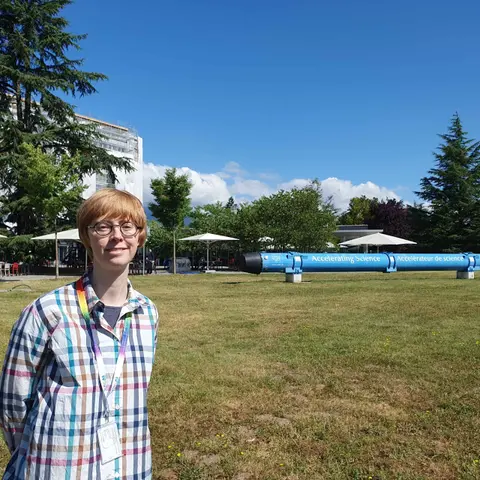
This podcast features an interview with Sara Alderweireldt, who is a physicist working on the ATLAS experiment at CERN – the world-famous physics lab that straddles the Swiss-French border and is home to the Large Hadron Collider (LHC). Based at the UK’s University of Edinburgh, Alderweireldt is in conversation with Physics World’s Margaret Harris and explains how physicists sift through the vast amount of information produced by ATLAS’ myriad detectors in search of new physics. They also chat...

July 3, 2025
Making science careers more accessible to people with disabilities
According to a recent white paper from the UK’s National Association of Disabled Staff Networks, 22% of working-age people in the UK have a disability compared to less than 7% of people working in science. At the upper echelons of science, only 4% of senior academic positions are filled with people with disabilities and just 1% of research grant applications to UK Research and Innovation are from researchers who disclose being disabled. These disappointing statistics are reported in “Towards a ...
June 26, 2025
Reversible computing could help solve AI’s looming energy crisis
This episode of the Physics World Weekly podcast features Hannah Earley, a mathematician and physicist who is chief technical officer and co-founder of Vaire Computing. The company is developing hardware for reversible computing, a paradigm with the potential to reduce significantly the energy required to do computations – which could be a boon for power-hungry applications like artificial intelligence. In a conversation with Physics World’s Margaret Harris, Earley talks about the physics, eng...
June 19, 2025
Helgoland: leading scientists reflect on 100 years of quantum physics and look to the future
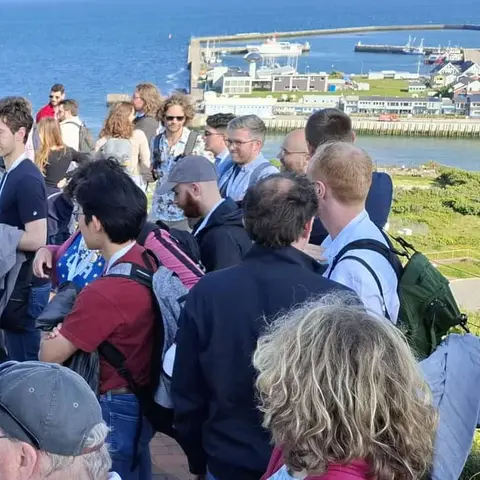
Last week, Physics World’s Matin Durrani boarded a ferry in Hamburg that was bound for Helgoland – an archipelago in the North Sea about 70 km off the north-west coast of Germany. It was a century ago in Helgoland that the physicist Werner Heisenberg devised the mathematical framework that underpins our understanding of quantum physics. Matin was there with some of the world’s leading quantum physicists for the conference Helgoland 2025: 100 Years of Quantum Mechanics – which celebrated Heisen...
June 12, 2025
Exploring careers in healthcare for physicists and engineers
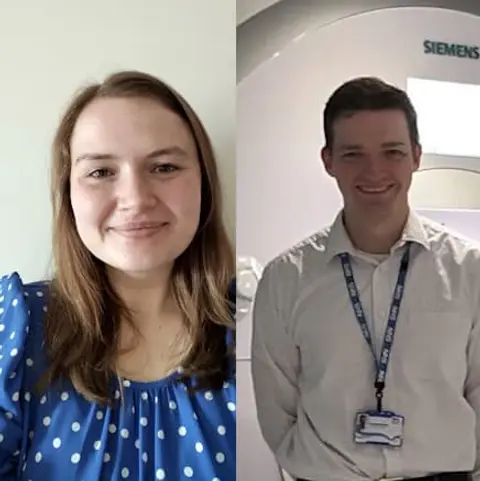
In this episode of the Physics World Weekly podcast we explore the career opportunities open to physicists and engineers looking to work within healthcare – as medical physicists or clinical engineers. Physics World’s Tami Freeman is in conversation with two early-career physicists working in the UK’s National Health Service (NHS). They are Rachel Allcock, a trainee clinical scientist at University Hospitals Coventry and Warwickshire NHS Trust, and George Bruce, a clinical scientist at NHS Grea...
June 5, 2025
Richard Bond and George Efstathiou: meet the astrophysicists who are shaping our understanding of the early universe
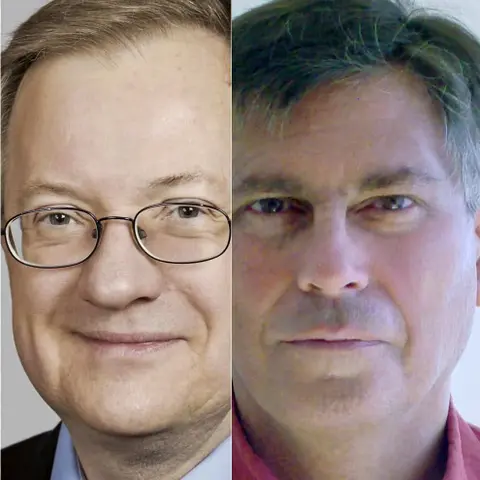
This episode of the Physics World Weekly podcast features George Efstathiou and Richard Bond, who share the 2025 Shaw Prize in Astronomy, “for their pioneering research in cosmology, in particular for their studies of fluctuations in the cosmic microwave background (CMB). Their predictions have been verified by an armada of ground-, balloon- and space-based instruments, leading to precise determinations of the age, geometry, and mass-energy content of the universe.” Bond and Efstathiou talk abo...
May 29, 2025
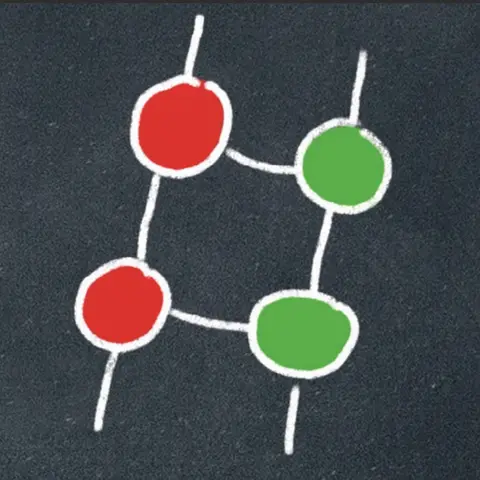
Teaching quantum physics to everyone: pictures offer a new way of understanding
Quantum science is enjoying a renaissance as nascent quantum computers emerge from the lab and quantum sensors are being used for practical applications. As the technologies we use become more quantum in nature, it follows that everyone should have a basic understanding of quantum physics. To explore how quantum physics can be taught to the masses, I am joined by Arjan Dhawan, Aleks Kissinger and Bob Coecke – who are all based in the UK. Coecke is chief scientist at Quantinuum – which develops...
May 22, 2025
A Martian aurora, how the universe fades away, Heisenberg on holiday, physics of fake coins
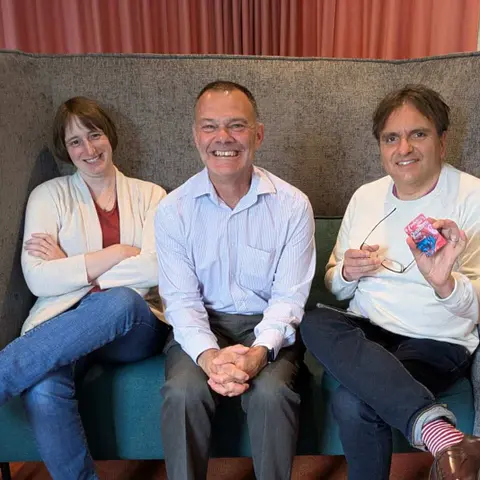
In this episode of the Physics World Weekly podcast I look at what’s new in the world of physics with the help of my colleagues Margaret Harris and Matin Durrani. We begin on Mars, where NASA’s Perseverance Rover has made the first observation of an aurora from the surface of the Red Planet. Next, we look deep into the future of the universe and ponder the physics that will govern how the last stars will fade away. Then, we run time in reverse and go back to the German island of Helgoland, whe...