Episodes

May 15, 2025
Quantum computing for artists, musicians and game designers
Many creative industries rely on cutting-edge digital technologies, so it is not surprising that this sector could easily become an early adopter of quantum computing. In this episode of the Physics World Weekly podcast I am in conversation with James Wootton, who is chief scientific officer at Moth Quantum. Based in the UK and Switzerland, the company is developing quantum-software tools for the creative industries – focusing on artists, musicians and game developers. Wootton joined Moth Quan...

May 8, 2025
Molecular engineering and battery recycling: developing new technologies in quantum, medicine and energy
This episode of the Physics World Weekly podcast comes from the Chicago metropolitan area – a scientific powerhouse that is home to two US national labs and some of the country’s leading universities. Physics World’s Margaret Harris was there recently and met Nadya Mason. She is dean of the Pritzker School of Molecular Engineering at the University of Chicago, which focuses on quantum engineering; materials for sustainability; and immunoengineering. Mason explains how molecular-level science is...

May 1, 2025
Ferenc Krausz explains how ultrashort laser pulses could help detect disease
This episode of the Physics World Weekly podcast features the Nobel laureate Ferenc Krausz. He is director of the Max-Planck Institute of Quantum Optics and a professor at LMU Munich, both in Germany, and CEO and scientific director of the Center for Molecular Fingerprinting in Budapest, Hungary. In a conversation with Physics World’s Tami Freeman Krausz talks about his research into using ultrashort-pulsed laser technology to develop a diagnostic tool for early disease detection. He also discu...
April 24, 2025
Driving skills and innovation in the UK’s semiconductor industry
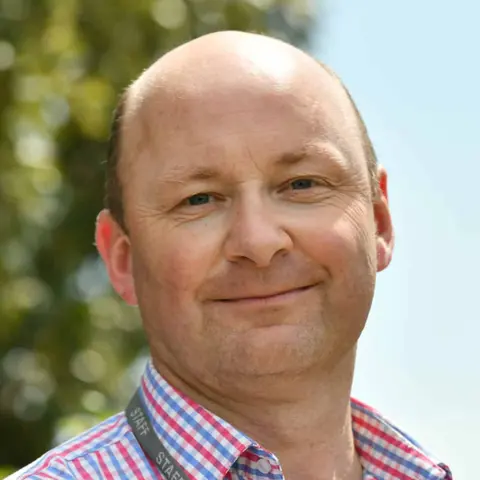
This episode of the Physics World Weekly podcast features the materials scientist Paul Meredith, who is director of the Centre for Integrative Semiconductor Materials (CISM) at the UK’s Swansea University. In a conversation with Physics World’s Matin Durrani, Meredith talks about the importance of semiconductors in a hi-tech economy and why it is crucial for the UK to have a homegrown semiconductor industry. Founded in 2020, CISM moved into a new, state-of-the-art £50m building in 2023 and is ...
April 17, 2025
Radiosurgery made easy: the role of the Gamma Knife in modern radiotherapy
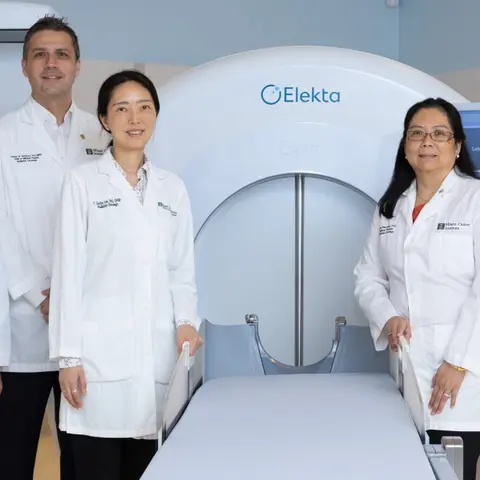
This podcast features Alonso Gutierrez, who is chief of medical physics at the Miami Cancer Institute in the US. In a wide-ranging conversation with Physics World’s Tami Freeman, Gutierrez talks about his experience using Elekta’s Leksell Gamma Knife for radiosurgery in a busy radiotherapy department. This podcast is sponsored by Elekta.

April 10, 2025
Non-invasive pressure sensor could revolutionize how brain injuries are diagnosed
This episode of the Physics World Weekly podcast features an interview with Panicos Kyriacou, who is chief scientist at the UK-based start-up Crainio. The company has developed a non-invasive way of using light to measure the pressure inside the skull. Knowing this intracranial pressure is crucial when diagnosing traumatic brain injury, which a leading cause of death and disability. Today, the only way to assess intracranial pressure is to insert a sensor into the patient’s brain, so Crainio’s n...

April 4, 2025
William Phillips: Nobel laureate talks about his passion for quantum physics
This episode of the Physics World Weekly podcast features William Phillips, who shared the 1997 Nobel Prize for Physics for his work on cooling and trapping atoms using laser light. In a wide-ranging conversation with Physics World’s Margaret Harris, Phillips talks about his long-time fascination with quantum physics – which began with an undergraduate project on electron spin resonance. Phillips chats about quirky quantum phenomena such as entanglement and superposition and explains how they a...

March 27, 2025
Microsoft’s Chetan Nayak on topological qubits, the physics of bigger splashes
Last week I had the pleasure of attending the Global Physics Summit (GPS) in Anaheim California, where I rubbed shoulders with 15,000 fellow physicists. The best part of being there was chatting with lots of different people, and in this podcast I share two of those conversations. First up is Chetan Nayak, who is a senior researcher at Microsoft’s Station Q quantum computing research centre here in California. In February, Nayak and colleagues claimed a breakthrough in the development of topolo...

March 20, 2025
Artur Ekert explains how Albert Einstein and John Bell inspired quantum cryptography
When physicists got their first insights into the quantum world more than a century ago, they found it puzzling to say the least. But gradually, and through clever theoretical and experimental work, a consistent quantum theory emerged. Two physicists that who played crucial roles in this evolution were Albert Einstein and John Bell. In this episode of the Physics World Weekly podcast the theoretical crypto-physicist Artur Ekert explains how a quantum paradox identified by Einstein and colleague...

March 13, 2025
Ionizing radiation: its biological impacts and how it is used to treat disease
This episode of the Physics World Weekly podcast features Ileana Silvestre Patallo, a medical physicist at the UK’s National Physical Laboratory, and Ruth McLauchlan, consultant radiotherapy physicist at Imperial College Healthcare NHS Trust. In a wide-ranging conversation with Physics World’s Tami Freeman, Patallo and McLauchlan explain how ionizing radiation such as X-rays and proton beams interact with our bodies and how radiation is being used to treat diseases including cancer. This episo...
March 6, 2025
New materials for quantum technology, how ultrasound can help detect breast cancer
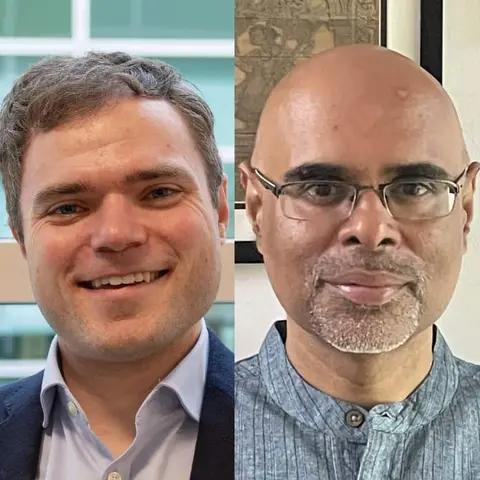
In this episode of the Physics World Weekly podcast, we explore how computational physics is being used to develop new quantum materials; and we look at how ultrasound can help detect breast cancer. Our first guest is Bhaskaran Muralidharan, who leads the Computational Nanoelectronics & Quantum Transport Group at the Indian Institute of Technology Bombay. In a conversation with Physics World’s Hamish Johnston, he explains how computational physics is being used to develop new materials and devi...
Feb. 27, 2025
Exploring CERN: Physics World visits the world’s leading particle-physics lab
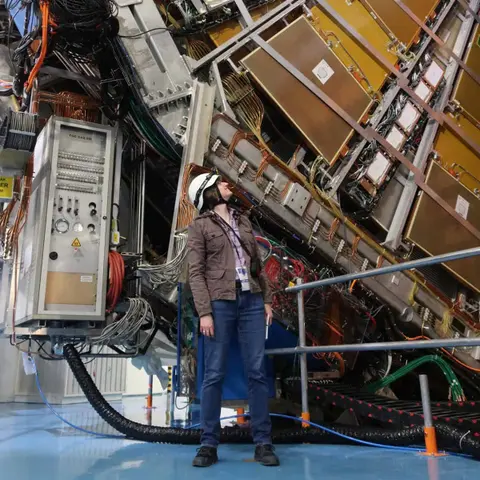
In this episode of the Physics World Weekly podcast, online editor Margaret Harris chats about her recent trip to CERN. There, she caught up with physicists working on some of the lab’s most exciting experiments and heard from CERN’s current and future leaders. Founded in Geneva in 1954, today CERN is most famous for the Large Hadron Collider (LHC), which is currently in its winter shutdown. Harris describes her descent 100 m below ground level to visit the huge ATLAS detector and explains why ...

Feb. 20, 2025
Jim Gates updates his theorist’s bucket list and surveys the damage being done to US science and society
This episode of the Physics World Weekly podcast features an interview with the theoretical physicist Jim Gates who is at the University of Maryland and Brown University – both in the US. He updates his theorist’s bucket list, which he first shared with Physics World back in 2014. This is a list of breakthroughs in physics that Gates would like to see happen before he dies. One list item – the observation or gravitational waves – happened in 2015 and Gates explains the importance of the discov...
Feb. 13, 2025
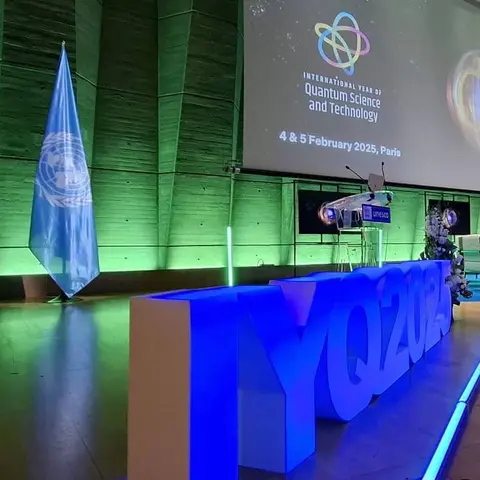
Quantum superstars gather in Paris for the IYQ 2025 opening ceremony
The United Nations Educational, Scientific and Cultural Organization (UNESCO) has declared 2025 the International Year of Quantum Science and Technology – or IYQ. UNESCO kicked-off IYQ on 4–5 February at a gala opening ceremony in Paris. Physics World’s Matin Durrani was there, and he shares his highlights from the event in this episode of the Physics World Weekly podcast. No fewer than four physics Nobel laureates took part in the ceremony alongside representatives from governments and indust...

Feb. 6, 2025
How the changing environment affects solar-panel efficiency: the Indian perspective
This episode of the Physics World Weekly podcast looks at how climate and environmental change affect the efficiency of solar panels. Our guest is the climate scientist Sushovan Ghosh, who is lead author of paper that explores how aerosols, rising temperatures and other environmental factors will affect solar-energy output in India in the coming decades. Today, India ranks fifth amongst nations in terms of installed solar-energy capacity and boosting this capacity will be crucial for the countr...

Jan. 30, 2025
Mark Thomson looks to the future of CERN and particle physics
This episode of the Physics World Weekly podcast features Mark Thomson, who will become the next director-general of CERN in January 2026. In a conversation with Physics World’s Michael Banks, Thomson shares his vision of the future of the world’s preeminent particle physics lab, which is home to the Large Hadron Collider (LHC). They chat about the upcoming high-luminosity upgrade to the LHC (HL-LHC), which will be completed in 2030. The interview explores long-term strategies for particle phys...
Jan. 23, 2025
Why electrochemistry lies at the heart of modern technology
This episode of the Physics World Weekly podcast features a conversation with Colm O’Dwyer, who is professor of chemical energy at University College Cork in Ireland and president of the Electrochemical Society. He talks about the role that electrochemistry plays in the development of modern technologies including batteries, semiconductor chips and pharmaceuticals. O’Dwyer chats about the role that the Electrochemical Society plays in advancing the theory and practice of electrochemistry and so...
Jan. 16, 2025
Ceryx Medical: company uses bioelectronics to coordinate the heart and lungs
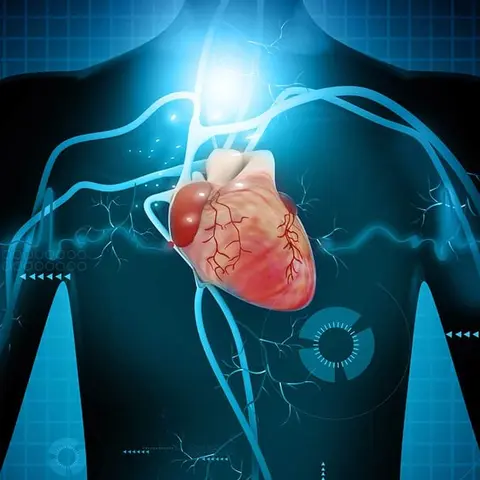
Heart failure is a serious condition that occurs when a damaged heart loses its ability to pump blood around the body. It affects as many as 100 million people worldwide and it is a progressive disease such that five years after a diagnosis, 50% of patients with heart failure will be dead. The UK-based company Ceryx Medical has created a new bioelectronic device called Cysoni, which is designed to adjust the pace of the heart as a patient breathes in and out. This mimics a normal physiological ...

Jan. 9, 2025
Humanitarian engineering can improve cancer treatment in low- and middle-income countries
This episode of the Physics World Weekly podcast explores how the concept of humanitarian engineering can be used to provide high quality cancer care to people in low- and middle-income countries (LMICs). This is an important challenge because today only 5% of global radiotherapy resources are located in LMICs, which are home to the majority of the world’s population. Our guests are two medical physicists at the University of Washington in the US who have contributed to the ebook Humanitarian E...
Jan. 2, 2025
International Year of Quantum Science and Technology: our celebrations begin with a look at quantum networks and sensors
As proclaimed by the United Nations, 2025 is the International Year of Quantum Science and Technology, or IYQ for short. This year was chosen because it marks the 100th anniversary of Werner Heisenberg’s development of matrix mechanics – the first consistent mathematical description of quantum physics. Our guest in this episode of the Physics World Weekly podcast is the Turkish quantum physicist Mete Atatüre, who heads up the Cavendish Laboratory at the UK’s University of Cambridge. In a conve...

Dec. 26, 2024
The physics of ice cream: food scientist Douglas Goff talks about this remarkable material
December might be dark and chilly here in the northern hemisphere, but it’s summer south of the equator – and for many people that means eating ice cream. It turns out that the physics of ice cream is rather remarkable – as I discovered when I travelled to Canada’s University of Guelph to interview the food scientist Douglas Goff. He is a leading expert on the science of frozen desserts and in this podcast he talks about the unique material properties of ice cream, the analytical tools he uses ...
Dec. 19, 2024
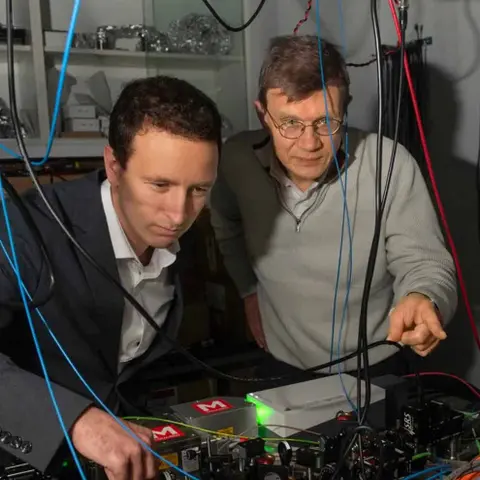
Mikhail Lukin and Dolev Bluvstein explain how they used trapped atoms to create 48 logical qubits
One half of the Physics World 2024 Breakthrough of the Year has been awarded to Mikhail Lukin, Dolev Bluvstein and colleagues at Harvard University, the Massachusetts Institute of Technology and QuEra Computing for demonstrating quantum error correction on an atomic processor with 48 logical qubits. In this episode of the Physics World Weekly podcast, Bluvstein and Lukin explain the crucial role that error correction is playing in the development of practical quantum computers. They also descri...

Dec. 19, 2024
Hartmut Neven talks about Google Quantum AI’s breakthrough in quantum error correction
One half of the Physics World 2024 Breakthrough of the Year has been awarded to Hartmut Neven and colleagues at Google Quantum AI and their collaborators for implementing quantum error correction below the surface code threshold in a superconducting chip. In this episode of the Physics World Weekly podcast, Neven talks about Google’s new Willow quantum processor, which integrates 105 superconducting physical qubits. He also explains how his team used these qubits to create logical qubits with e...
Dec. 12, 2024
Exploring this year’s best physics research in our Top 10 Breakthroughs of 2024
This episode of the Physics World Weekly podcast features a lively discussion about our Top 10 Breakthroughs of 2024, which include important research in nuclear physics, quantum computing, medical physics, lasers and more. Physics World editors explain why we have made our selections and look at the broader implications of this impressive body of research. The top 10 serves as the shortlist for the Physics World Breakthrough of the Year award, the winner of which will be announced on 19 Decemb...