Episodes
May 31, 2025
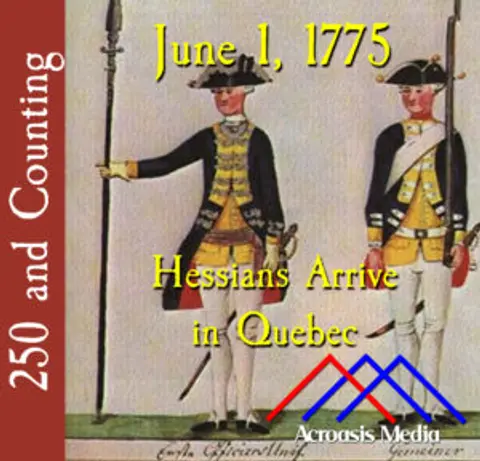
June 1, 1775: Hessians Arrive in Quebec
When I was a kid learning about the American Revolution, we somehow got it in our heads that Hessians were some kind of Super Troopers, practically undefeatable and certainly not to be trifled with. And to a certain extent, that was true. Hessians were professional soldiers, that is, they were mercenaries. What’s more, they were well-trained and well-paid. But still in the long run, they were still just soldiers, and we won the war anyway, against all odds. Britiain eventually hired over 30,00...
May 30, 2025
May 31, 1775: The Second Letter to Canada
With all the talk of our good relationships with Canada possibly going awry in the light of tariffs being levied [or not] against that country, it’s interesting to recognize that there was, in fact, a genuine relationship established before the Colonies broke away from England. It started in 1774, and continues on this day in 1775, and there’s one more attempt in the works. But for the time being let’s live for today. The post May 31, 1775: The Second Letter to Canada appeared first on 250 and...
May 29, 2025
May 30, 1775: Thomas Willing Gets Mail
As we noted a couple of days ago, the Continental Congress had its share of delegates who wanted to take one more crack at reconciliation. To that end they’d begun working on the Olive Branch Petition, though it wouldn’t be ready to send to Britain for several more weeks. So when a letter came in from Lord North to one of the delegates, and the letter offered its own form of reconciliation…well, attention must be paid. The post May 30, 1775: Thomas Willing Gets Mail appeared first on 250 and C...
May 28, 2025
May 29, 1775: Nathan Cutler
By all accounts, Nathan Cutler was an effective lawyer and legislator, as his frequent returns to the Massachusetts Legislature, and later the Maine House of Representatives, will attest. And when a governor of the State of Maine died, he was able to step into the role until the term of office expired. Cutler could have probably remained Governor, but he’d turned down positions before, so it’s entirely possible that he simply chose not to run again. Listen in, it’s an interesting story. The ...
May 27, 2025
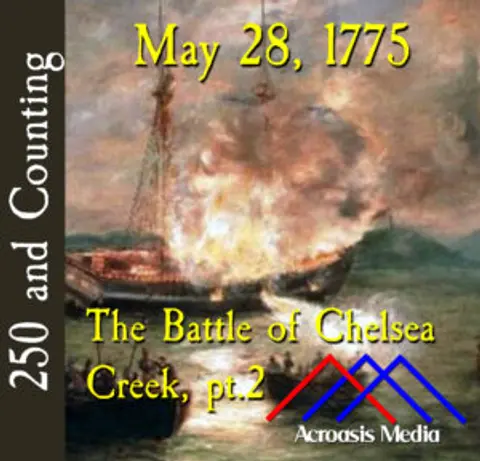
May 28, 1775: The Battle of Chelsea Creek, pt.2
Some of what you’ll be hearing today will have overlap with yesterday’s episode, but we all have shorter memories, we read in an article…uh, somewhere. But in the long run, that’s okay, because context is everything, and it’s important to understand what a big deal this particular incident was against the bigger picture. The post May 28, 1775: The Battle of Chelsea Creek, pt.2 appeared first on 250 and Counting.
May 26, 2025
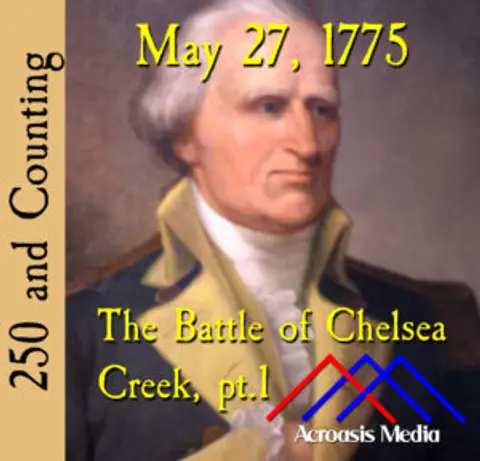
May 27, 1775: The Battle of Chelsea Creek, pt.1
Not to be confused with Chelsea of Battle Creek, who has worked for a famous cereal company for 28 years. (We may have made that up.) Lexington and Concord was the first “official” battle of the American Revolution, but at best it was a draw: Patriots took a bunch of losses, soldier-wise, but the British were forced to retreat under fire the entire time, and they wound up mostly sequestered in Boston when the dust settled. This could be considered the next chapter in that story, in that the Si...
May 25, 2025
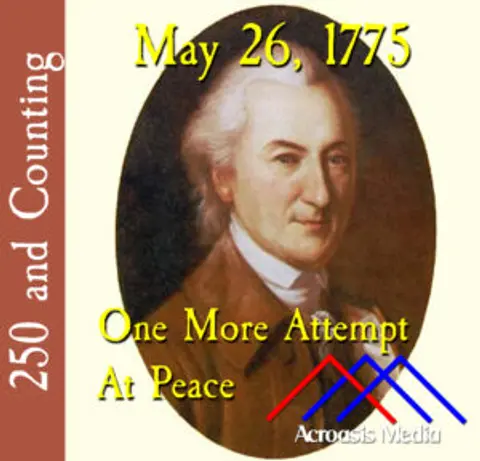
May 26, 1775: One More Attempt at Peace
Despite everything that had already happened, there was still a sizeable chunk of the Second Continental Congress who thought that some form of reconciliation with England was possible. Under their logic, the fact that there had been fighting at Lexington and Concord should have provided King George with ample proof that his policies were unpopular, and maybe he could back off on them a little bit. In retrospect, we can see that this was rather short-sighted, and that those people truly didn’t...
May 24, 2025
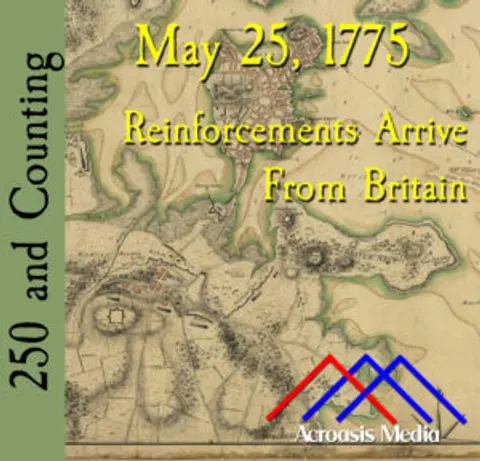
May 25, 1775: Reinforcements Arrive From Britain
Sometimes it’s kind of tough to bring an image to life through an audio podcast, but we thought it was important enough that you needed to see it somehow. It’s oftentimes hard for us to understand just how wild the Thirteen Colonies were back in the day. In 1775, New York City was roughly a square mile of the southern tip of Manhattan. Where today’s Wall Street is was literally a wall, keeping out anything to the north. That’s another 13 miles of island (roughly) to the north which might have s...
May 23, 2025
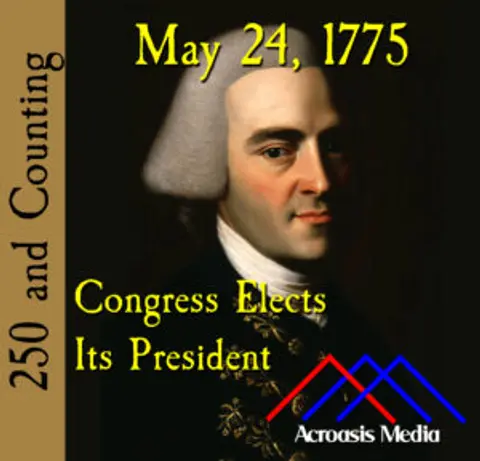
May 24, 1775: Congress Elects Its President
Even though he was President of the Second Continental Congress when the Declaration of Independence was signed in 1776 (whoops…spoiler alert), it’s entirely possible that John Hancock would be just one more guy who signed the document, except for the fact that he signed his name so large. His signature is so large and so well-known that you can say to someone “Give me your John Hancock” and they know exactly what you mean. Sure, we know John Adams and Thomas Jefferson, because they became pre...

May 22, 2025
May 23, 1775: New Jersey Gets Into the Act
New Jersey has been pretty quiet since the Lexington and Concord fighting took place. But no more: today they came back…with a vengeance! The post May 23, 1775: New Jersey Gets Into the Act appeared first on 250 and Counting.
May 21, 2025
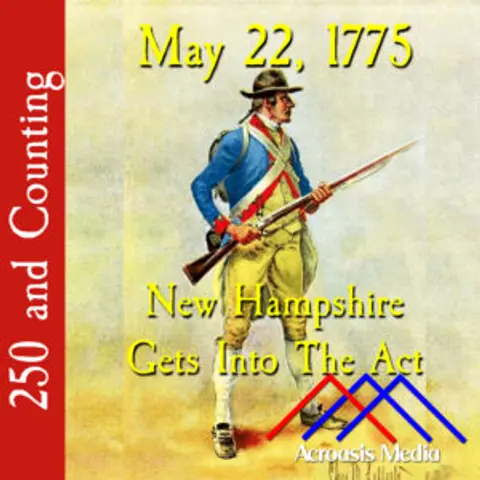
May 22, 1775: New Hampshire Gets Into the Act
Up until now, New Hampshire has been rather quiet when it came to resisting British rule. But today was the day that “Live Free or Die” was more than a motto for their license plates, which had yet to be invented. New Hampshire already had militias, of course, but they had a much broader range of available men from whom to choose. In addition, they organized themselves into a tight fighting force quicker than anyone imagined they would. The post May 22, 1775: New Hampshire Gets Into the Act ap...
May 20, 2025
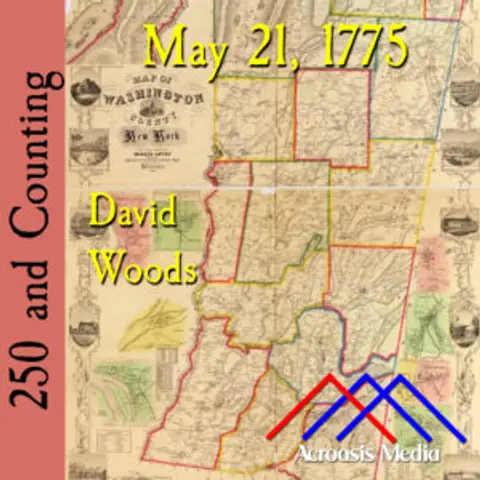
May 21, 1775: David Woods
Like so many people who lived in upstate New York in the Revolutionary era, David Woods was an immigrant from Ireland when he came over with his family in 1775. New York was unusual compared to the other colonies in that the overwhelming percentage of the population was immigrants; as a result it became a bit of an enclave for people from the UK and the Netherlands, so Woods blended in well. As a result, we believe that although he wasn’t a politician for very long, he did a solid job, which d...
May 19, 2025
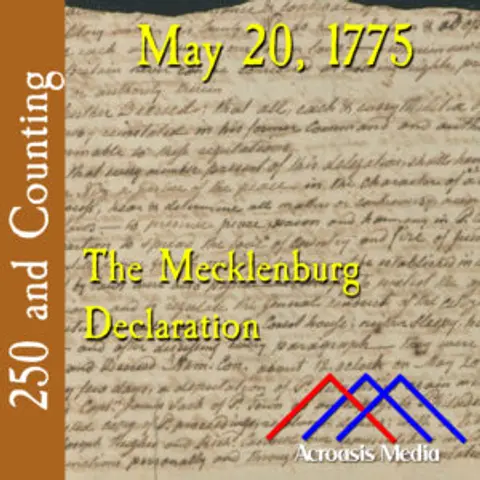
May 20, 1775: The Mecklenburg Declaration
When the folks in Mecklenburg County, North Carolina, heard about the events at Lexington and Concord a month earlier, they were quite incensed. So much so that they decided they were going to declare independence from Britain. Maybe. Maybe not. Tune in as Mike explains the controversy. The post May 20, 1775: The Mecklenburg Declaration appeared first on 250 and Counting.
May 18, 2025
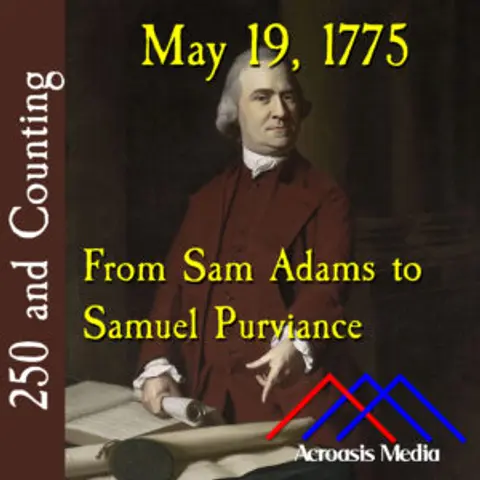
May 19, 1775: From Sam Adams to Samuel Purviance
Baltimore has a lot of historic pride in its street names. Nearly all of them can be traced back to an historic figure or event: Key Highway, named after Francis Scott Key. (Also the Key Bridge, but we’re all still sad about that.) Fort Avenue, leading to Fort McHenry. And while I’m at it, McHenry Street, about two miles from the fort. The town also has John Street, Eager Street and Howard Streets, all of them named after John Eager Howard. one of the earliest governors of the state. During the...
May 17, 2025
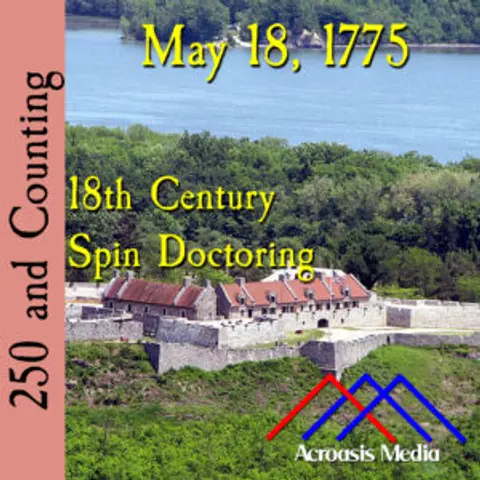
May 18, 1775: 18th Century Spin Doctors
People seem to have an inherent need to excuse their own unfortunate behaviors. One of the most common is to point to someone else breaking a rule and making it about them. Or, in the case of most of the battles of the early American Revolution, the colonists seemed always to be the aggressor, making their actions strictly an act of self-preservation. But what happens when you’ve captured all their horses? Tune in! The post May 18, 1775: 18th Century Spin Doctors appeared first on 250 and Cou...
May 16, 2025
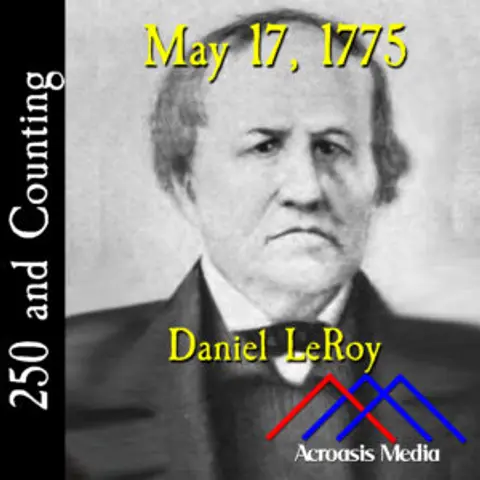
May 17, 1775: Daniel LeRoy
Is it just me or does Daniel LeRoy look a lot like actor Richard Kind? Daniel LeRoy was born in upstate New York and started to put together a pretty good settlement, but an unfortunate choice on his part caused him to lose it all. So he moved west and rebuilt his life and, by most accounts, it’s reasonable to say that he did rather well in the Michigan Territory, and in the State after that area became our nation’s 26th. The post May 17, 1775: Daniel LeRoy appeared first on 250 and Counting.
May 15, 2025
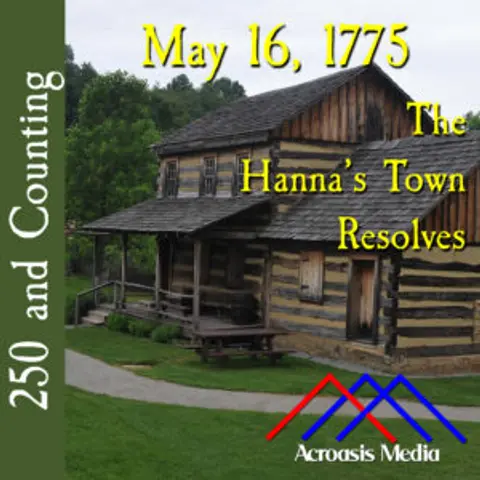
May 16, 1775: The Hanna’s Town Resolves
While the Declaration of Independence was still about 15 months away, a small community in the far western reaches of Pennsylvania decided not to wait around for it to happen, and they took matters into their own hands. The Hanna’s Town Resolves was probably the most direct challenge to British rule to date, if you don’t count the stuff that involved shooting. Unfortunately, in the end the entire town paid the price and it was destroyed. However, on the same site you can visit reproductions of...
May 14, 2025
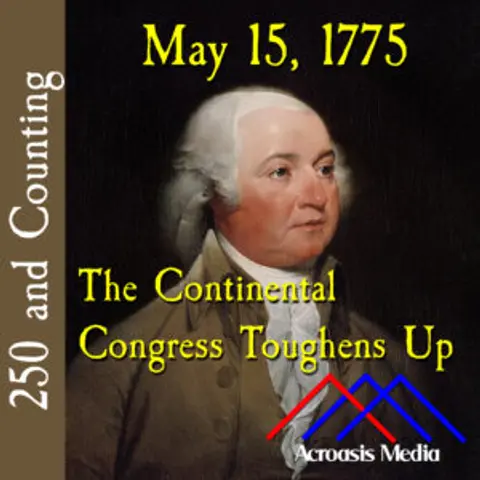
May 15, 1775: The Continental Congress Toughens Up
The Second Continental Congress has only been convened for about five days and things are already heating up for them. Delegates are still arriving. Lexington and Concord has upset their original plans so they’re making alternate plans. And even the alternate plans they made five days ago are being amended. And then Virginia comes in with some crazy idea about Independence? Will the madness never end? (Spoiler alert: it doesn’t, but we’ll tell you if it ever does.) The post May 15, 1775: The...
May 13, 2025
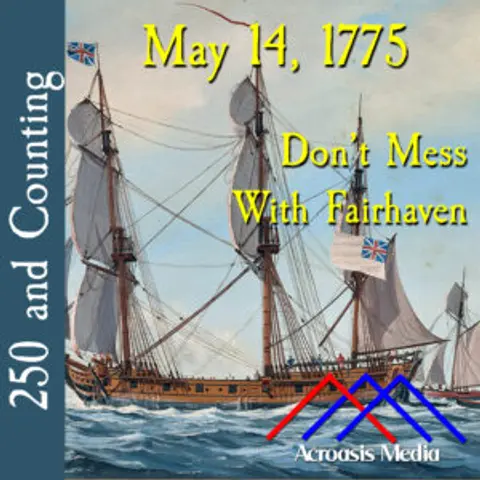
May 14, 1775: Don’t Mess With Fairhaven
The Thirteen Colonies didn’t have a lot in the way of a navy to help them with their battles, especially not against perhaps the biggest and best navy ever up until then. What they did have was people who were willing to act in lieu of a navy. Some of them did it out of sheer patriotism, and others were a little more mercenary about it. Specifically, privateers. Now, “privateers” sounds a little like “pirates” and people often use the words interchangeably. You should stop being friends with t...
May 12, 2025
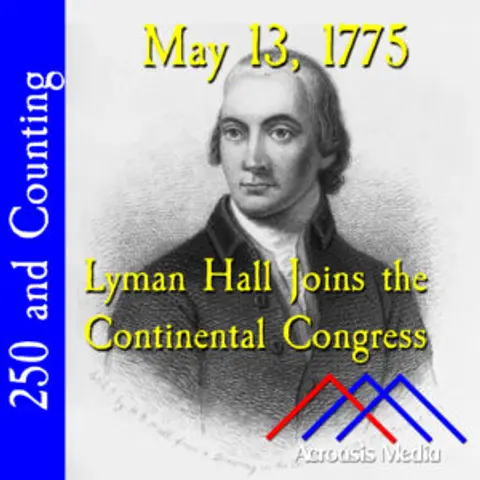
May 13, 1775: Lyman Hall Joins the Continental Congress
Dr. Lyman Hall gets a little name recognition because he was a strong supporting character in the play/film 1776, but he was more involved in the Revolution than that. While Georgia (eventually) sent five delegates to the Continental Congress, Hall was one of the three who regularly attended and signed the Declaration of Independence. For instance, he ensured that food and medicine got to Colonial soldiers, and it was he who convinced the Georgia congress to send official delegates to the Seco...
May 11, 2025
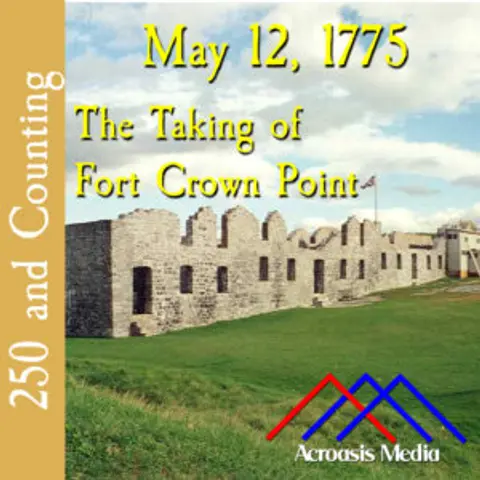
May 12, 1775: The Taking of Fort Crown Point
A fort was built at Crown Point in 1730 by the French. The British attacked it twice before the French finally destroyed it in 1759. That same year the British began building a new fort for defending against the French. In 1773 it was partially destroyed in a fire. Since nobody had seriously threatened the area in thirteen years, the British didn’t really care and chose to keep a skeleton staff of nine soldiers there. So what made it such an important target to the Green Mountain Boys? Mike’s...
May 10, 2025
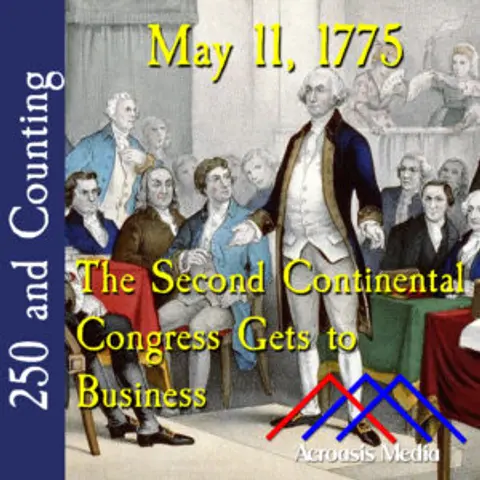
May 11, 1775: The Second Continental Congress Gets to Business
When the Second Continental Congress convened, they spent a little time with the formalities of going over credentials and establishing some ground rules. But right after that, they got right down to business. They knew that they were going to move into a wartime footing immediately. They also knew that they wanted to operate in an “official” capacity, so they took the time to review, on the record, the events leading up to and including the battle at Lexington and Concord. They then adjourned ...
May 9, 2025
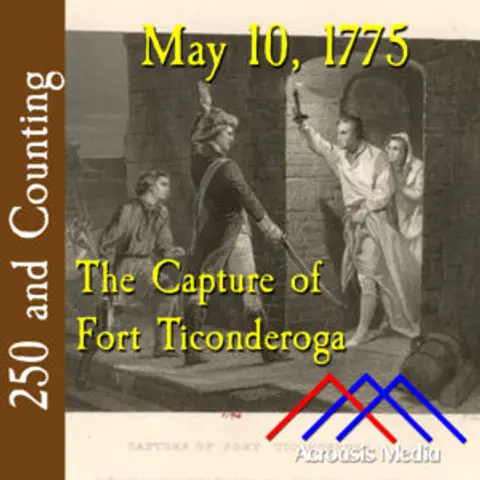
May 10, 1775: The Capture of Fort Ticonderoga
Mike has done a pretty good job of covering the basic story in today’s episode, so I thought I’d spend a minute with you on the cover art. This image, which had to be cropped to fit the parameters of podcast art, is called a “conjectural work”, because it was created many years later based on accounts of people who were there. I’ve also seen the phrase “idealized depiction,” but I think “conjectural work” is more value-neutral. The original artist was named Alonzo Chappel, and he created this ...
May 8, 2025
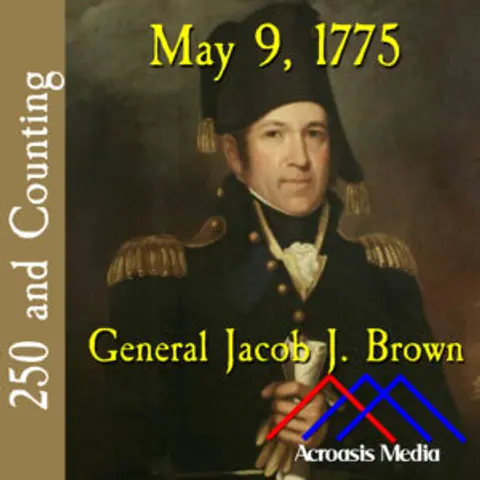
May 9, 1775: Jacob J. Brown
When it comes to the War of 1812, Baltimore and the Fort McHenry get to eat for free for a long time, because they get most of the good stories: the star-spangled banner and Francis Scott Key, the battle at North Point, the Shot Tower being briefly the highest structure in America, and so on. But there was a lot of fighting going on elsewhere, particularly in upstate New York, around the Great Lakes area, and General Jacob Brown was in the thick of it. He was a nationally-recognized war hero ba...