Episodes
May 7, 2025
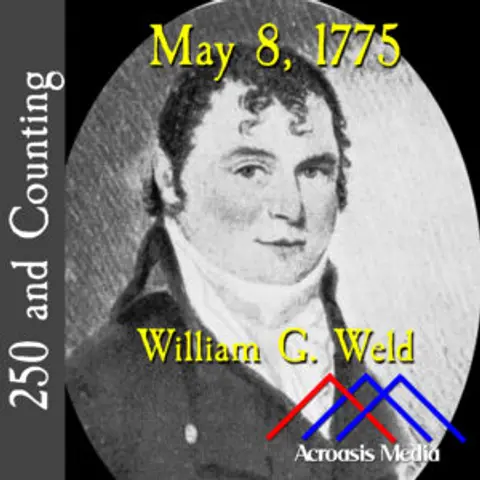
May 8, 1775: William G. Weld
If you’re like me, you’ll hear a less-common name from history and have yourself a moment of “Wait…I should know that name, but from where…?” William G. Weld was one of those names, but it turns out that William wasn’t necessarily the famous one here; it’s just that he was a direct ancestor of so many other people named Weld. Listen in and learn about the patriarch of a family of merchants and politicians, and suddenly it’ll come to you that it wasn’t THIS William Weld you’re thinking of…it’s h...
May 6, 2025
May 7, 1775: Joseph Wanton is Prevented from Becoming Governor
Joseph Wanton was elected governor of Rhode Island in 1769, and every year he was re-elected to the position. By all accounts he did a good job and looked out for his constituents. Then came the events at Lexington and Concord. Wanton wasn’t a Loyalist, but he did think that a war with England wouldn’t be especially productive, and when the General Assembly thought that it was time to raise an army, Wanton refused to do so. Unfortunately for him, he was in the space between his re-election and...
May 5, 2025
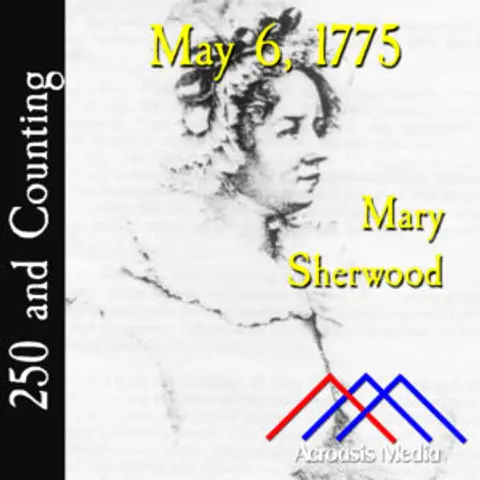
May 6, 1775: Mary Sherwood
First, I think we need to address the elephant in the room that Mike brought up during this episode: Winona Ryder comes third out of four; Katharine Hepburn and Saoirse Ronan are way ahead. And let’s just pretend June Allyson didn’t happen. Mary Sherwood is one of those authors who, it appears, was fated to fade into obscurity after dying despite the huge popularity they enjoyed in life. It still happens today; ask anyone under 40 about Erma Bombeck or Kurt Vonnegut. Fortunately you have us t...
May 4, 2025
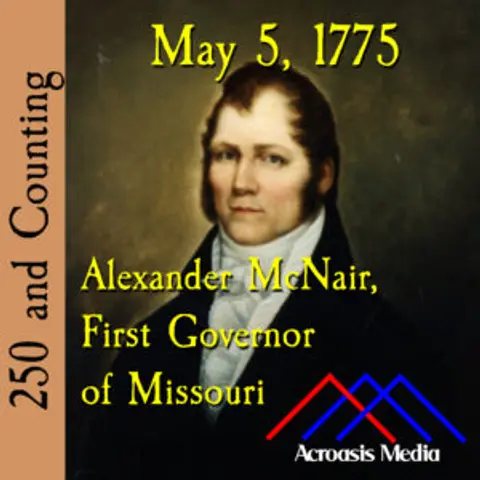
May 5, 1775: Alexander McNair, First Governor of Missouri
Alexander McNair wasn’t especially well-educated, but he became a judge and a governor of a territory and then that same area when it became a state, so he must have had something going on besides high-level friends. Then again, as governor, he wasn’t able to get a ton of stuff done, and when his term ended he took on a Federal job just for the money. So, for a guy who spent so much time in the “Show-Me State”, he didn’t really have much to show. The post May 5, 1775: Alexander McNair, First G...
May 3, 2025
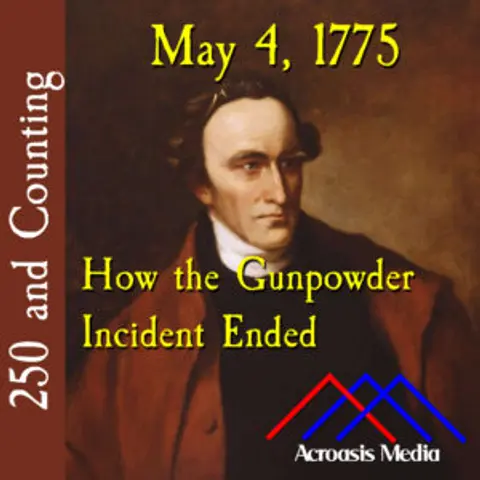
May 4, 1775: How the Gunpowder Incident Ended
As we noted a few days ago, both Payton Randolph and George Washington managed to quell a couple of militia-based riots which would have resulted in the torching of the Royal Governor’s mansion. Both of those riots came from Fredericksburg. What nobody counted on, however, was that militia from other parts of Virginia had the same idea to march on Williamsburg and wreak a little havoc. They were led by Patrick Henry, who (let’s face it) extorted payment for the missing gunpowder from Lord Dunmo...
May 2, 2025
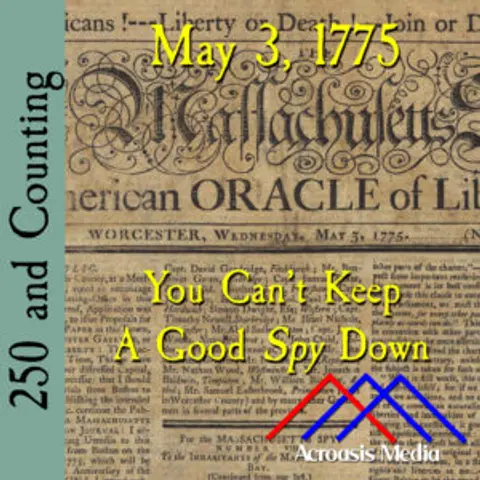
May 3, 1775: You Can’t Keep a Good Spy Down
More often than not, items that appear in the Bill of Rights derive directly from actions that the British took at one time or another in the past. Ban guns, will you? Here’s a nice Second Amendment. Ban free speech? Here’s your First Amendment. And so on. Today’s edition could be considered a Part Two to the events of April 16, when the Massachusetts Spy had to pack up shop and hightail it out of Boston down the road some forth miles to Worcester specifically so it could keep publishing. On t...
May 1, 2025
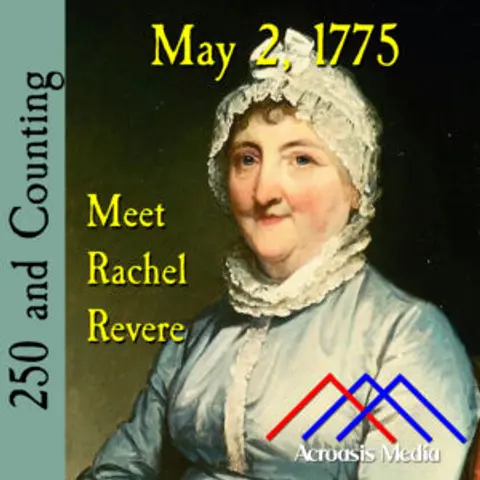
May 2, 1775: Meet Rachel Revere
Rachel Walker Revere was Paul Revere’s second wife. When he married her, he’d only been a widower for a few months, so clearly she made a big impression on him, especially since they remained together until her death in 1813 (one year after the portrait in today’s artwork was painted), and he didn’t remarry after that. Rachel was a very supportive wife to Paul, by most accounts, but she was also willing to give him grief when he deserved it, as you’ll learn in today’s episode. The post May 2, ...

April 30, 2025
May 1, 1775: Invasion of Quebec, and a Fort is Destroyed
Wellll….ordered to be destroyed. But it didn’t happen. Oddly, it was also quite susceptible to the foibles of weather, so when the British took South Carolina back five years later, it was assumed that the garrison had been destroyed on purpose, but nobody knows for sure. The post May 1, 1775: Invasion of Quebec, and a Fort is Destroyed appeared first on 250 and Counting.
April 30, 2025
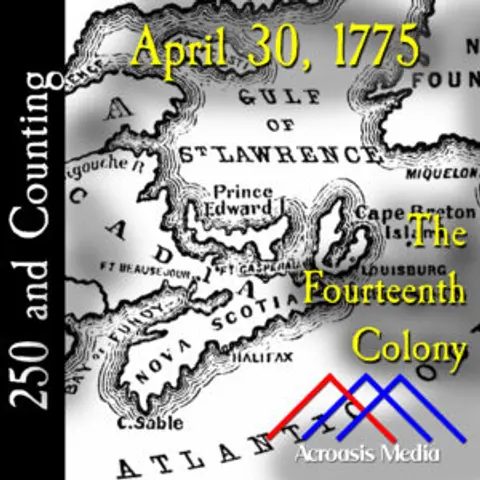
April 30, 1775: The Fourteenth Colony
Nova Scotia could have been the fourteenth state, except we ruined it for them over the whole fishing rights thing. And then when push came to shove, they decided that rebellion wasn’t for them, and they sent troops down to Boston to help the British there. Ain’t that a kick in the head! The post April 30, 1775: The Fourteenth Colony appeared first on 250 and Counting.
April 28, 2025
April 29, 1775: The Gunpowder Incident, Part 2
Payton Randolph was the Speaker of the House of Burgesses during this period in 1775, and while what was said wasn’t recorded, he managed to put down two riots in which Virginians were ready to trash the Royal Governor’s place with the Royal Governor inside of it. He did it twice. No question, this man was a patriot who cared deeply about the soul of its people. And if he hadn’t died just a few months later, he would almost certainly have been a name we’d have heard a lot more often in recent ...
April 27, 2025
April 28, 1775: Jonathan Trumbull Chooses a Side
Jonathan Trumbull was one of only two men to serve as governor of a Colony and of a State. (Nicholas Cooke of Rhode Island was the other.) This, to us, gives him a kind of air that perhaps he could be trusted by all parties to act appropriately. And when push came to shove, Trumbull found himself in the position of having to support the Colony rather than the crown, as you’ll see in today’s episode. And as things further deteriorated, he became more focal about supporting the Colony, since the ...
April 26, 2025
April 27, 1775: Skullduggery and Rebellion Here & There
The war was hot in Massachusetts, but it was still cold elsewhere. But that didn’t mean that there wasn’t rebellious activity going on, since by this point everyone knew what was going on up north. It manifested itself in different ways. In Maryland, it appeared that Patriots were straight-up lying to the Royal Governor in order to deprive the British troops of some of their arms and gunpowder stores. And in North Carolina, the Royal Governor loudly declaimed his disdain for anyone who didn’t ...
April 25, 2025
April 26, 1775: Josiah Quincy II Dies at Sea
Josiah Quincy—who we’ve talked about before; remember that portrait?—would have been one of the more prominent men we speak of when we use venerated tones about the Founding Fathers, had it not been for the fact that he died just as the war was getting started. The post April 26, 1775: Josiah Quincy II Dies at Sea appeared first on 250 and Counting.
April 24, 2025
April 25, 1775: Benedict Arnold Wasn’t All Bad
Benedict Arnold was a pretty smart guy who chose the wrong friends…and, as we’ll discover later on, the wrong enemies as well. But for the time being, here’s a peek into some of Arnold’s activities when he was still on our side in both body and spirit. The post April 25, 1775: Benedict Arnold Wasn’t All Bad appeared first on 250 and Counting.
April 23, 2025
April 24, 1775: Eyewitness Testimony from Lexington & Concord
The testimony of John Robins is what teachers like to call “primary sources”. It’s a document prepared by someone contemporary to an event, and even if the narrator is unreliable, we learn much more from it than from, say, something that was written long after the fact. In the case of John Robins’ testimony regarding events at Lexington and Concord, the events were still fresh in his mind, having happened only a few days earlier. And because it derived from an official proceeding, that document...
April 22, 2025
April 23, 1775: Boston Needs a Few Good Men
I (Claude) suppose that I should note that for a few days last week I sounded a little odd. You’re not wrong; I was not in my usual recording space and not using my usual recording equipment; what’s more I was plagued by allergies and sounded a little rough on top of the funky acoustics. I hope it didn’t bug you too much. Anyway. Today, the Massachusetts Provincial Congress takes the time to organize its militiamen into a decent army. Meanwhile in New York, word gets out about Lexington and Co...
April 21, 2025
April 22, 1775: Who Shot First?
In the aftermath of the battles at Lexington and Concord, the Massachusetts Provincial Congress held a series of hearings to determine who fired the first shot. The purpose of the hearings was partially to find out exactly what had happened, but it had another purpose: if it turned out that the British had fired first, then the Assembly could turn to England and say “SEE? It wasn’t us!” Even 250 years ago, Congressional hearings had a second agenda attached to them. (*sigh*) In the end, despit...
April 20, 2025
April 21, 1775: We Can Confiscate Arms, Too
Word spread rather quickly about the events at Lexington and Concord, and everybody mobilized to be ready for when (rather than if) hostilities broke out. Most people were arming themselves and avoiding confiscation of supplies by the British, but in South Carolina they turned the tables and did a little confiscating of their own. The post April 21, 1775: We Can Confiscate Arms, Too appeared first on 250 and Counting.
April 19, 2025
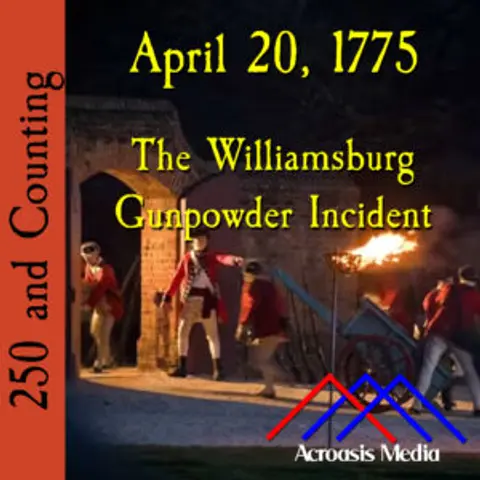
April 20, 1775: The Williamsburg Gunpowder Incident
Word was already getting out about the fighting in and near Boston. While Virginia hadn’t been much of a concern to anyone until then, the British wanted to ensure that there wouldn’t be any trouble. So in the middle of the night, they removed the gunpowder from the magazine at Williamsburg. Oddly, as we’ll learn shortly, this wasn’t a popular move on their part. The post April 20, 1775: The Williamsburg Gunpowder Incident appeared first on 250 and Counting.
April 18, 2025
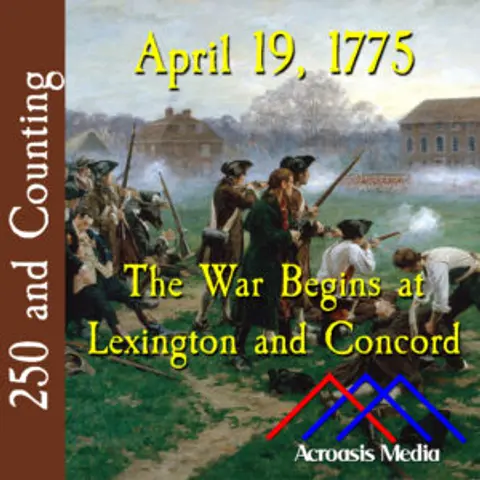
April 19, 1775: The War Begins at Lexington and Concord
This is the big one, and it’s a date that many people don’t remember, but today is the day that the Revolutionary War officially began. Oh sure, there were a few skirmishes here and there, which we’ve already discussed in earlier episodes. But this was the true tipping point from which nobody could recover or walk back. Looking through social media the past couple of days, it’s heartwarming to see the number of events commemorating the 250th anniversary of things like Paul Revere’s ride, and t...
April 17, 2025
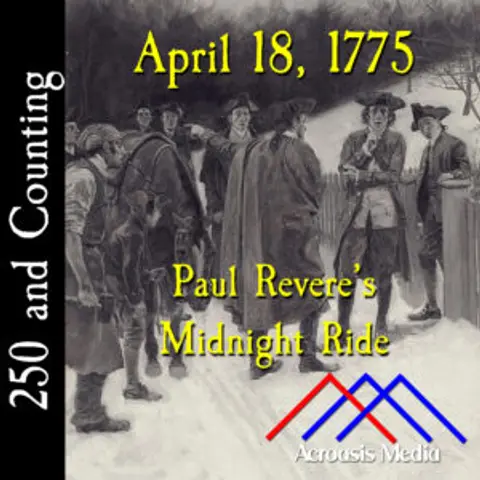
April 18, 1775: Paul Revere’s Midnight Ride
Once in awhile, we fear that students of history don’t necessarily put things into the appropriate perspective when it comes to dates. We offer them some facts regarding what happened and when, but the events still kind of mush together. That’s how we get the Simpsons joke: “Let’s take a look back at the year 1928- the year when you might have seen Al Capone dancing the Charleston on top of a flagpole!” To that end, students might place the Boston Massacre, say, as quite close in the timeline ...
April 16, 2025
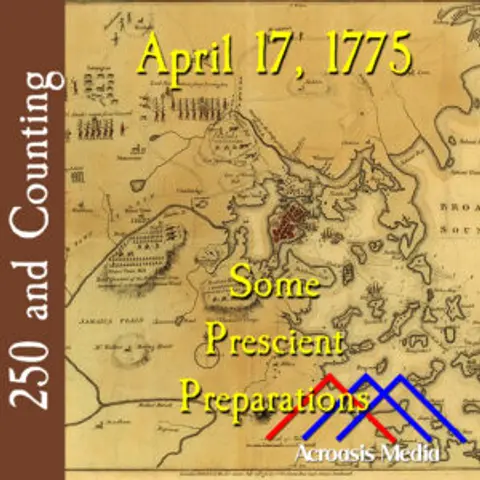
April 17, 1775: Some Prescient Preparations
War was coming closer, but nobody knew just how close. Two committees came together in Concord to make plans. They arranged for certain munitions to be moved around, for others to be prepared for action, and to ask people to lead combat units. And if those people said “No Thanks,” who the backup person would be. Then they all went out to a nearby tavern, as you do when planning a revolution. But nobody could suspect that the time from then to the war was measurable in hours by then, not by wee...
April 15, 2025
April 16, 1775: Sylvester Maxwell
I (Claude) remember once reading something about how it’s not so much the dates on the tombstones so much as it is the dash in between the dates. Because the dates represent singular events, but a lot of stuff happened during the dash. And while that sentiment is often so much glurge, it does get me to thinking sometimes about the legacies left behind by tombstones. These were people who wanted to be remembered somehow. That’s not to say that people who choose to be cremated or buried at sea or...
April 14, 2025
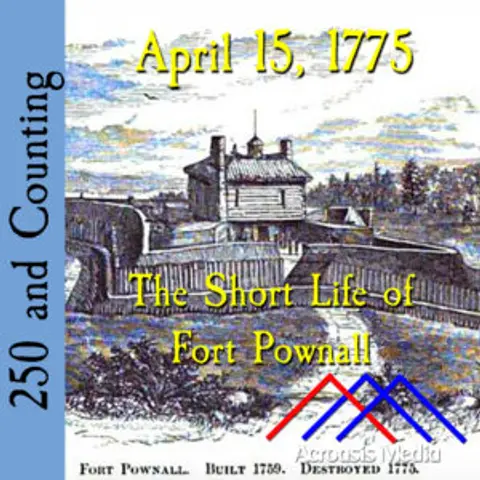
April 15, 1775: The Short Life of Fort Pownall
In retrospect, we feel like we may be picking on this historic site a little bit. In fact, the park surrounding the ruins of Fort Pownall are quite nice for hiking, biking, picnics and, as we mentioned, there are historical markers all over the place so you do get a sense of how important this particular site was. At any rate, on April 5 we told you about a detachment sent to the fort to disarm the place; today was the day that they arrived and succeeded, because even if spies knew about it (an...