Episodes
March 20, 2025
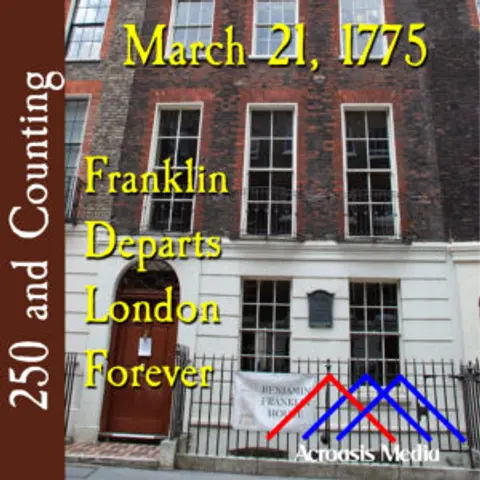
March 21, 1775: Franklin Departs London Forever
Benjamin Franklin was pretty good at diplomacy, but even when given several years to try, he was unable to bring about peace between England and the Thirteen Colonies. From December 1774 through February 1775, he and some of his British friends tried to put together a map to peace, but unfortunately both sides were too entrenched to even consider compromise. Franklin finally went home on this day in 1775, but he left one final impression that we’ll learn about tomorrow. The post March 21, 1775...
March 19, 2025
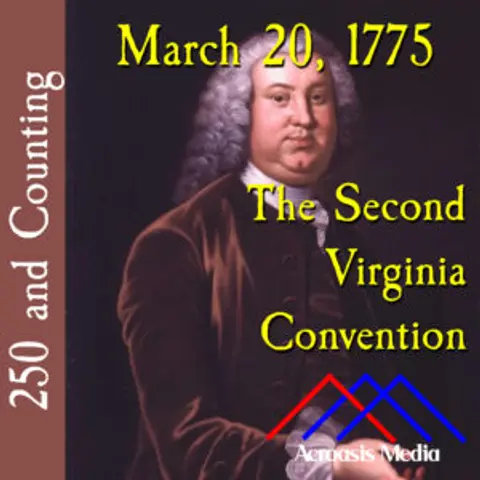
March 20, 1775: The Second Virginia Convention
The people in Virginia were getting pretty upset about what was going on between the Colonies and the British Parliament. They called a convention and, as we’ve noted over the past several days, each county sent delegates with specific instructions, many of which recommended that the colony commit itself to resisting the British and supporting any efforts made by other American entities in that respect. The Second Virginia Convention finally met on this day in 1775, and they elected Peyton Rand...
March 18, 2025
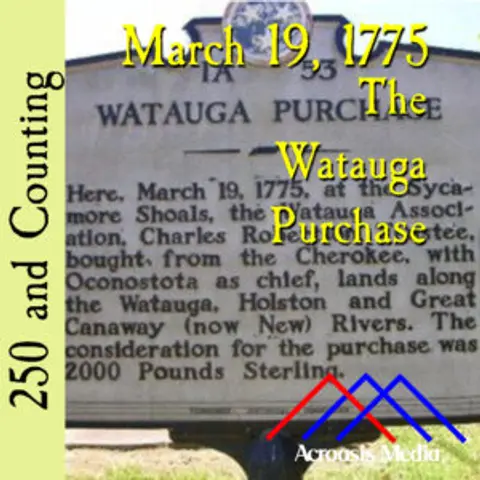
March 19, 1775: The Watauga Purchase
The Watauga Purchase was one of several land purchases in the area of the Watauga River made around the same time. But this one was first, and we know this because it’s literally on Page One of the deed book, which still exists in the Archives of two different states (one is a copy, of course). Interestingly, while this territory is sometimes considered by historians to be a self-governing area, the residents actually considered themselves to be British subjects, even after the war began, and t...
March 17, 2025
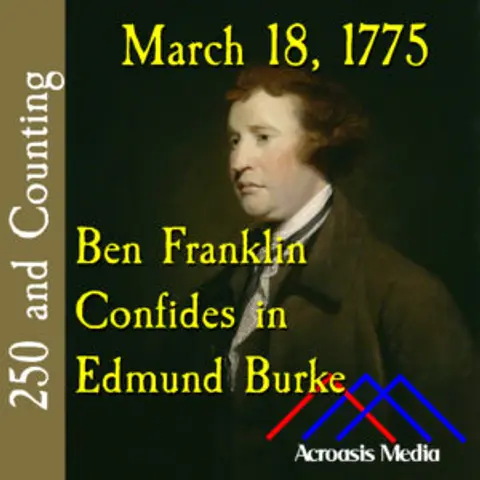
March 18, 1775: Ben Franklin Confides in Edmund Burke
Among the casualties of the early days of American History are all the friendships that were damaged by people being on opposite sides of the political fence. Good thing we’re all past that sort of petty nonsense nowadays, amirite? Sigh. We’ve talked in the past about John Adams and his former friend Daniel Leonard, who sparred in print under pen names and never quite repaired their relationship. Today we talk about Benjamin Franklin and Edmund Burke, a member of the British Parliament who was...
March 16, 2025
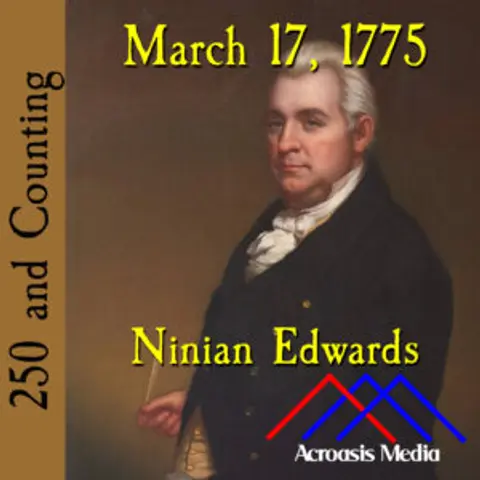
March 17, 1775: Ninian Edwards and His Illinois Doings
(Yeah, we couldn’t fit all that on the title card and have the artwork still visible.) Happy St. Patrick’s Day, if you’re the type to celebrate! We have a little Easter Egg (shamrock?) in this episode for you. Ninian Edwards was an interesting character in that he tried very hard to make the best choices for the people he represented, and while he succeeded in some respects, in others it seems he left a trail of hard feelings and broken plans. But with a single exception he doesn’t seem to ha...
March 15, 2025
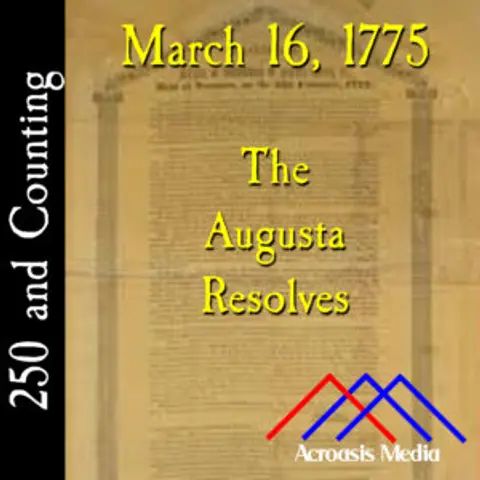
March 16, 1775: The Augusta Resolves
Over the last few days we’ve heard from several counties in Virginia sending delegates and instructions to the Second Virginia Convention, which would meet in another few days. Many of these counties published their instructions, called “Resolves,” in newspapers, so that anyone who was literate would know where the freeholders of those counties stood. And today it’s Augusta County which weighed in by publishing their Resolves in the Virginia Gazette. Augusta County is quite close to both Fincas...
March 14, 2025
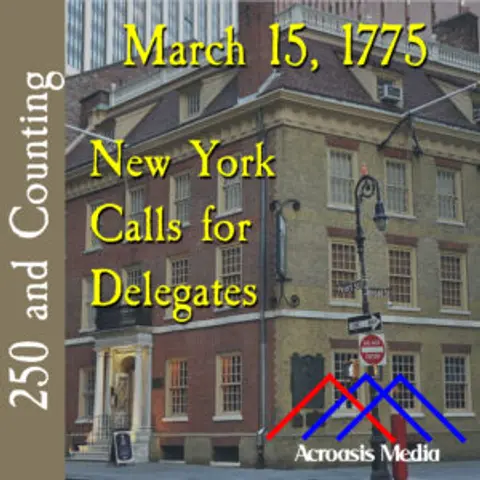
March 15, 1775: New York Calls for Delegates
The New York colony gets a bad reputation for not having its act together when it came to American Independence, but the fact is, they were late to the party because they held on to their loyalty to the Crown until there was clearly no more reason to do so. Simply put, they were the last holdout. What makes this extra remarkable is that most of the residents of New York really had no reason to be loyal to King George III, since they weren’t English-born, nor were they the descendants of English...
March 13, 2025
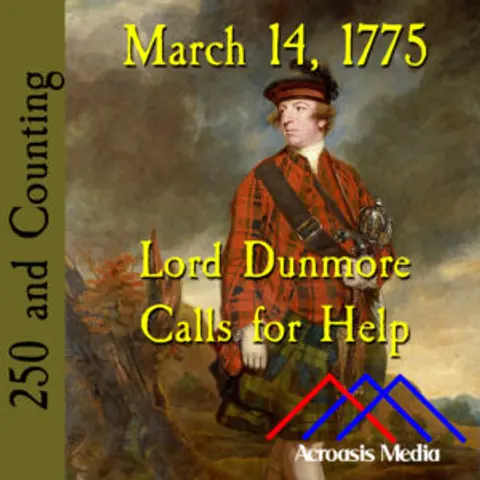
March 14, 1775: Lord Dunmore Calls for Help
John Murray, the Fourth Earl of Dunmore, or more commonly Lord Dunmore, came to the Colonies in 1770 to become the Royal Governor of New York, but fate intervened and he wound up as the Royal Governor of Virginia instead. He might have fared better in New York, but given the events of the Westminster Massacre you learned about yesterday, we’re not sure it would have made much difference. Dunmore wasn’t an especially good politician in general, and he didn’t hold the Colonists in an especially h...
March 12, 2025
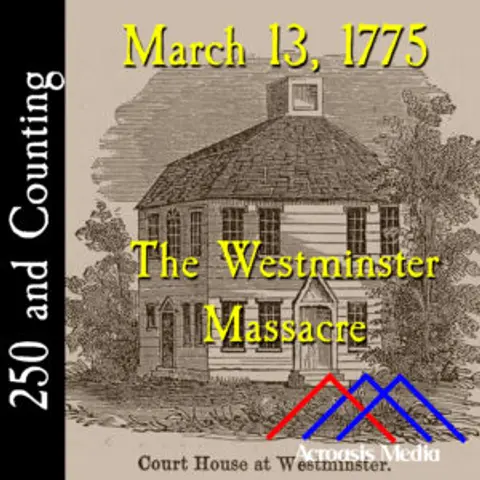
March 13, 1775: The Westminster Massacre
The Westminster Massacre was a seminal event in the history of both the United States and the State of Vermont. At that time, Vermont was a disputed territory between New York, which was loaded with Loyalists, and New Hampshire, which had many Patriots. So when a group of five dozen New Yorkers showed up to break up a New Hampshire rally, there clearly wasn’t going to be a happy ending to the encounter. But afterward, many New Yorkers were ejected from the area and nearly two years later, Verm...
March 11, 2025
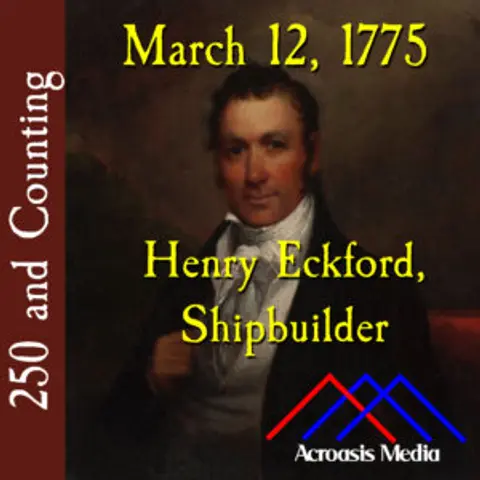
March 12, 1775: Henry Eckford, Shipbuilder
Henry Eckford was born in Scotland on this day in 1775 and died in Constantinople in 1832. In between he spent a great deal of time in the Thirteen Colonies and then the United States, primarily in New York. Eckford also dabbled in politics, serving in the state legislature and as a delegate to the Electoral College, before moving to the Ottoman Empire to assist with rebuilding the fleet there. He died quite suddenly there, probably of cholera, and his body was brought back to America, where he...
March 10, 2025
March 11, 1775: The Botetourt Resolutions
The Botetourt Resolutions was a document prepared by the freeholders of Botetourt County in Virginia that sent instructions to its representatives in the Second Virginia Convention. Botetourt doesn’t get a lot of attention nowadays, largely because the Fincastle Resolutions arrived first and laid down nearly identical sentiments. But as we’ll see in the next few days, these two counties weren’t the only ones with the sort of opinions that they expressed. The post March 11, 1775: The Botetourt ...
March 9, 2025
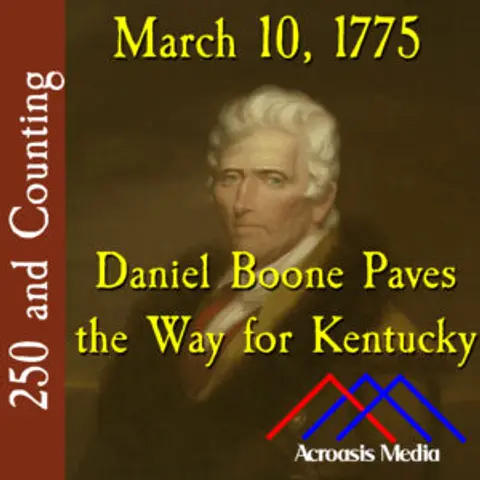
March 10, 2025: Daniel Boone Paves the Way for Kentucky
Because of popular culture in the 1950s and 1960s, Daniel Boone is probably one of the more colorful figures in American history. He was born in Pennsylvania, but it was in the frontier territory. He had little formal education, but he could read and write, even if his spelling was unorthodox. (In fact, oftentimes when he went on hunting or exploring expeditions, he was the only literate man in the group.) He was court-martialed at one point, but found Not Guilty and received a promotion afterwa...
March 8, 2025
March 9, 1775: The Restraining Act Moves Forward
We’ve talked about the New England Restraining Acts in the past, but now they’re being put to actual votes by Parliament. And on this day in 1775, they take another step forward when the House of Commons passes the measure. With still more economic pressure placed on the Colonies (and the Act itself, by the way, not yet in full force), is it any wonder that the tensions escalated into actual war? The post March 9, 1775: The Restraining Act Moves Forward appeared first on 250 and Counting.
March 7, 2025
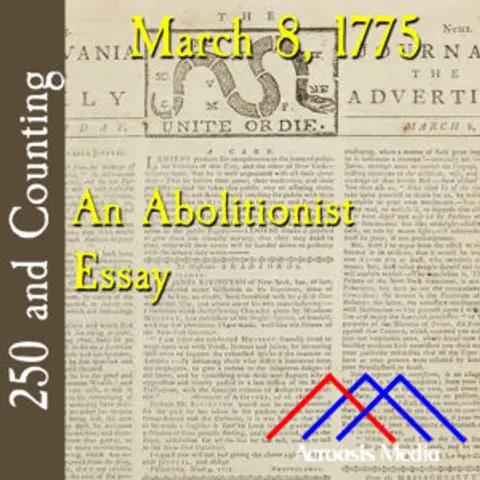
March 8, 1775
It was on this day that an essay appeared in the Pennsylvania Journal advocating for the abolition of slavery. The content wasn’t a huge surprise for Pennsylvania, but the interesting thing is: the essay is known for being written under a pen name, and for a long time, people were pretty sure they knew who that person was. They’re still not 100% positive. The post March 8, 1775 appeared first on 250 and Counting.
March 6, 2025
March 7, 1775
[NOTE: our apologies for those who came early and got the wrong file. We hope at least that you enjoyed the re-run. The correct file is now in place. –CC] Topsfield, Massachusetts wanted to be prepared when the British came. What’s more, they wanted to ensure that their militiamen were drilled and fully outfitted should the need arise. To that end, they offered some of the best wages for their Minutemen. But they had some trouble recruiting at first, until the town’s selectmen decided that the...
March 5, 2025
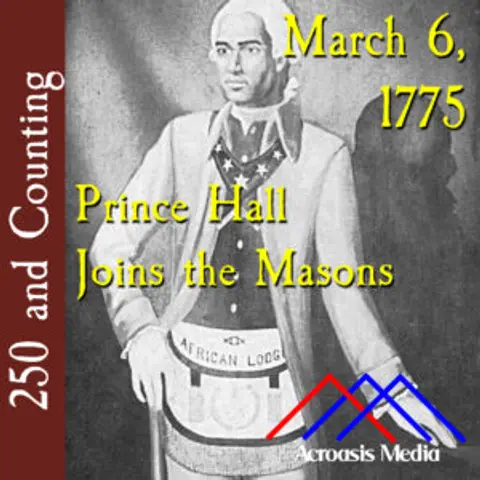
March 6, 1775
Prince Hall, who appears in today’s artwork in an undated and unattributed picture, became interested in becoming a Mason but was turned down because of his race. The British Masons, however, were perfectly willing to accept Blacks into their ranks…so long as they fought on the British side of the Revolution. It wasn’t long before the Americans caught on to the scheme and reversed their decision. But Hall wasn’t done with simply joining the Freemasons. He had additional ambitions for himself, a...
March 4, 2025
March 5, 1775
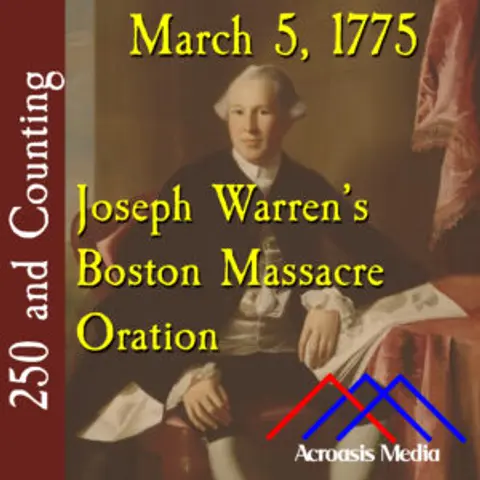
Joseph Warren’s life as a Patriot was rather brief (in fact his life overall was relatively short), but it was quite important to the cause. Warren was part of the committee that investigated the Boston Massacre, he sent Paul Revere on his midnight ride (just go with it for now), he wrote a song called “Free America,” which was based on a British melody called “The British Grenadiers”, he fought at Lexington and Concord, and he died at Bunker Hill. And he was one of only two men who was asked t...
March 3, 2025
March 4, 1775
The Powell Family was a prominent one in the Loudoun County, Virginia area. It’s about due west of Washington, DC. If you’ve ever been anywhere between Leesburg and the Appalachian Mountains in Virginia, you’ve been to Loudoun County. The Powells were among the first to fight for Virginia during the American Revolution, and as the Thirteen Colonies broke away and became the United States, they found themselves with a sense of noblesse oblige and took to representing their area in the political ...
March 2, 2025
March 3, 1775
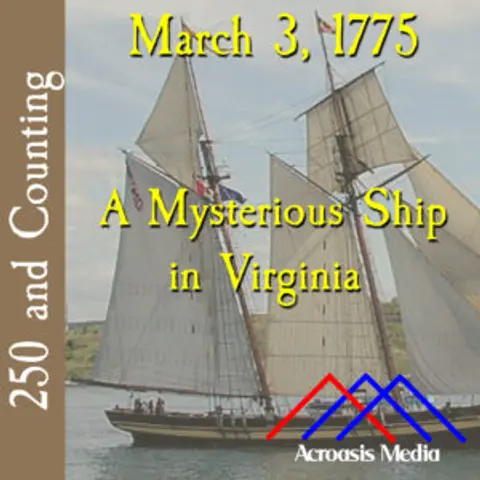
The Gunpowder Incident was an event that took place on April 21, 1775, so there won’t be much about it today. But that was the event that pushed Virginia deeply into the movement toward independence, and allowed the Continental Congress to finally consider seriously the idea of formally breaking away from England. But it was an event that took place on this day— that barely got any notice at the time—which ultimately led to the Gunpowder Incident. The post March 3, 1775 appeared first on 250 a...
March 1, 2025
March 2, 1775
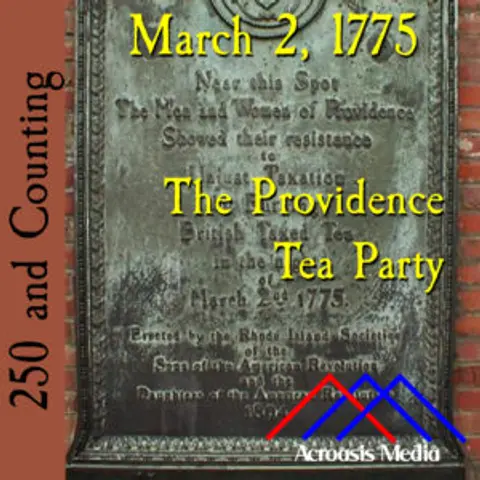
As we noted yesterday, there were all kinds of abuses of tea going on in the Colonies. It (mostly) started with the Boston Tea Party, but also spread to other areas as well. The Boston Tea Party was notable for being a literal destruction of unsold tea, removing it from the market. Other tea parties and actions largely involved tea that had already been purchased in the Colonies, either in the form of boycotts (as in the Edenton Tea Party), or in the form of destroying tea from one’s own pantry...
Feb. 28, 2025
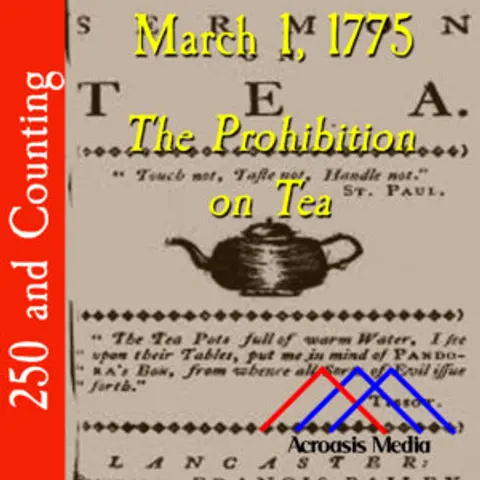
March 1, 1775
When it comes to tea-related protests, the Boston Tea Party seems to get all the press, even though there was also wanton destruction of tea in Charleston, and then there was the Edenton Tea Party. But Boston was the first, and abusing tea in one way or another became a popular way to demonstrate your patriotism. (Some modern-day Brits would argue that we never quite stopped abusing tea.) Today we talk about an effort to actually prohibit the import or consumption of tea in the Colonies. It wo...
Feb. 27, 2025
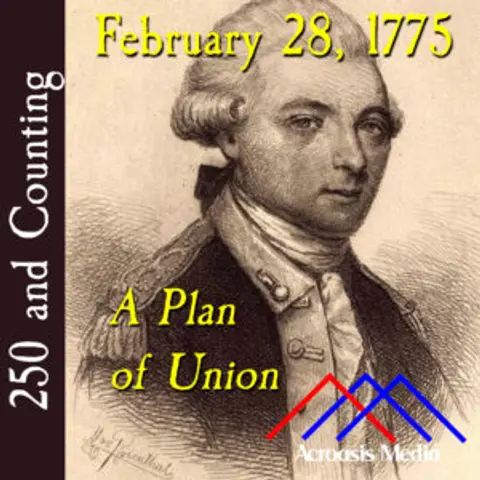
February 28, 1775
Today we meet yet another prominent citizen who thought he had the solution for putting an end to the tension between the Thirteen Colonies and Great Britain. It’s important to note at this point, we think, that these people weren’t delusional; they were genuinely interested in maintaining a good relationship and therefore invested in repairing the damage that had been done. They liked being British citizens, even though a minority percentage of them had emigrated from England (many were born h...
Feb. 26, 2025
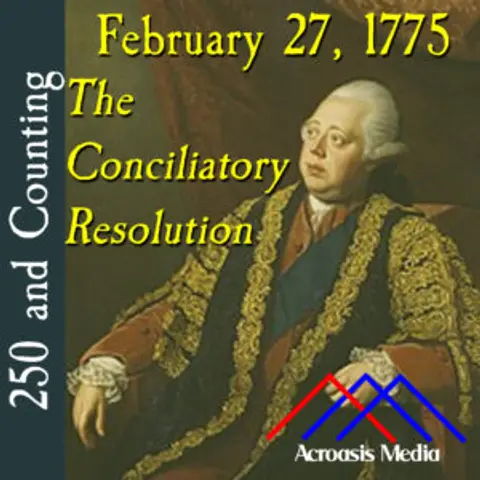
February 27, 1775
And once again, we have someone (two someones, really) who manage to come up with a plan that will put all this unpleasantness between the Thirteen Colonies and the British Empire to rest, and once again the physical distance between the two threatens the success of those plans. What’s more, it turns out that the more popular of the two plans has an almost-hidden ulterior motive… The post February 27, 1775 appeared first on 250 and Counting.
Feb. 25, 2025
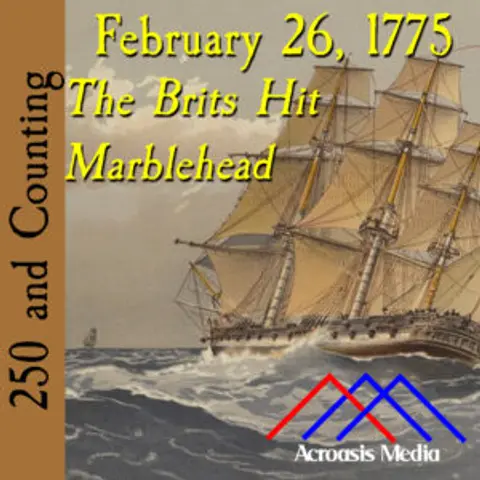
February 26, 1775
It’s one thing to hear someone hollering “The British are coming!” and quite another to actually see them arriving in your port. And that’s especially true when they’re also seen confiscating the cannons that you’d hidden upriver. This wasn’t the first time something like this had happened, but there was something different about the Colonists’ response—and it almost touched off the war nearly two months before it actually did. The post February 26, 1775 appeared first on 250 and Counting.