Episodes
12
Aug. 1, 2023
Growing Impact: Season 4
In season four, Growing Impact is expanding: more team members from different disciplines and deeper conversations around the challenges their project is addressing, the inspiration that turned an idea into a project, and the solutions that may arise from these interdisciplinary researchers.
11
June 30, 2023
Flooding, Addiction, and Resilience
Substance use is similar to extreme weather due to climate change in multiple ways. Both have had impacts in rural towns and big cities. Both can impact any socio-economic class. Both are here to stay for the foreseeable future, and both can damage lives. Another connection is the impact of one on the other, specifically, how extreme weather, like flooding, can impact a community's ability to support those afflicted with substance use disorder.
10
June 1, 2023
Urban embodied carbon
Every material that makes up a building, be it steel, concrete, wood, or plastic, has a greenhouse gas emission associated with it. This is called embodied carbon, and calculating the amount of GHG for one building is achievable. However, calculating that number for an entire city is still a challenge. To assist policymakers to better manage their city's carbon emissions, a team of researchers is developing a methodology to calculate embodied carbon for an entire city.
9
May 1, 2023
Cities cooled by trees
As cities are built, a lot of vegetation is replaced with building materials such as concrete and brick. These materials absorb the sun's heat and then radiate it back into the atmosphere. This leads to urban heat islands where cities are much hotter than the surrounding areas. But trees offer shade and cooling, reducing the temperature in cities. So, what is stopping cities from planting more trees? That is what one research team is investigating.
8
March 31, 2023
Climate and health policy solutions
Creating laws and policies informed by science and facts was not always the primary method used by legislators and policymakers. Until around 2000, policies were often based on a policymaker's intuition. Today, there are concerted efforts to get vetted, fact-based scientific research on numerous topics into the hands of policymakers. One of those topics is climate change and its impacts on human health. Climate change presents a huge array of health problems, and helping policymakers know how to...
7
March 1, 2023
Battery energy from waste heat
Waste heat has been a challenge that scientists and engineers have been pondering for decades. What can be done with this lost energy and can it be harnessed in a useful way? As combustion and technology improved, the percentage of waste heat has decreased, but it is estimated that up to 50% of all industrial energy is lost through waste heat. If that heat could captured or used in a meaningful way, society would move closer to a circular economy. While Derek Hall and his team explored how diffe...
6
Feb. 1, 2023
Fuels from waste
Combustible fuels have been around ever since humans realized that they could burn wood. Over time, we discovered new energy sources—fossil fuels, which still dominate the world’s energy portfolio. But what if we could find another fuel source, one that was abundant, easy to procure, and people were happy to give it away? Something like municipal or agricultural waste? One fuel, called hydrochar, which is a proposed replacement for coal, can be made in a laboratory from waste using water and som...
5
Jan. 1, 2023
Cleaner community air
A lot of our lives is impacted by the air we breathe, both inside and outside. And where we live is an important factor in this equation. For those living in the Pittsburgh area, it is likely that they could be impacted by poor air quality related to large industrial sites that dot the western Pennsylvania landscape. To better understand the air quality concerns of this region and how it's impacted by complex terrain, a team of interdisciplinary researchers is working closely with communities an...
4
Nov. 30, 2022
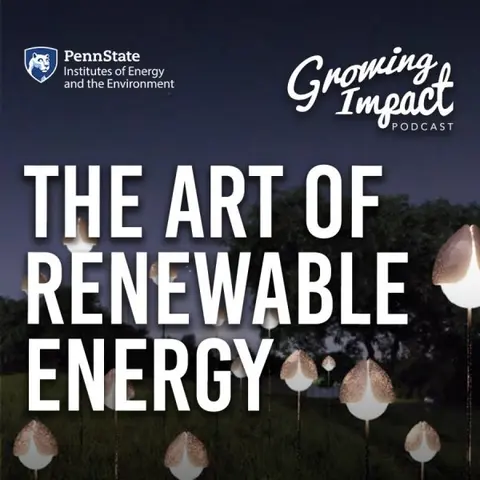
The art of renewable energy
As Mihyun Kang sees it, if renewable energy is the future, then it should be engaging and appealing. She combined that idea with her passion for nature and sustainability to develop art installation concepts that she hopes to bring to life throughout Pennsylvania, in an effort to bring rationally sound and emotionally compelling solutions to climate change.
3
Oct. 31, 2022
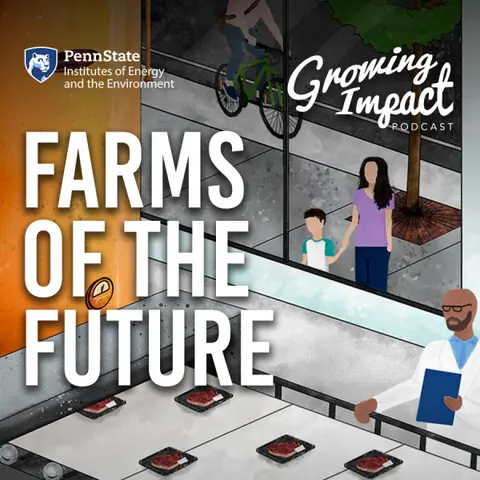
Farms of the future
What does it take to get a piece of steak or chicken to someone's table? The amount of time, energy, water, land, and the resulting carbon footprint may be surprising. Today, scientists are exploring the farms of the future, including the generation of meat products through cellular agriculture. These animal-based proteins have plenty of pros, including sustainable production, and groups, ranging from U.S. government to the meat industry, are investigating the future of cellular agriculture.
2
Sept. 30, 2022
Climate signals from wetlands
Wetlands are some of the richest ecosystems in the world. They support an extensive variety of plants and animals, from the smallest of microbes to the largest of mammals. Wetlands also filter and protect water, improving its quality. However, as climate change intensifies, wetlands are threatened by changes in precipitation, both too much and too little. They also may provide early signals of climate change.
1
Aug. 31, 2022
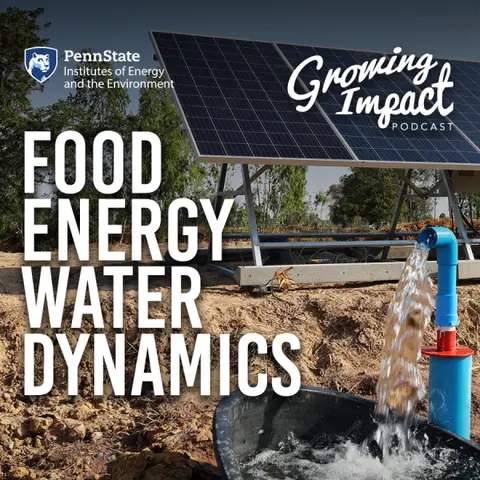
Food-energy-water dynamics
The groundwater level in India is consistently dropping year to year. In fact, India uses more groundwater than any country in the world. However, it is also a nation that lacks water availability, and its population continues to grow. A team of researchers is analyzing how an Indian government policy aimed at installing and using solar irrigation pumps in agriculture may further lower groundwater levels, impact energy use, and help or hinder food production in India.