Episodes
1
Nov. 1, 2026
Can plants detect PFAS?
Plants respond to changes in their environment, but can those responses help detect contamination? A new research project is exploring whether flexible sensors attached to plants can identify electrical signals associated with exposure to PFAS, a group of persistent chemicals found throughout the environment. If successful, the approach could offer a faster, less expensive way to monitor contamination and help farmers and communities make more informed decisions.
6
Oct. 5, 2026
Plastic recycling with coal
Plastic recycling is difficult for a simple reason: Plastics are designed to last. Penn State researchers are testing whether tiny particles of Pennsylvania anthracite coal can absorb laser light and deliver targeted heat to break polymer bonds. If successful, the approach could use less energy, require less sorting, and make more types of plastic easier to recycle.
5
June 30, 2026
Resilient power grid planning
As electricity demand grows and becomes harder to predict, power grid planners face a difficult question: how do they build for a future shaped by extreme weather, renewable energy, and the rapid rise of data centers? A new research project is developing tools to help planners identify the most important risks without having to model every possible future. The work could help utilities make better long-term infrastructure decisions while reducing the chances of costly overbuilding or major power...
4
March 31, 2026
Managing India's groundwater crisis
India is the world's largest groundwater-based economy, with more than half its 1.5 billion population depending on agriculture for their livelihoods — making groundwater depletion a critical threat. Researchers are investigating the Atal Bhujal Yojana, a $500 million World Bank–supported national program that takes a community-led, "inside-out" approach to groundwater management. But can village committees manage this resource sustainably and equitably? And what happens when the program is cut ...
3
Jan. 31, 2026
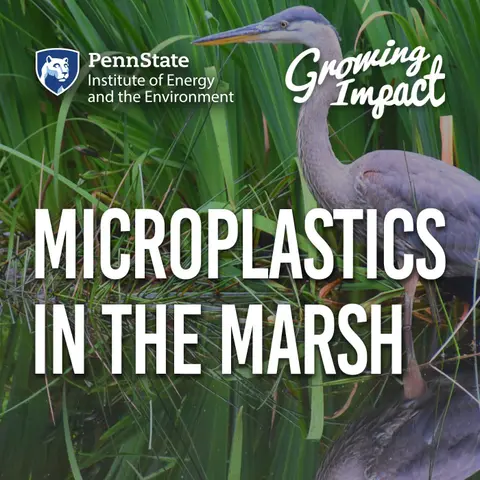
Microplastics in the marsh
Microplastics are turning up in unexpected places, including tidal freshwater marshes. Researchers are uncovering how these ecosystems trap plastics before they reach the ocean, leading to long-term accumulation in sediments and habitats. Understanding where plastics accumulate and how different materials behave matters for protecting ecosystems, communities, and long-term environmental health.
2
Nov. 30, 2025
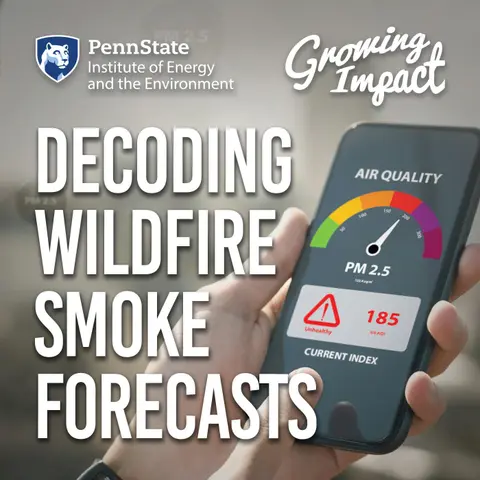
Decoding wildfire smoke forecasts
Long-distance wildfire smoke is emerging as a serious health risk in the Northeast U.S., where many residents have little experience navigating hazardous air. Conflicting messages from apps, agencies, media, and social networks often leave people unsure what to trust or how to respond. Researchers are uncovering how people interpret these warnings, why uncertainty slows protective action, and what clearer, more reliable communication could do to better protect communities during future smoke eve...
1
Oct. 1, 2025
Energy saving smart windows
How do you keep a building comfortable without wasting energy? A Penn State team is tackling that question with an innovative smart window. Using a responsive polymer, the window can block visible light, infrared heat, or both—automatically, without sensors or electricity. The technology could dramatically reduce energy use in buildings while giving architects new freedom to design spaces that work with, rather than against, the sun.
10
July 31, 2025
Indigenous communities and Amazon oil
The Amazon, home to rich biodiversity and vital carbon-storing ecosystems, is also the ancestral land of Indigenous communities who are grappling with the devastating effects of oil extraction across Ecuador, Peru, and Colombia. These communities live amid widespread pollution from oil spills, toxic chemicals, and industrial infrastructure, which threaten their way of life and the health of their environment. In response, they are working alongside researchers to map the environmental destructio...
9
June 30, 2025
Climate change, extreme heat, and infant health
Heat significantly affects pregnant women and infants, increasing risks like dehydration, heat exhaustion, and developmental issues in children. Expectant mothers are more vulnerable due to physiological changes, while infants face heightened danger because of immature temperature regulation. These challenges are further intensified for families with limited resources. Researchers are investigating these impacts to provide lawmakers with the knowledge needed to create protective measures for the...
8
May 31, 2025
Cooling high-performance buildings
Cooling is energy-intensive, with air conditioning consuming a significant portion of electricity in homes and commercial buildings, while also contributing to greenhouse gas emissions and climate change. This creates a cycle of increasing energy demand for cooling. However, innovative materials that cool when strained offer a promising, sustainable solution for various applications.
7
March 31, 2025
Measuring nitrous oxide emissions
Nitrous oxide is a potent greenhouse gas with nearly 300 times the warming potential of carbon dioxide, making even small emissions highly impactful. Agriculture, particularly soil management, is the largest source of nitrous oxide. To better understand and manage these emissions, researchers have developed a system for continuous monitoring on farms and other land management purposes.
6
Feb. 28, 2025
PFAS and human health
PFAS, synthetic chemicals found in countless everyday products, have made their way into humans and animals around the globe. Although their health effects remain unclear, their widespread presence raises important questions. Scientists are now investigating whether these chemicals might disrupt the human gut microbiome, potentially impacting our health in unexpected ways.
5
Jan. 31, 2025
Seismic sensing with fiber optics
The Earth can shift suddenly, with sinkholes and landslides posing serious risks to people and property. Scientists are now using existing fiber optic cables in cities to detect potential geohazards before they strike. This innovative approach is expanding to monitor flooding and even track human movement, unlocking new possibilities for data collection and understanding our world.
4
Dec. 31, 2024
Low-carbon cement from farm waste
Cement, a major component of concrete, is a significant contributor to global carbon emissions. Researchers are exploring agricultural waste as a potential alternative to cement, aiming to reduce carbon footprint while also finding new uses for farm byproducts. However, the feasibility and effectiveness of this solution depend on the collaboration between researchers and farming communities.
3
Nov. 30, 2024
Feeding a changing world
Smallholder farmers are the unsung heroes of our food system. Tilling tiny plots, they produce a staggering one-third of the world’s food and up to 80% of the food supply in regions like sub-Saharan Africa and Asia. But these vital contributors face immense challenges: such as climate change, pests, insufficient finances, and limited education and training. On this episode of Growing Impact, we’re revisiting the story of PlantVillage, a project funded as a seed grant by IEE in 2016. Its aim was ...
2
Oct. 31, 2024
Visualizing flood risk
Flooding is the world's most devastating natural disaster, causing widespread destruction and loss of life. Millions of Americans live in high-risk flood zones, with the threat amplified by climate change and aging infrastructure. This episode explores how innovative computer modeling and visualizations can help communities plan for future flood risks and develop effective response strategies.
1
Sept. 30, 2024
Converting CO2 into fuel
Carbon dioxide (CO2) is abundant and stable, making it difficult to convert into something useful without a lot of energy. Researchers are using advanced computational modeling to find a catalyst that can efficiently transform CO2 into valuable products. This could turn CO2 from a climate issue into a valuable resource.
Aug. 31, 2024
Growing Impact: Season 5
Our planet is at a critical crossroads. In Season 5 of Growing Impact, we delve into groundbreaking research with the power to transform our world. This season offers a deep dive into the vast and varied research at Penn State, showcasing its pivotal role in advancing a healthier planet and improving the well-being of people everywhere. Growing Impact is a podcast by the Institute of Energy and the Environment at Penn State. Each episode explores cutting-edge projects of researchers and scientis...
12
July 31, 2024
Floating offshore wind energy
Wind power has come a long way from its humble beginnings as water pumps and windmills. Today, it's a major contributor to our electricity generation. While onshore wind farms are well-established, the U.S. has yet to tap into the full potential of offshore wind. With advancements like floating turbines and improved blade designs, wind energy is poised for another significant leap forward.
11
June 30, 2024
Evaluating lighting efficiency
Before the early 20th century, light measurement lacked a standard, repeatable approach. At that time, scientists developed a spectral sensitivity curve, representing the "average human observer." This graph quantified light output and standardized lamp brightness calculations. Although experts recognized its imperfection and proposed alternatives, this graph, remarkably, remains the standard a century later. On this episode of Growing Impact, we discuss light sources, the measurement of those s...
10
June 1, 2024
Underground carbon storage
Storing carbon dioxide underground could offset the record amounts of CO2 that humans emit each year. If this technology is successful, it could be an answer to climate change impacts, such as rising temperatures and acidification of the ocean. However, the process is complex and costly. A team of researchers is exploring one way liquid CO2 could be injected into rock formations, which may efficiently convert the molecule into a solid.
9
April 30, 2024
Investigating thawing permafrost
Once a frozen haven, climate-driven rising temperatures are rapidly thawing the Arctic permafrost, posing a major threat to communities and infrastructure. Researchers are investigating how these changes will transform rivers, with potential consequences for erosion, sediment transport, and the entire Arctic landscape. Additionally, their project incorporates art to communicate these critical findings in an engaging way.
8
March 31, 2024
Youth climate leadership
The global push to involve youth in climate action is gaining momentum, harnessing their innovative spirit, deep investment in the future, and strong collective voice to combat climate change. Getting young people involved ensures that climate policies are forward-thinking and geared towards sustainable development, while their global solidarity and use of digital platforms amplify the call for urgent action. At the forefront of this movement, Penn State's Global Youth Storytelling and Research ...
7
Feb. 29, 2024
Low-cost PFAS filtration
For decades, PFAS (per- and polyfluoroalkyl substances) have been a staple in products from detergents to cosmetics, making items more durable and resistant to water and stains. However, the creation and use of these "forever chemicals" is not without consequences. They persist in the environment and are now ubiquitous, even in our drinking water. Emerging evidence links PFAS exposure to significant health risks, prompting a team of researchers to evaluate affordable filtration technology. The t...