Episodes
6
Oct. 5, 2026
Plastic recycling with coal
Plastic recycling is difficult for a simple reason: Plastics are designed to last. Penn State researchers are testing whether tiny particles of Pennsylvania anthracite coal can absorb laser light and deliver targeted heat to break polymer bonds. If successful, the approach could use less energy, require less sorting, and make more types of plastic easier to recycle.
5
June 30, 2026
Resilient power grid planning
As electricity demand grows and becomes harder to predict, power grid planners face a difficult question: how do they build for a future shaped by extreme weather, renewable energy, and the rapid rise of data centers? A new research project is developing tools to help planners identify the most important risks without having to model every possible future. The work could help utilities make better long-term infrastructure decisions while reducing the chances of costly overbuilding or major power...
4
March 31, 2026
Managing India's groundwater crisis
India is the world's largest groundwater-based economy, with more than half its 1.5 billion population depending on agriculture for their livelihoods — making groundwater depletion a critical threat. Researchers are investigating the Atal Bhujal Yojana, a $500 million World Bank–supported national program that takes a community-led, "inside-out" approach to groundwater management. But can village committees manage this resource sustainably and equitably? And what happens when the program is cut ...
3
Jan. 31, 2026
Microplastics in the marsh
Microplastics are turning up in unexpected places, including tidal freshwater marshes. Researchers are uncovering how these ecosystems trap plastics before they reach the ocean, leading to long-term accumulation in sediments and habitats. Understanding where plastics accumulate and how different materials behave matters for protecting ecosystems, communities, and long-term environmental health.
2
Nov. 30, 2025
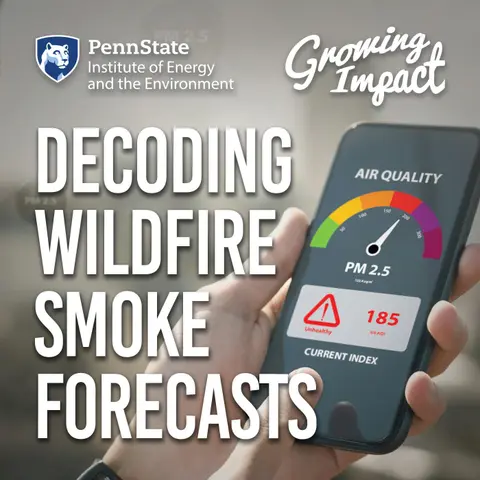
Decoding wildfire smoke forecasts
Long-distance wildfire smoke is emerging as a serious health risk in the Northeast U.S., where many residents have little experience navigating hazardous air. Conflicting messages from apps, agencies, media, and social networks often leave people unsure what to trust or how to respond. Researchers are uncovering how people interpret these warnings, why uncertainty slows protective action, and what clearer, more reliable communication could do to better protect communities during future smoke eve...
1
Oct. 1, 2025
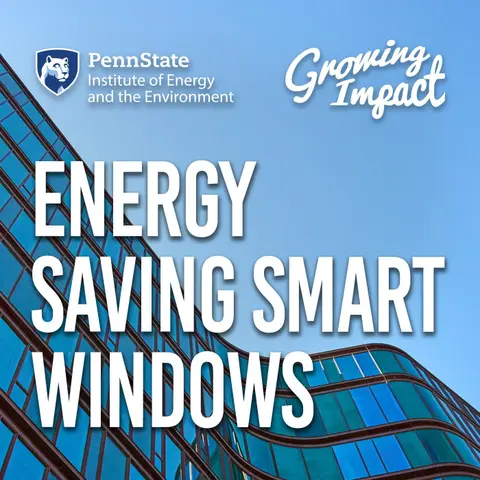
Energy saving smart windows
How do you keep a building comfortable without wasting energy? A Penn State team is tackling that question with an innovative smart window. Using a responsive polymer, the window can block visible light, infrared heat, or both—automatically, without sensors or electricity. The technology could dramatically reduce energy use in buildings while giving architects new freedom to design spaces that work with, rather than against, the sun.