Episodes
6
Jan. 31, 2022
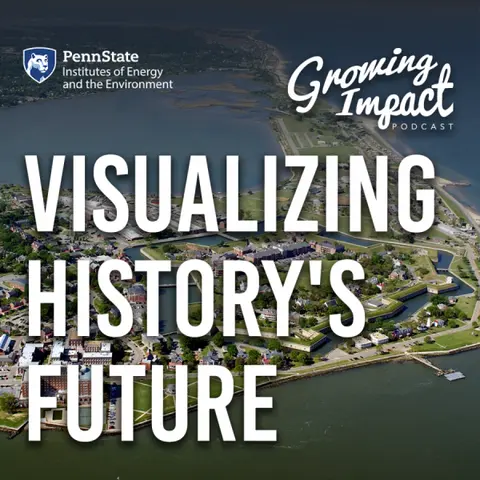
Visualizing history's future
As sea-levels rise due to climate change, historical monuments and landscapes near bodies of water are at risk. A new research project will provide decision makers with information on what that could look like for their site. Specifically, the project is focused monuments and landscapes that are significant to African American, Indigenous, and other minority communities.
5
Dec. 31, 2021
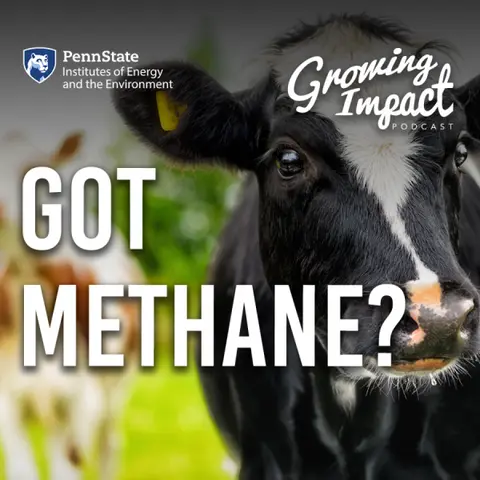
Got methane?
The latest episode of the Growing Impact podcast features a research team that is designing and building a biofiltration system that can reduce greenhouse gas emissions, specifically methane and carbon dioxide.
4
Nov. 30, 2021
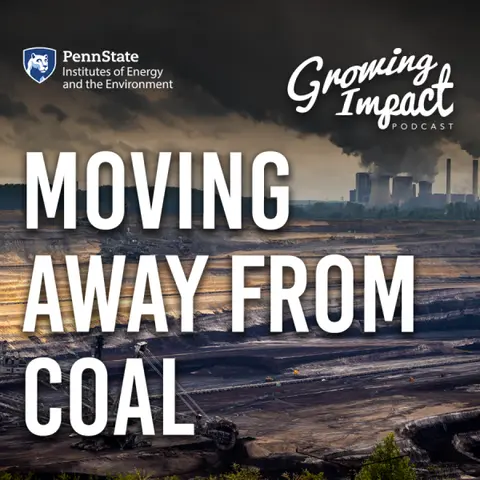
Moving away from coal
This episode of Growing Impact features Emily Pakhtigian, assistant professor of public policy and the Jeffrey L. and Sharon D. Hyde-McCourtney Career Development Professor. On the podcast, she discusses her seed grant project, titled “Assessing Distributional Effects of Coal-Fired Power Plant Operations on Pollution and Health,” through which she and her colleagues are investigating how the transition away from coal-fired power plants is impacting the environment and health of communities in Pe...
3
Oct. 31, 2021
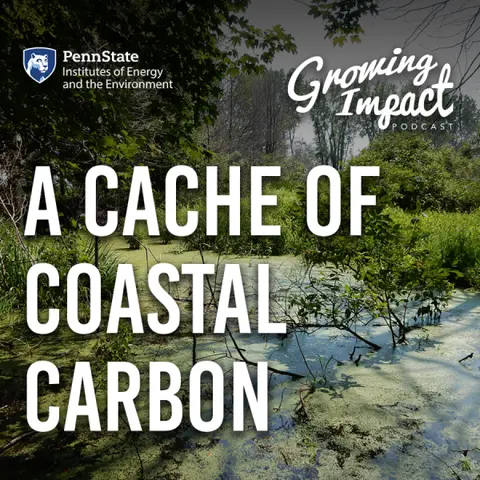
A cache of coastal carbon
Lisa Emili, an associate professor of physical geography and environmental studies at Penn State Altoona, discusses her project titled “Coastal Carbon Dynamics in a Riparian Buffer Ecosystem, Lake Erie Basin,” which is investigating carbon accumulation in freshwater wetlands around the Great Lakes area. She and her team are interested in better understanding how these wetlands fit into the carbon cycle and how these areas can help impact climate change.
2
Sept. 30, 2021
In-Tune lighting
Penn State researchers, Julian Wang and Anne-Marie Chang, discuss their seed grant project that investigates how indoor lighting can be adjusted to save energy and positively impact human health.
1
Sept. 1, 2021
Building with fungi
According to reports, the building industry is responsible for a lot of the carbon emissions in the world, about 37% in the U.S. This includes the production of materials, construction, operation, and even deconstruction. Additionally, the world will need alternative building materials to keep up with the demand of the construction industry. In this episode of Growing Impact, we explore a seed grant project that looks to use mycelium, the root structure of fungi, as a renewable, biodegradable bu...
6
Aug. 1, 2021
Accelerating renewable energy
Splitting water into hydrogen and oxygen requires a lot of energy. By introducing catalysts into the process, these renewable energy sources can be created more efficiently. The challenge is that these catalysts use precious metals and are expensive. Mauricio Terrones and Lauren Zarzar are working on a novel method to develop inexpensive and efficient catalysts to split water.
5
July 1, 2021
A guide to decarbonization
In order for the world to meet the challenge of climate change, decarbonization and negative emissions must be part of the discussion. Wei Peng looks to provide policy and tech leadership with information on what decarbonization technology might be effective in the future and how to strategically employ it.
4
June 1, 2021
Unlocking a world of energy
Some countries in Africa and Asia have been locked into contracts that prevent improvements to existing electricity systems. Mohamed Badissy and his team are examining these contracts to find ways that could make these systems more efficient, sustainable, and cleaner.
3
May 1, 2021
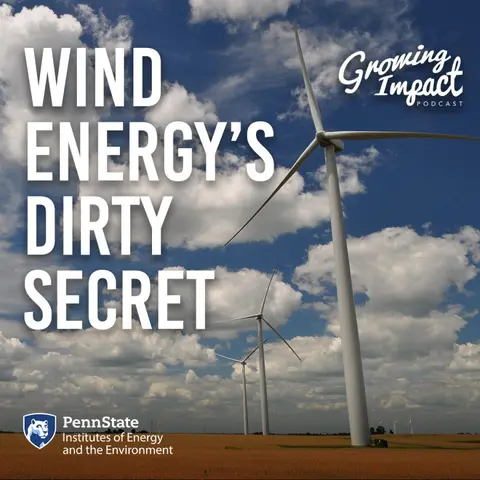
Wind energy's dirty secret
Steve Chmely and Chris Costello discuss how wind energy has a dirty secret surrounding the wind turbine blades and their disposal. The research team is exploring materials to reduce the waste associated with the blades.
2
April 1, 2021
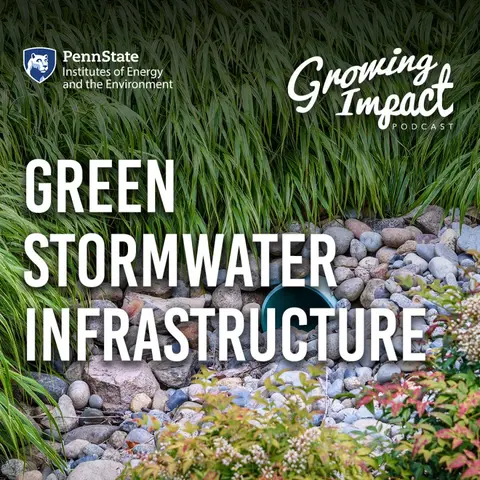
Green stormwater infrastructure
Green storm water infrastructure uses the power of plants and soils to improve water quality. More than that, Lauren McPhillips discusses how making stormwater infrastructure green is saving cities money, impacting environmental justice, and cooling urban heat islands with aesthetically pleasing gardens.
1
Feb. 1, 2021
Climate change on the Hudson
Kirk French talks about his newest project, "Climate Change on the Hudson: A Century After Nanook." In the discussion, Kirk talks about the importance of documenting climate change through film and how revisiting "Nanook of the North" empowered the Inuit to tell their story, even in the face of COVID.